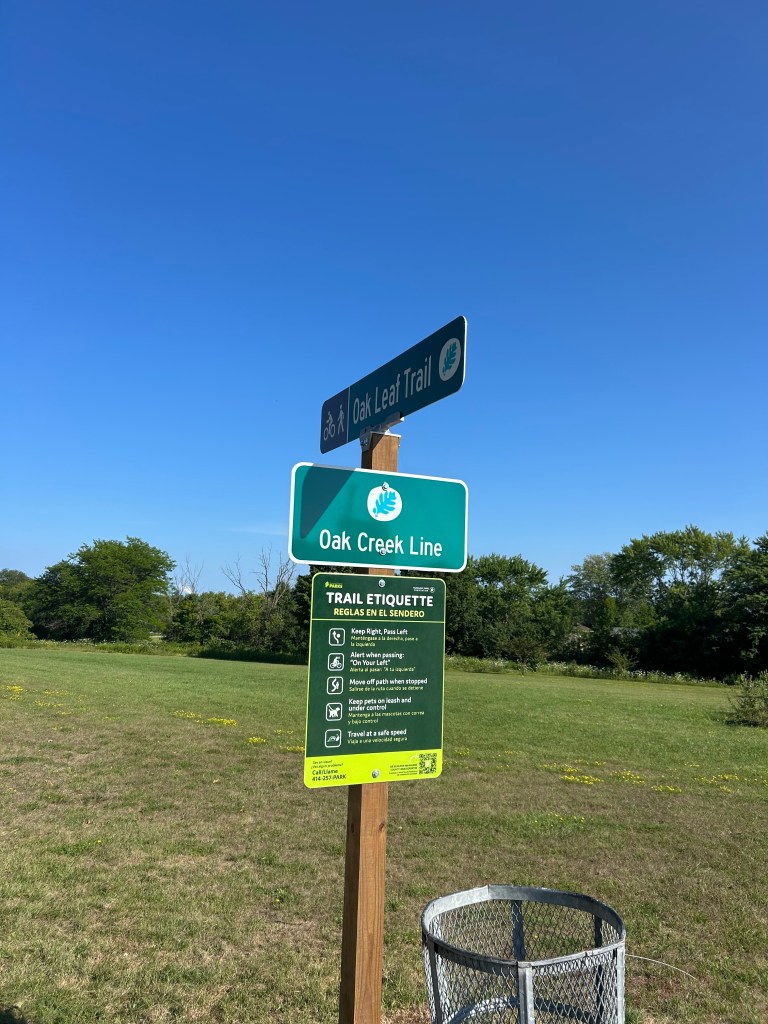
Oak Creek Line Trail
Run Time: 66:43 + 2:30 kick
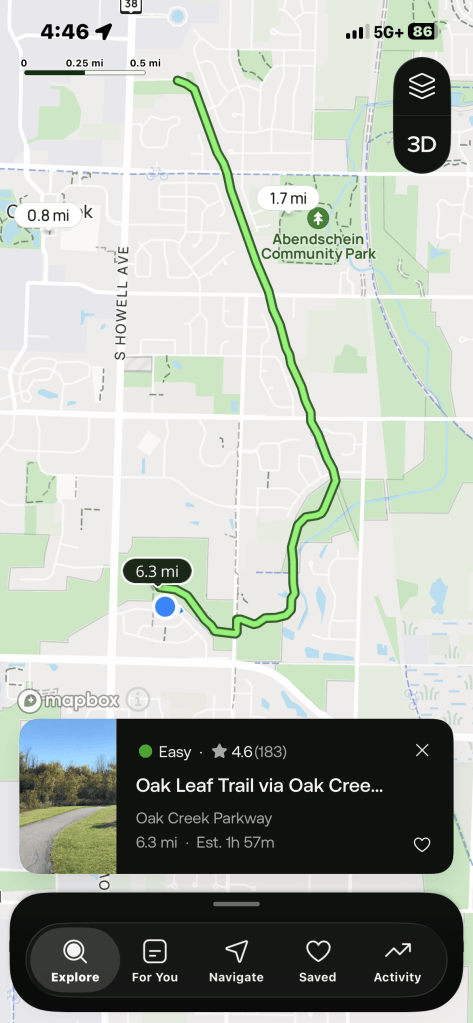
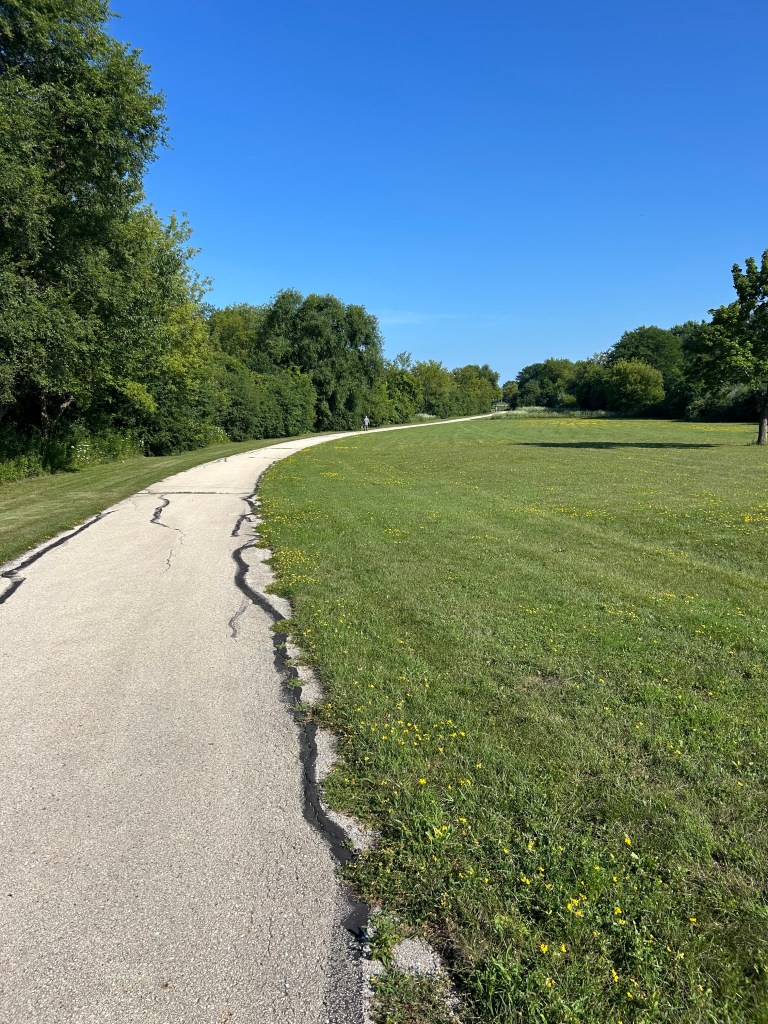
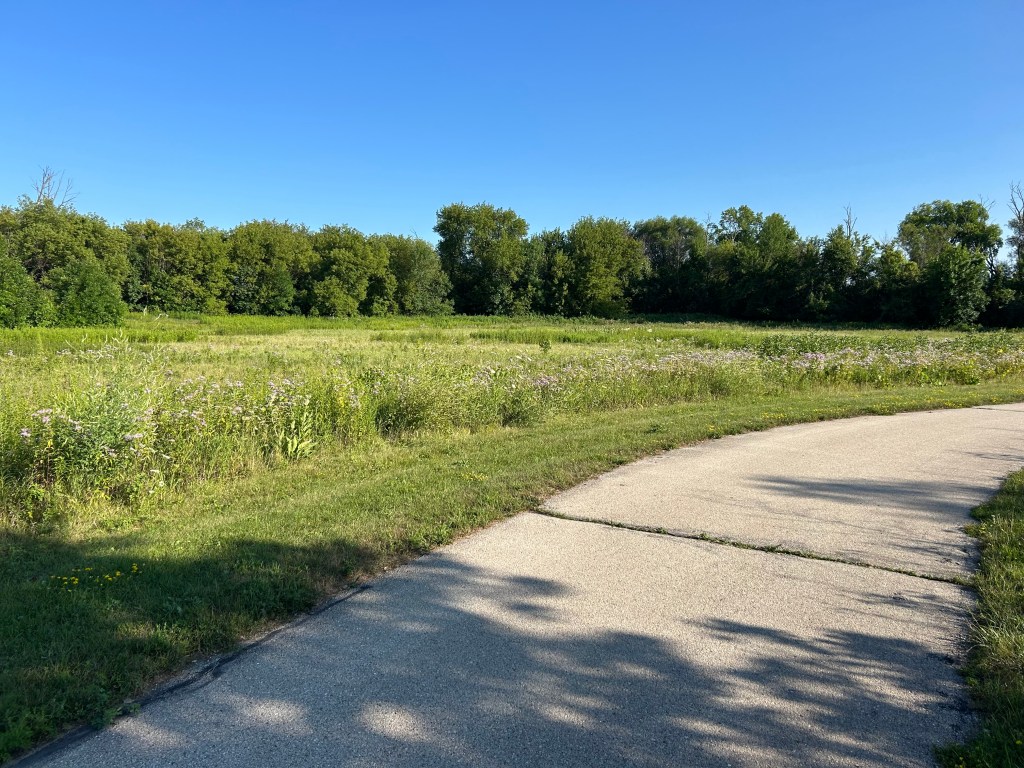
This runs started out moderately promising. The cement was no bueno, but the grass was mowed short enough to facilitate off-trail running. It led away from streets and traffic, which is always a bonus. I passed walkers and dog-walkers early on, so I had every reason to think that I would be able to run out-and-back for the full run.
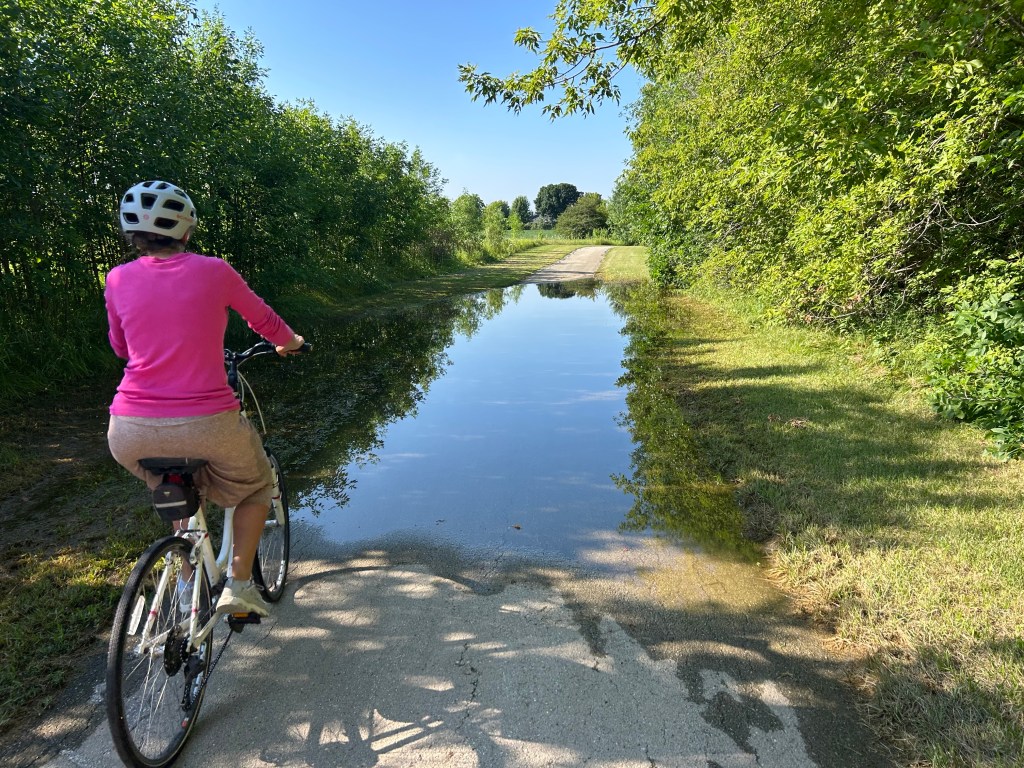
Alas, it was not to be. I was quickly reminded that much of the Great Lakes region is right at groundwater level, and with the recent thunderstorms, the lakes extended onto the trail system. I tiptoed around the first water hazard, but the second one was not navigable. Time to pivot.
I have had some poor luck recently with informed choices, including choosing which book to read. I started The Satanic Verses, by Salman Rushdie, and I could not get into it at all. I moved it to the bathroom for my bathroom reader, and even that didn’t work. Looking for anything else to read, I visited the bookshelf just outside the bathroom and grabbed my old copy of Zen and the Art of Motorcycle Maintenance.
It’s been a few decades since I read it, and within a few pages, I realized that much of it was probably lost on the younger me. While this is a book for all ages, it has a depth that probably increases with life experience. Early on in the book, the main character describes a philosophical conundrum that his previous self (you’ll have to read the book to find out what that means) discovers involving scientific method.
He reasons that the number of rational hypotheses that can explain any given phenomenon is infinite, and then he concludes that this law is completely nihilistic, because it is a disproof of the general validity of all scientific method. “If all hypotheses cannot be tested, then the results of any experiment are inconclusive and the entire scientific method falls short of its goal of establishing proven knowledge.”
This is just part of the problem with scientific method that he reasons out. And the primary philosophical conundrum that he discovers, or develops, has to do with the the flaws of logic and reason themselves. But the idea that scientific development is producing hypotheses at an increasing rate that shortens the length of scientific truths and therefore prevents us from reaching ultimate scientific truths is, to me, a metaphor for the self-induced chaos that we are now living with every potential piece of information, misinformation, and disinformation at our swiping fingertip.
But, we continue on into the chaos, because what else can we do? At least in the field of scientific inquiry, we can comfort ourselves with the fact that we are advancing… something. We’re not just scrolling through endless shit. The fact that scientific method might be internally flawed is easier to ignore (I’m hypothesizing). I’m not going to give the mess we are in now the same benefit of the doubt. We’ve passed multiple points of diminishing return beyond a point of no return.
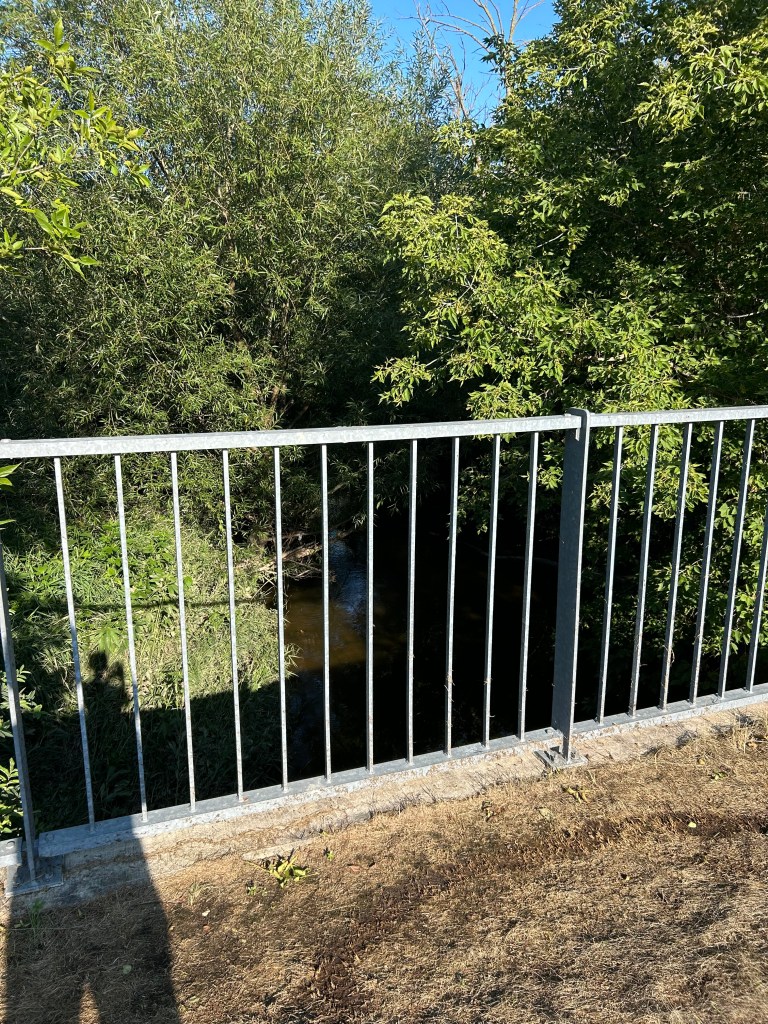
The information morass, like the trail lake that blocked my progress, is shallow but not worth crossing. I diverted to a sidewalk for the middle half of the run, returning to the beginning section of the trail to finish up. I breathed in a little more carbon monoxide than I would have otherwise, and the scenery was less attractive, but I checked off the calendar item.
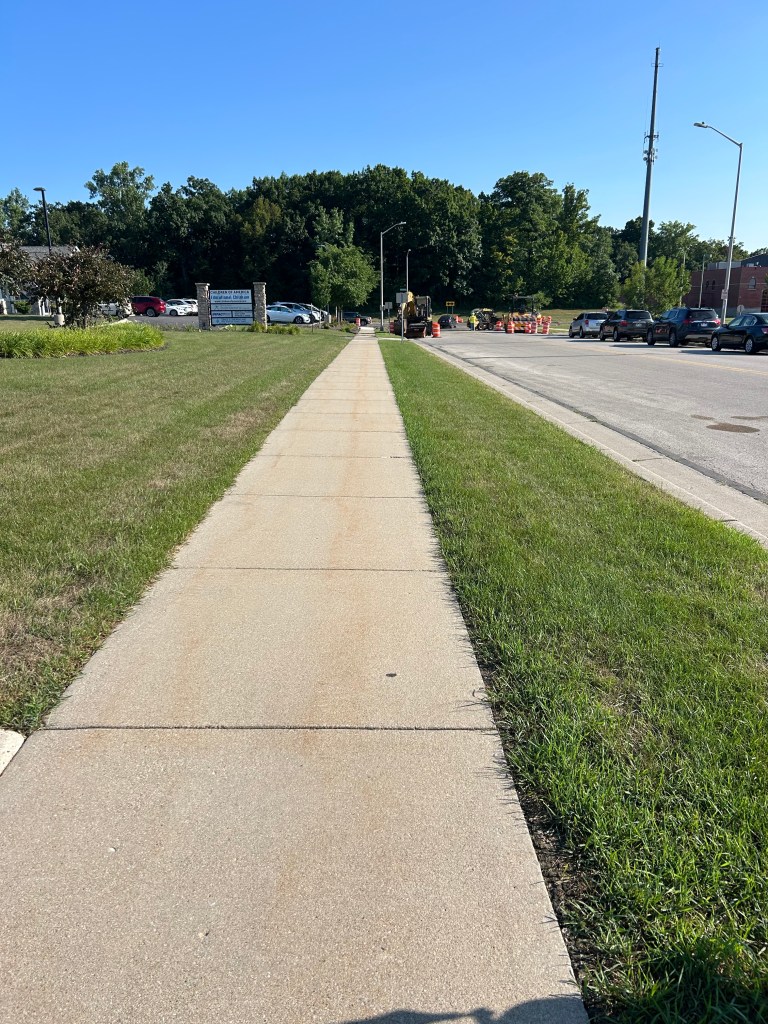
We ignore conundrums and inconsistencies and paradoxes all the time, all our lives. We keep reading books that we don’t enjoy or learn from. We stay on the path despite the shallow morasses. We don’t stop and question why. We don’t inspect the foundation of reason and logic, and maybe we should, because look where they’ve brought us.
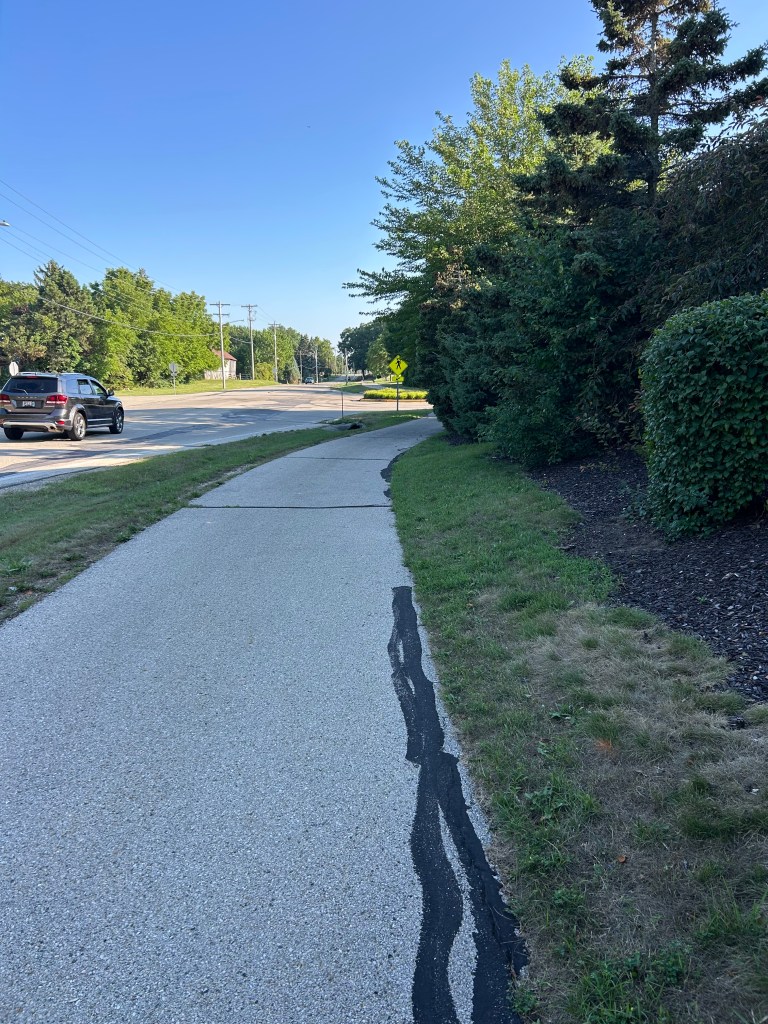
I’m looking forward to finishing Zen. I don’t remember all of the story. I know that I’m going to get more out of it now than I did when I was 20, 25, 30. Will I get enough to figure out solutions to climate change? To political chaos? To existential threats? Probably. I’ll make a calendar item, like the Grinch: “Solve world hunger. Tell no one.”