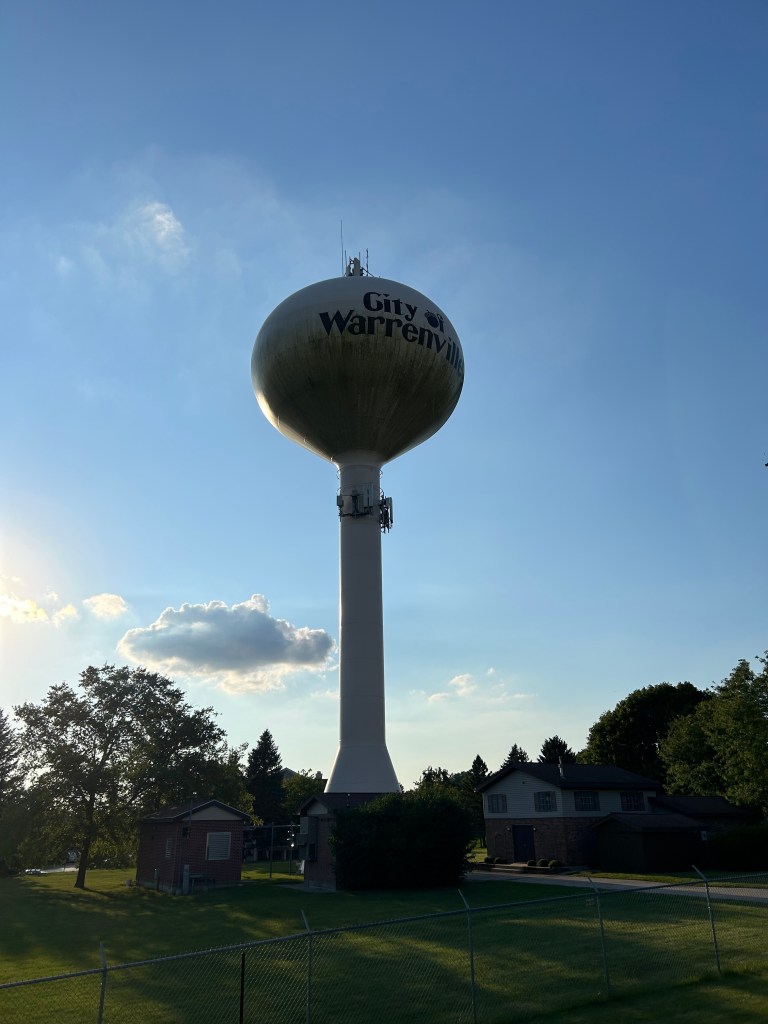
Warrenville, IL

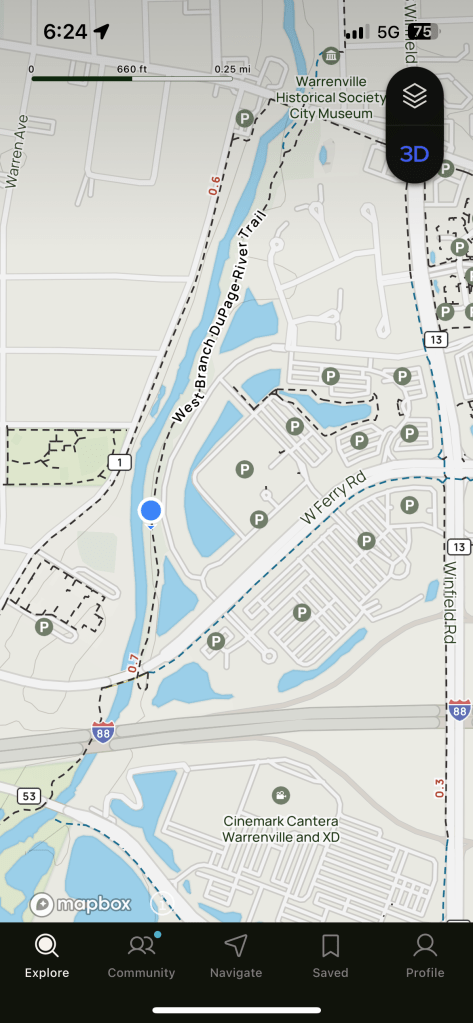
West Branch DuPage River Trail

Run Time: 63:56 + 2-minute kick

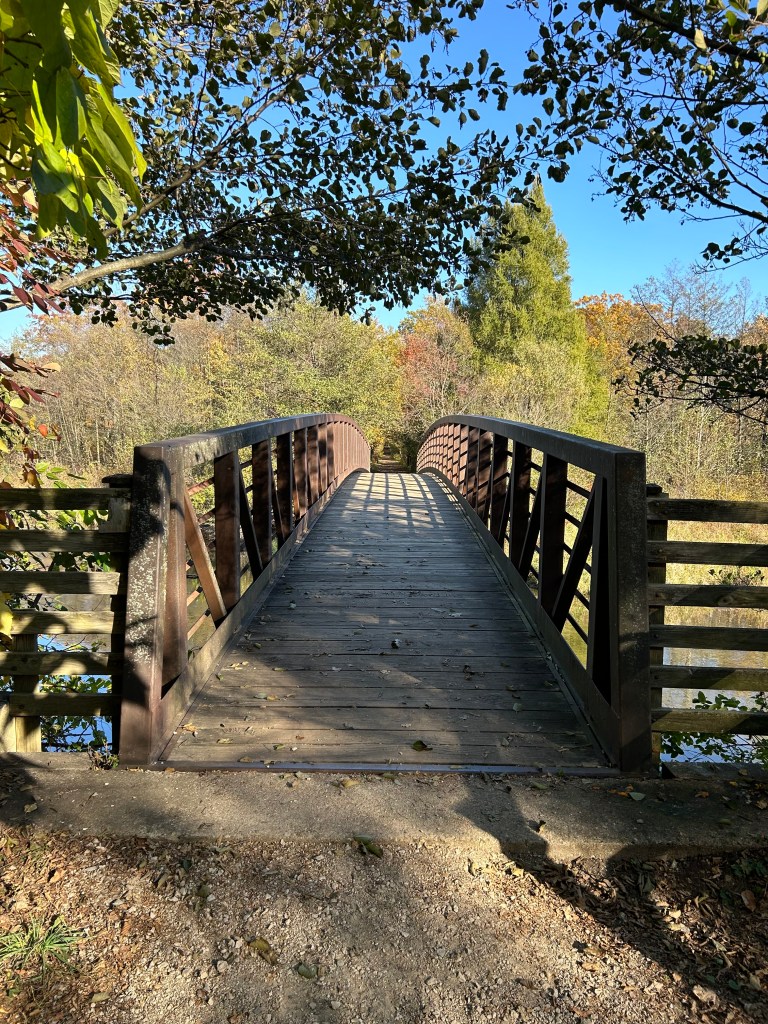
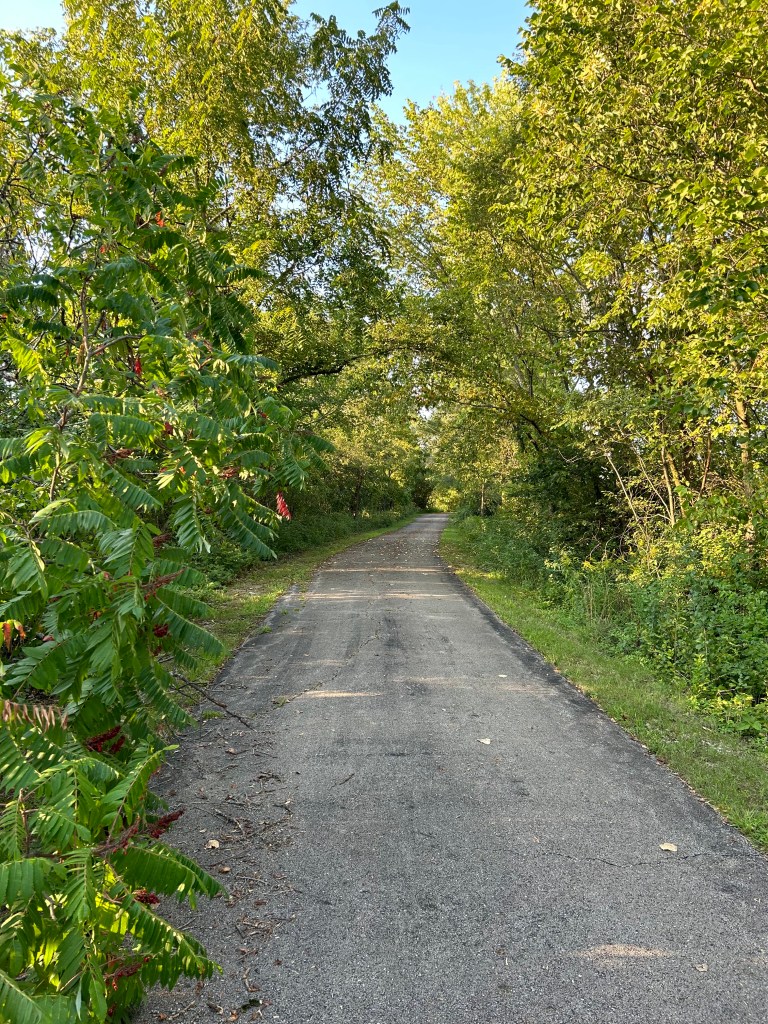
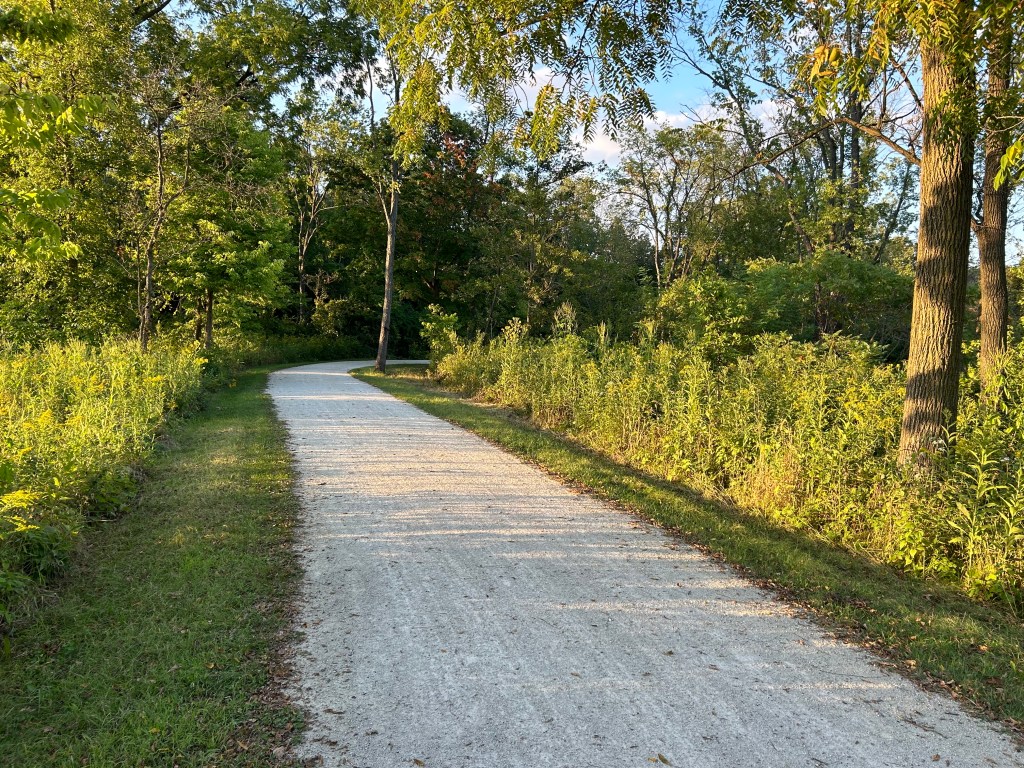
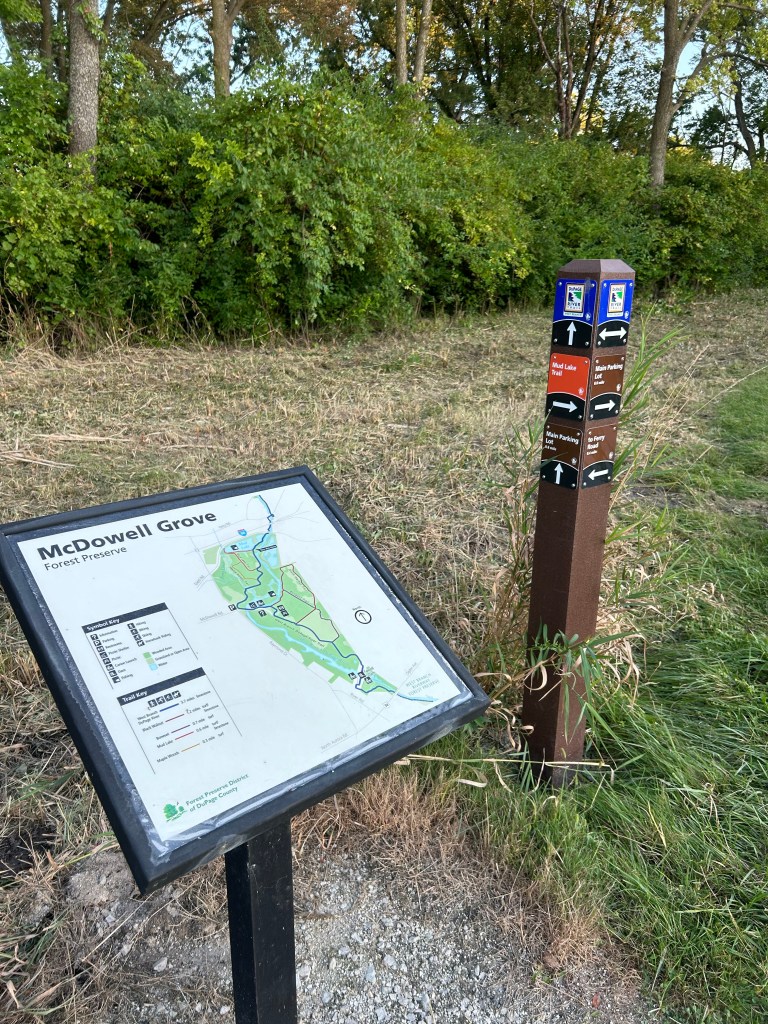
A pleasant urban trail. Just 0.8 mile of sidewalk to the river, and then the rest of the run on cement and dirt/fine gravel. I waited a little later to run, so shade was abundant. Plus, the river was a little lower in elevation than most of the adjacent streets, which reduced traffic noise.

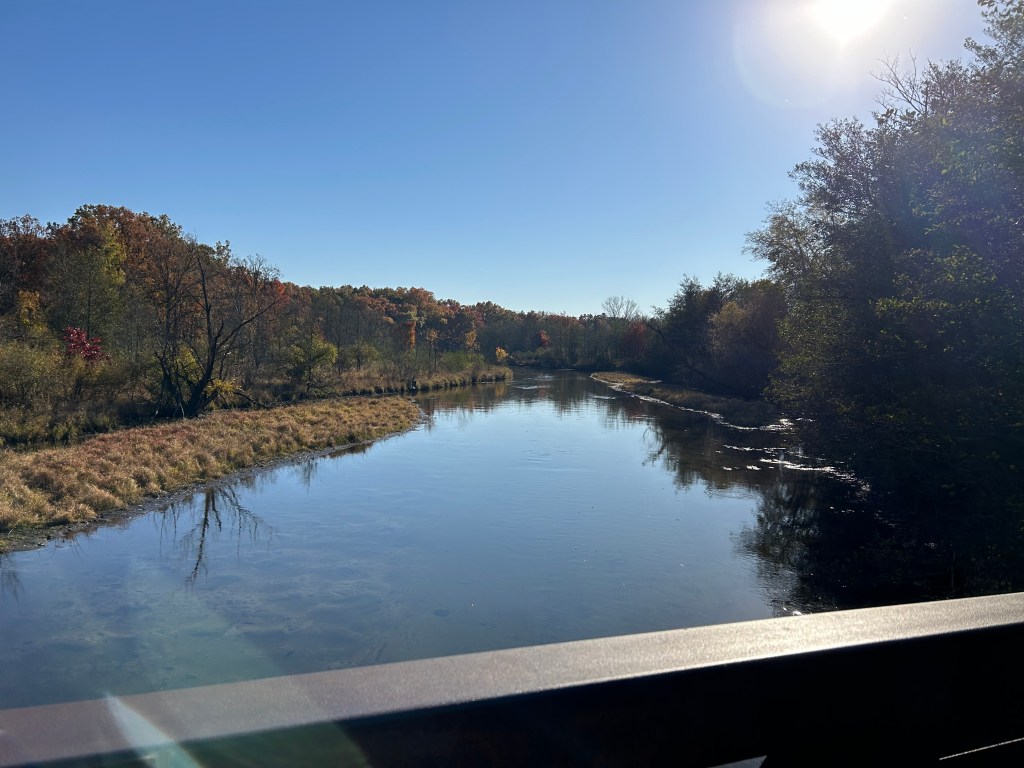
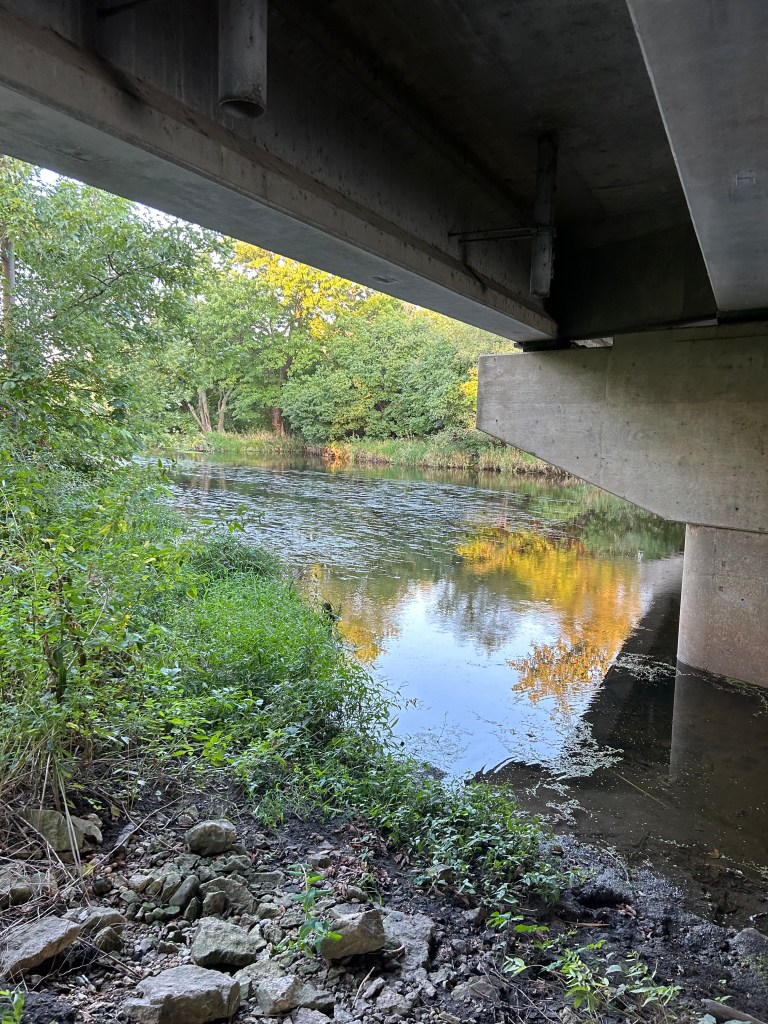
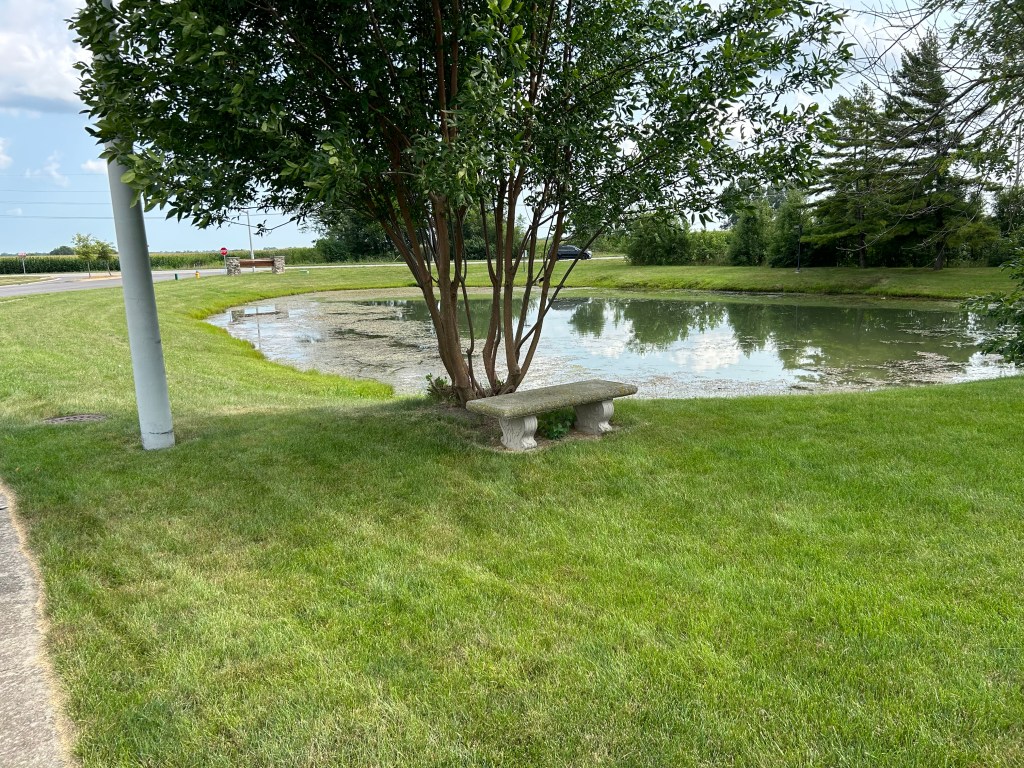
The flow of the DuPage River was suspiciously still. It was pond-like. It did not have a bad smell, and there were occasional ripples, but it did not invite swimming or wading. However, given its proximity to a major metropolis, it was surprisingly riparian.

The next day I visited an account in East Chicago, not far from the Indiana line. There was a sign across the street: Hegewisch Swamp, Established 2001. Really? Established by whom? Seems like the wrong word. Named, maybe. Walking path put in, likely. Sustainability Fund created, probably. Established? I think that swamp has been there a long time.

I see a fair amount of swampage in my travels in the Mideast. Swamps, wetlands, marshes, and forested muck is likely the primary established ecosystem conglomeration of this region. It makes you wonder how some settlements were built, and whether or not the occasional log cabin was swallowed whole by a sudden pond.

How desperate were American settlers that this is where they settled? I get it — it’s hard to push or pull a wagon over a mountain range. It was probably tempting once you got past the Adirondacks/Appalachians to just keep on going since it was so flat, but flowing water that you can hear seems so much more comforting than a floodplain.

I’m listening to Robert Caro’s The Power Broker, his biography of Robert Moses, who developed so much of New York City and New York State. It’s fun to contrast those stories with the thought of some council in Hegewisch, circa 1999, saying, “Hey, I know. Let’s establish a swamp.” Moses seems almost biblical in comparison.

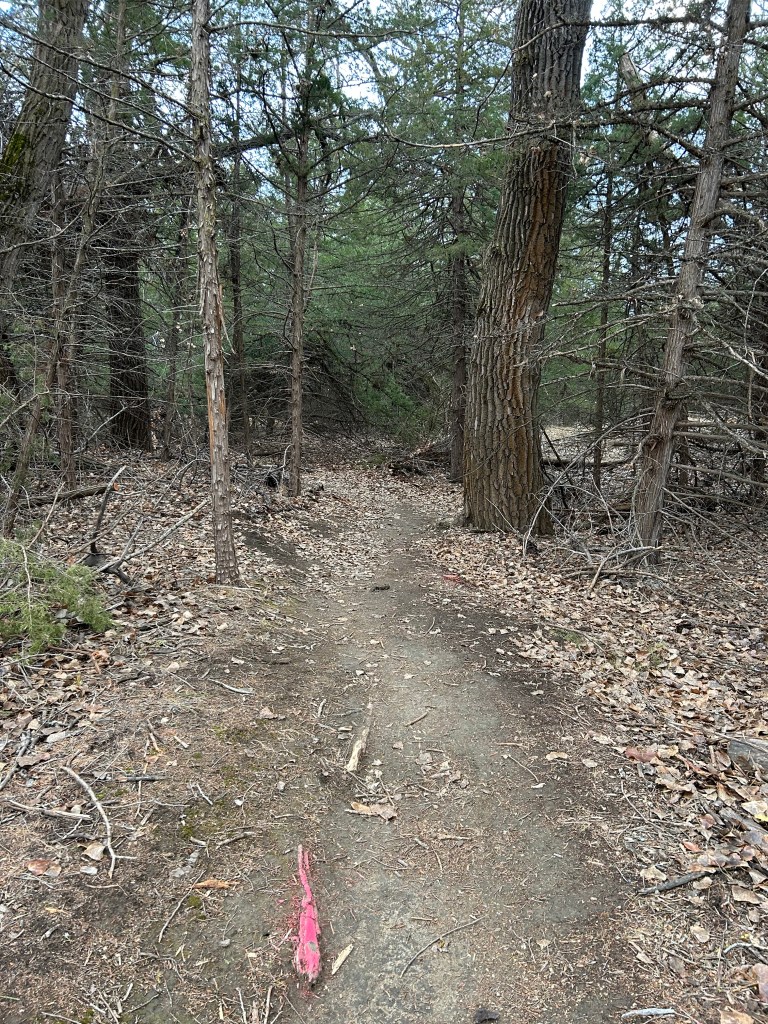
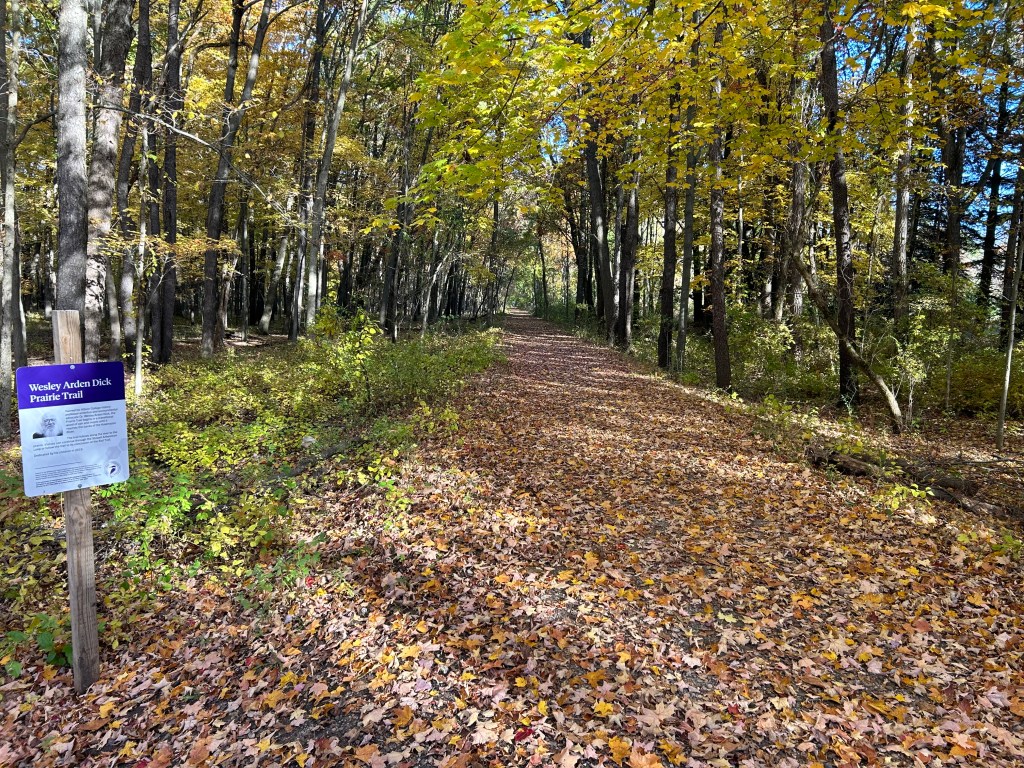
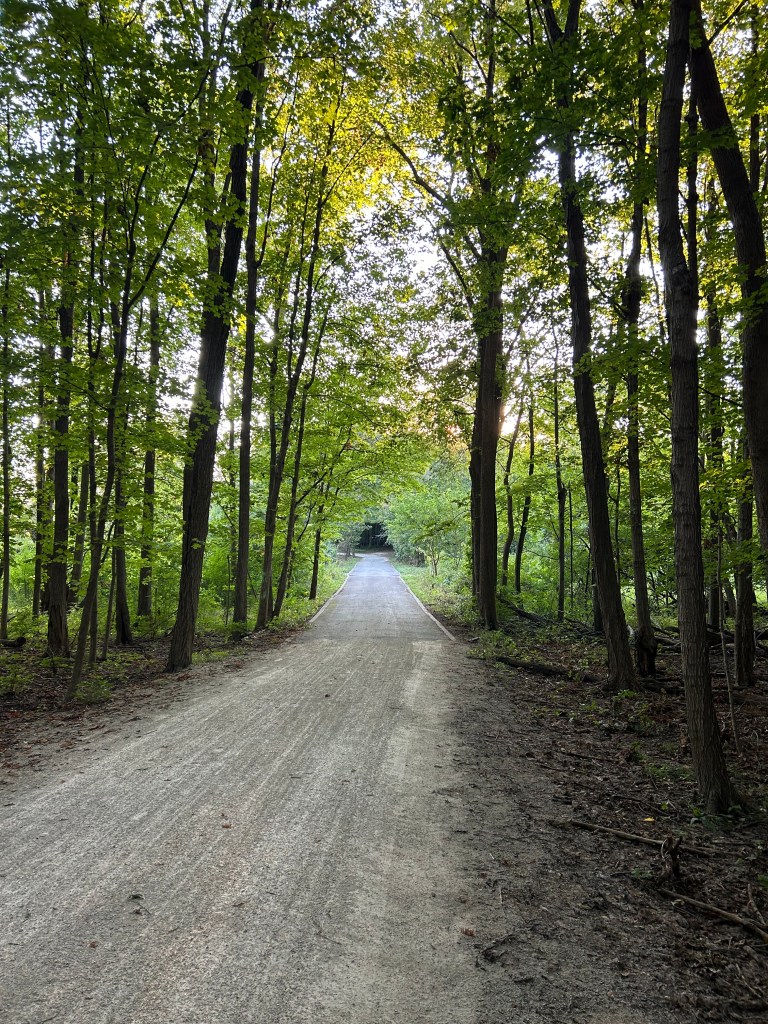
A lot of no swimming/no fishing/no boating signs along this run, which featured a few ponds once the trail broke away from the river and into the forest. The forest was nice — decent-sized trees, a wide trail, few bugs, noticeable coolness. I did see a couple guys with fishing poles, though, so there must be some place to catch something edible.

I don’t mean to pick on local governments. I appreciate the effort to create and maintain these trail systems, especially in the urban areas. I do not want to slog through sidewalk and track runs every day. We were not meant to live on cement.

Next time through Chicago, I’ll stay on the East Side and plan my run for the Hegewisch Swamp Trail. See what all the hype is about.
Schofield, WI

Mountain Bay State Trail

Run Time: 63:55 + 2-minute kick

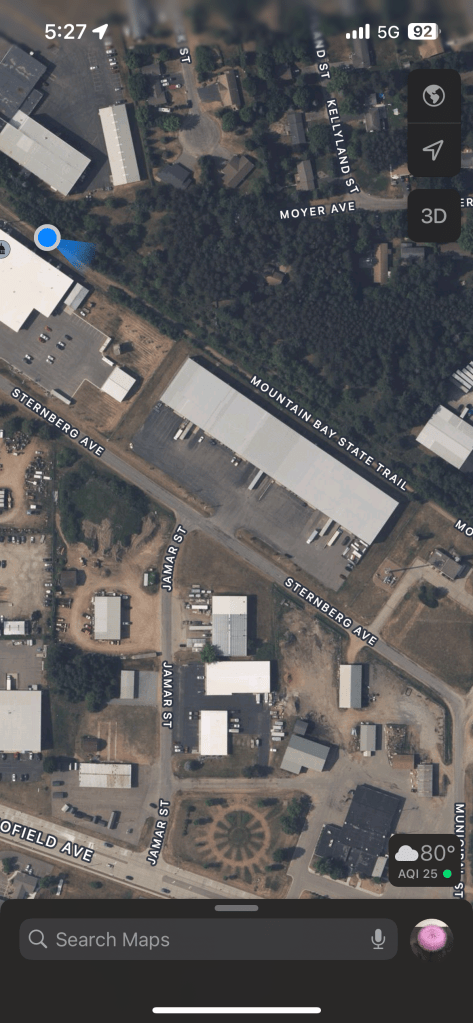
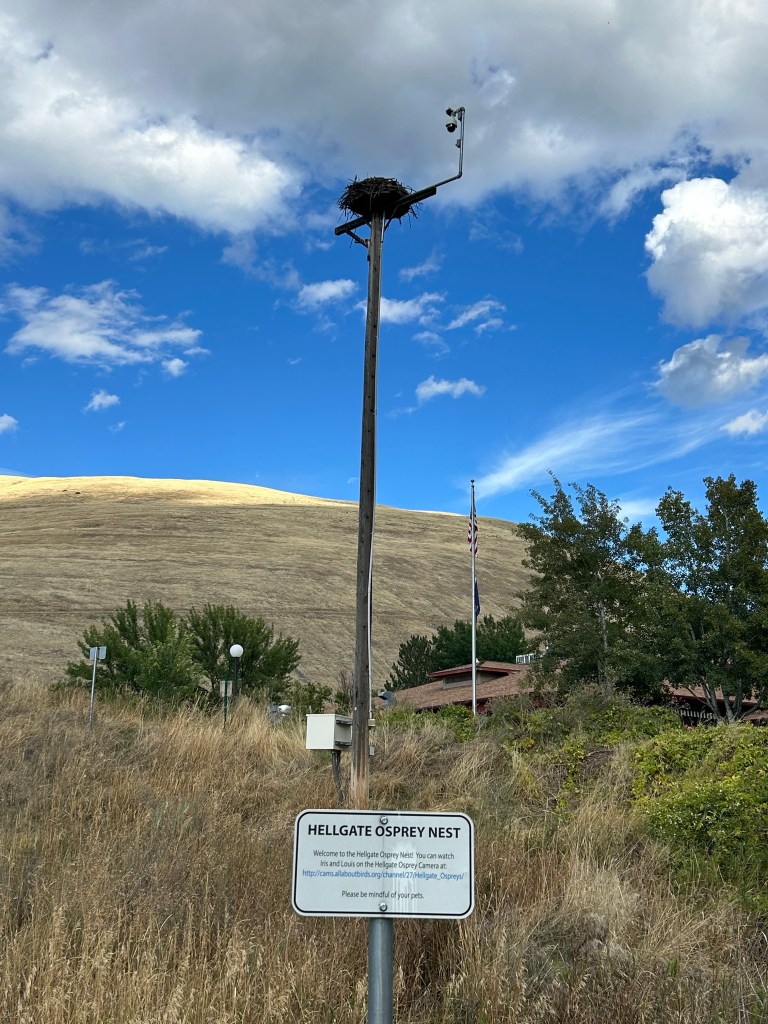
I am not sure where Mountain Bay is, in relation to Schofield. We seemed to be rather far inland for a bay to be in close proximity. Like much of the Mideast, there are bodies of water all around, and groundwater lurking a cm or so below the surface, but a bay implies an ocean, sea, or large body of water. The nearest Great Lake was a hundred miles away. Not to mention that no mountains are to be found for many times that distance. So, one would have to conclude that the trail is either very long or misnamed.

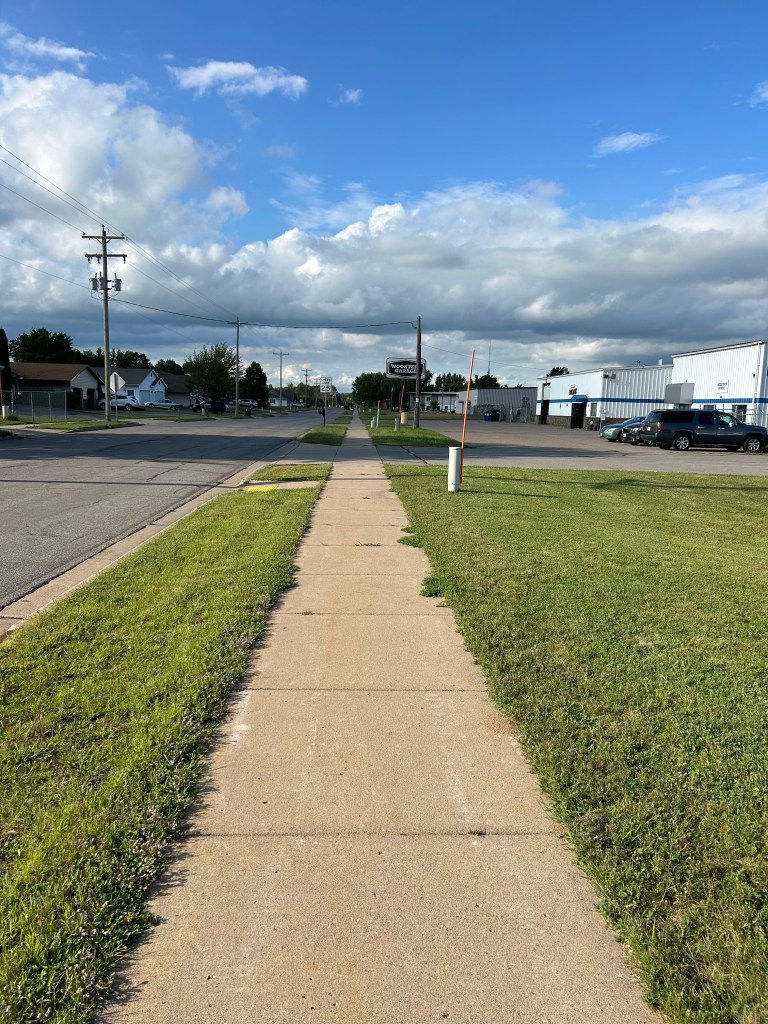
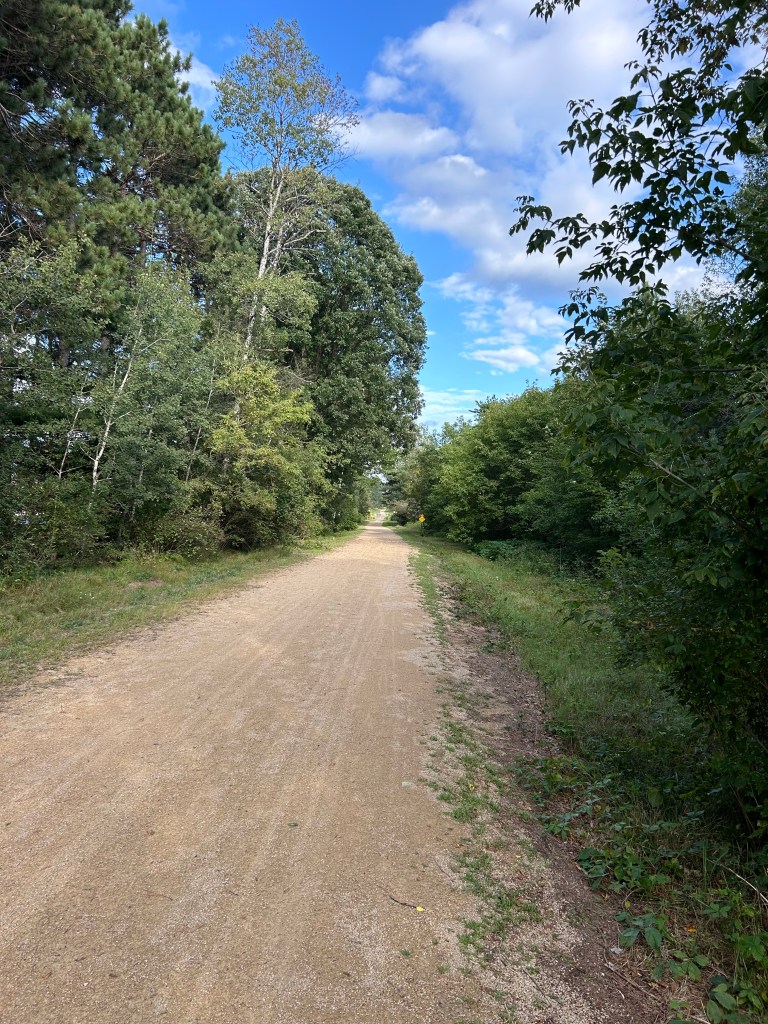
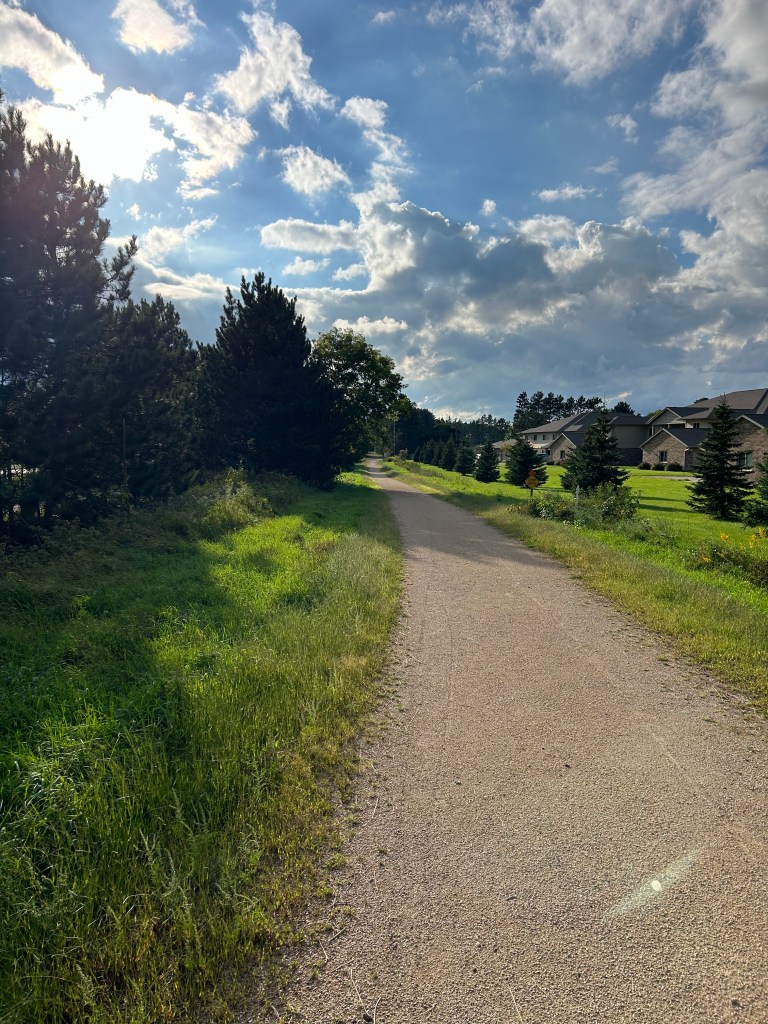
It was a delightful trail, nonetheless. Tree-lined and away from traffic, it started out paved and eventually gave way to dirt and fine gravel. The only downsides were its flatness and straightness. Of course, flatness and straightness are not downsides in relation to the goal of getting from Point A to Point B, so the trail was utilitarian in its simplicity.

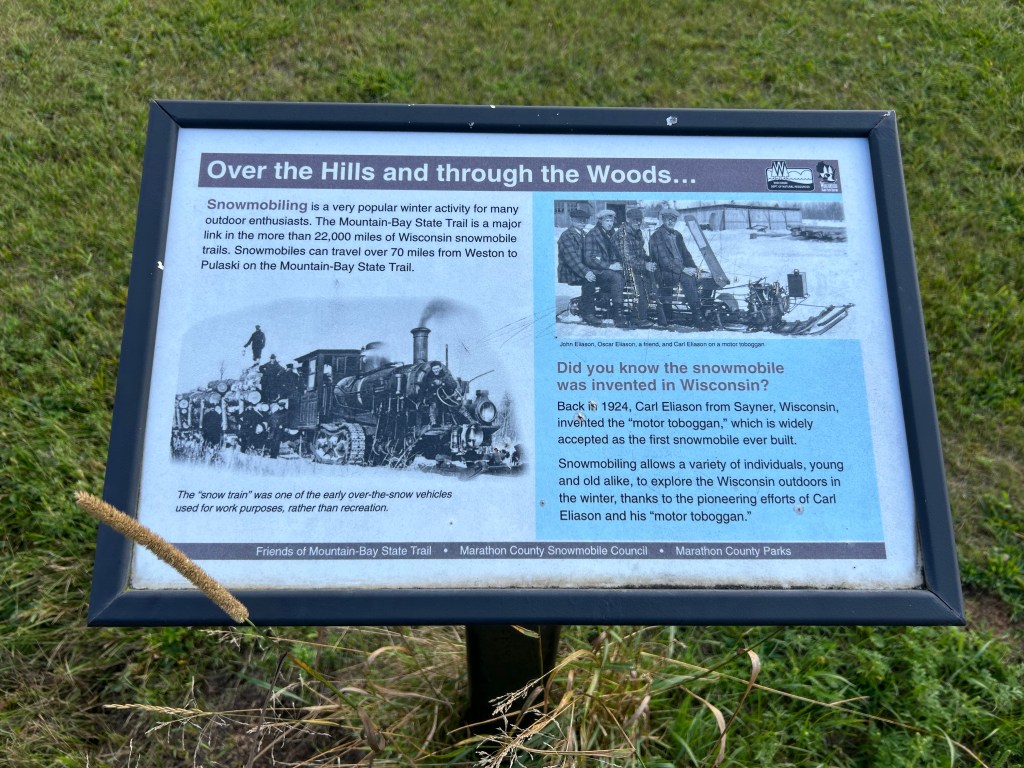
Also, flat and straight work well for snowmobiling, one might assume. It was not surprising when I encountered a State Park sign asking me if I knew the snowmobile was invented in Wisconsin. I have run on Wisconsin snowmobile trails on many occasions. They are extremely well-maintained. Plus, they are demonstrably multi-use.

I have never ridden on a snowmobile, nor do I plan to. I had a motorcycle when I was 11, and I enjoyed it for a few years, but I have moved out of the motorsports phase of my life. It was short. I survived it, thankfully. I dumped my motorcycle on a dirt airstrip that had been decommissioned and plowed up to plant trees, launching me several motorcycle lengths through the late teenage summer air. The dirt was soft, so when I face-planted, it merely filled my mouth with dirt rather than cause physical injury. My friends rode over to me and thought all of my teeth had been knocked out — that was how much dirt had gotten in. My advice? Scream with your mouth closed while catapulting off a motorcycle.
That incident was not what stopped me from riding motorcycles. The incident that stopped me was me trying to do minor maintenance on my motorcycle (translation: taking things apart to see how they worked). I messed up the clutch and made it unrideable. I didn’t want to tell anyone, so it sat in the garage for a few years till my dad got rid of it somehow. I had purchased a 1949 Willys Jeep by that time, so I was content with four wheels of adventure.

The Willys didn’t last long, either. It had no top, which made its use problematic. It also would not go faster than 60 mph. There were other limitations, such as a stick for a fuel gauge, limited seating, and no mirrors. I loved it, though, and I wish now I had kept it rather than trading it for a ’71 LeMans, which I crashed into a tree just after graduating high school.

There was insufficient snow where I grew up in Oregon to warrant a snowmobile. It was a great place for motorcycles and Willys Jeeps, however. There were fields where dirt bike riders congregated and created their own elaborate tracks and trail systems. It just happened organically, if you can use that term to describe something mechanical. At some point, lawyers and property developers put an end to that era. The land where Intel now sits in Hillsboro, Oregon, was once an enormous four-wheeling site.

Oh, well. Progress, right?

Richmond, IN

Whitewater Gorge Trail

Run Time: 63:00ish

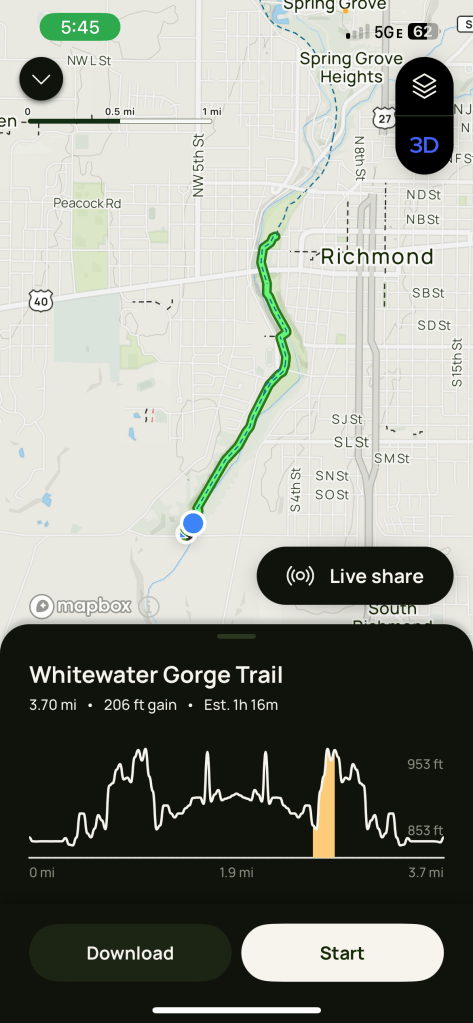
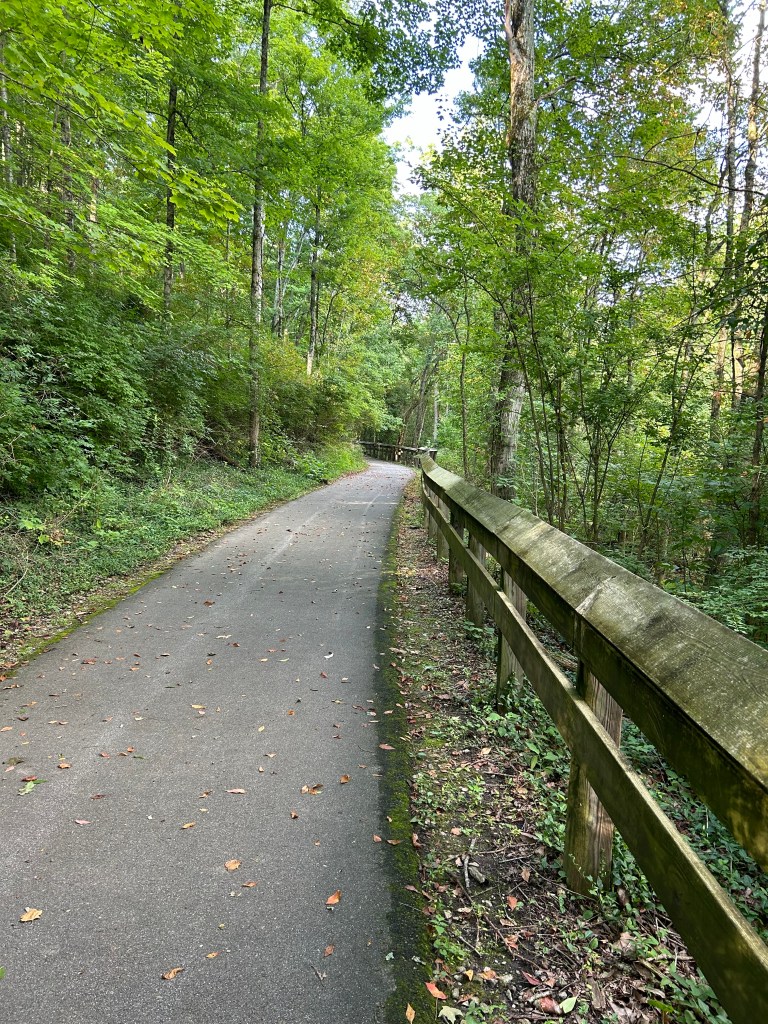
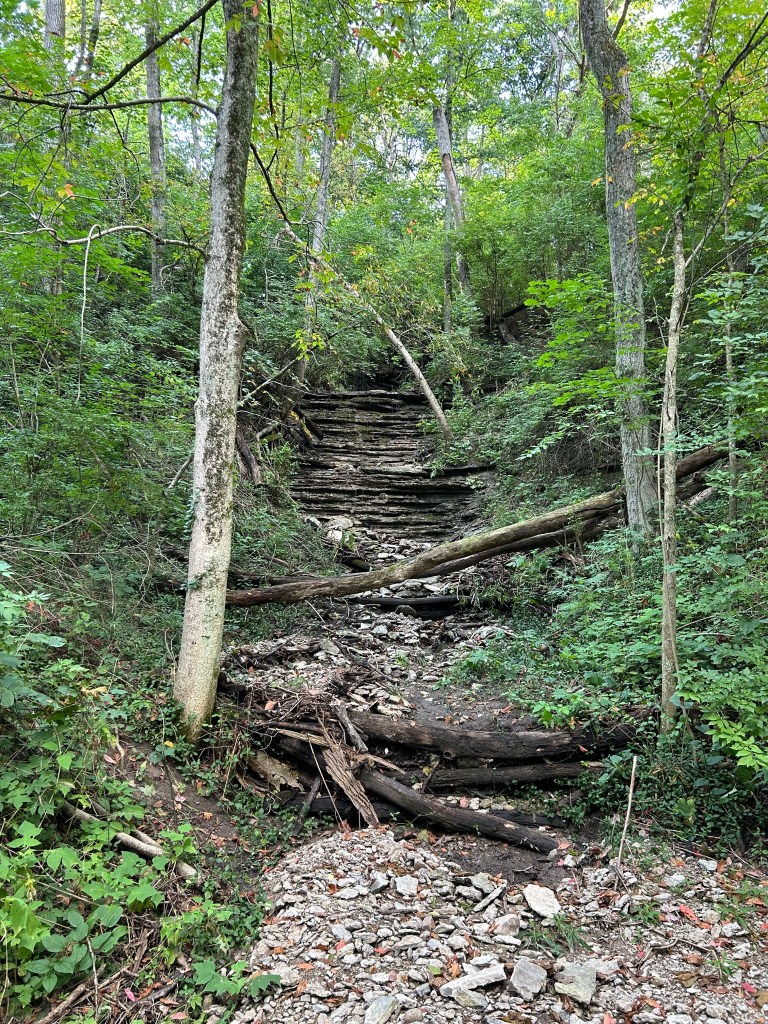
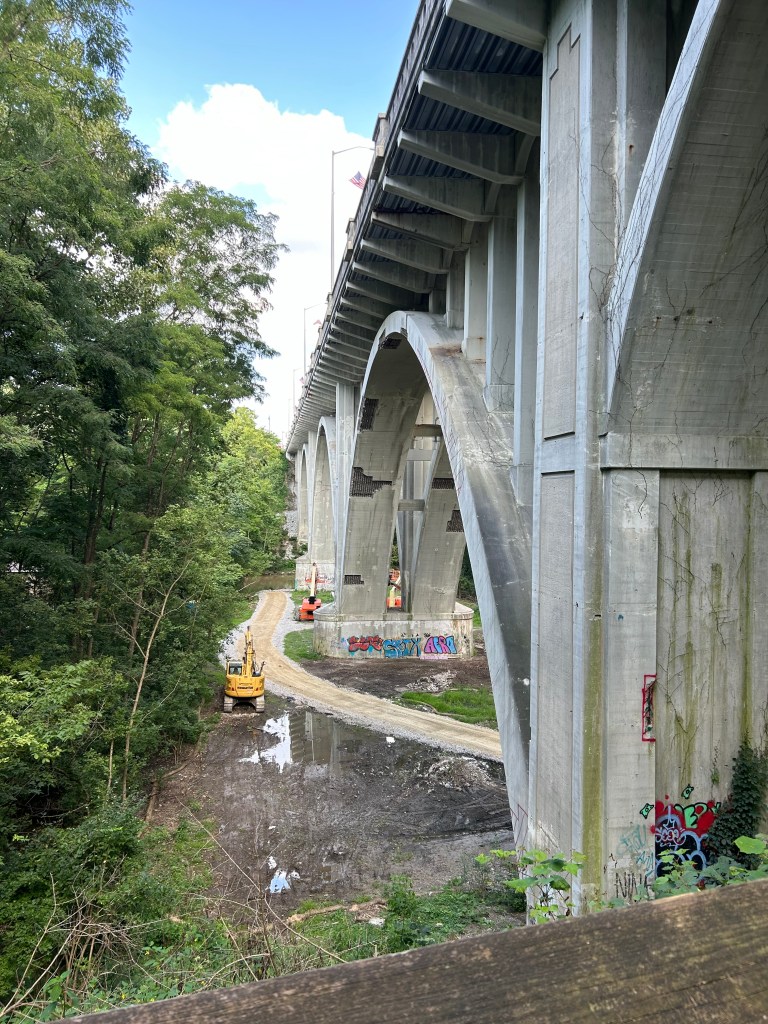
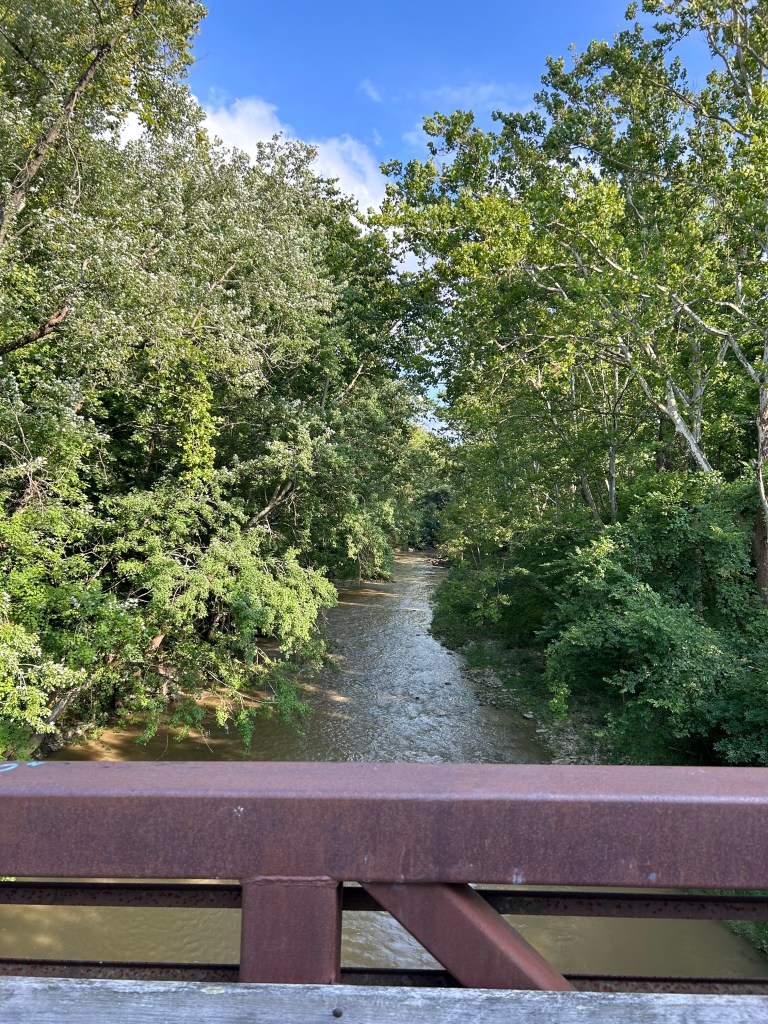
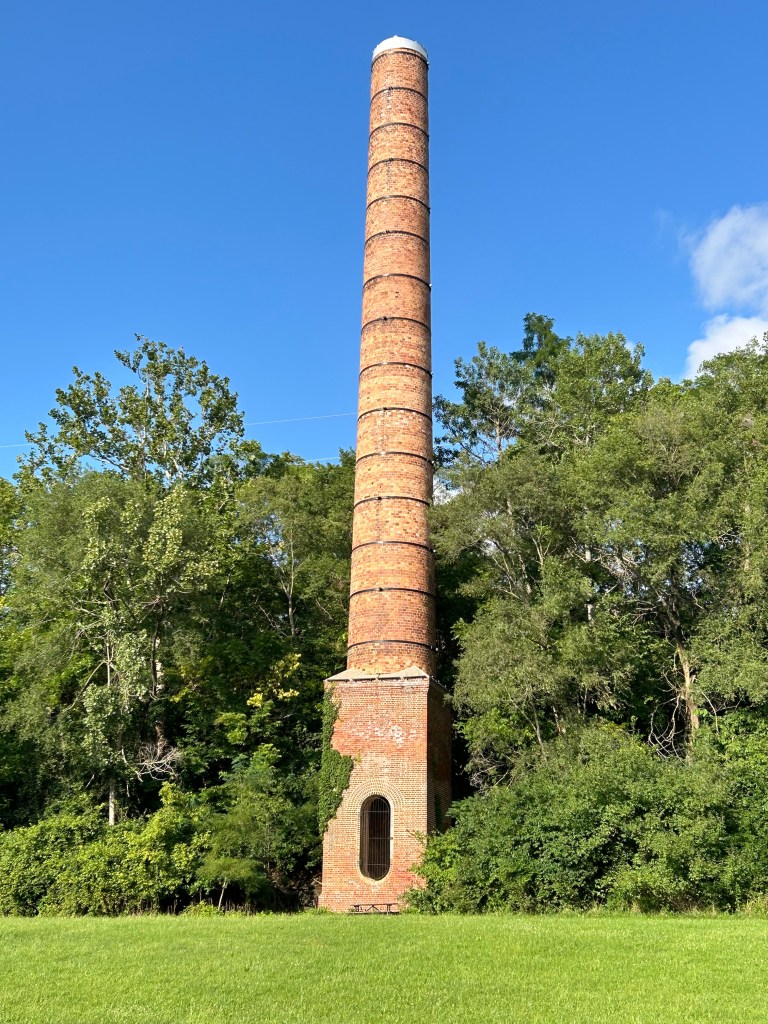
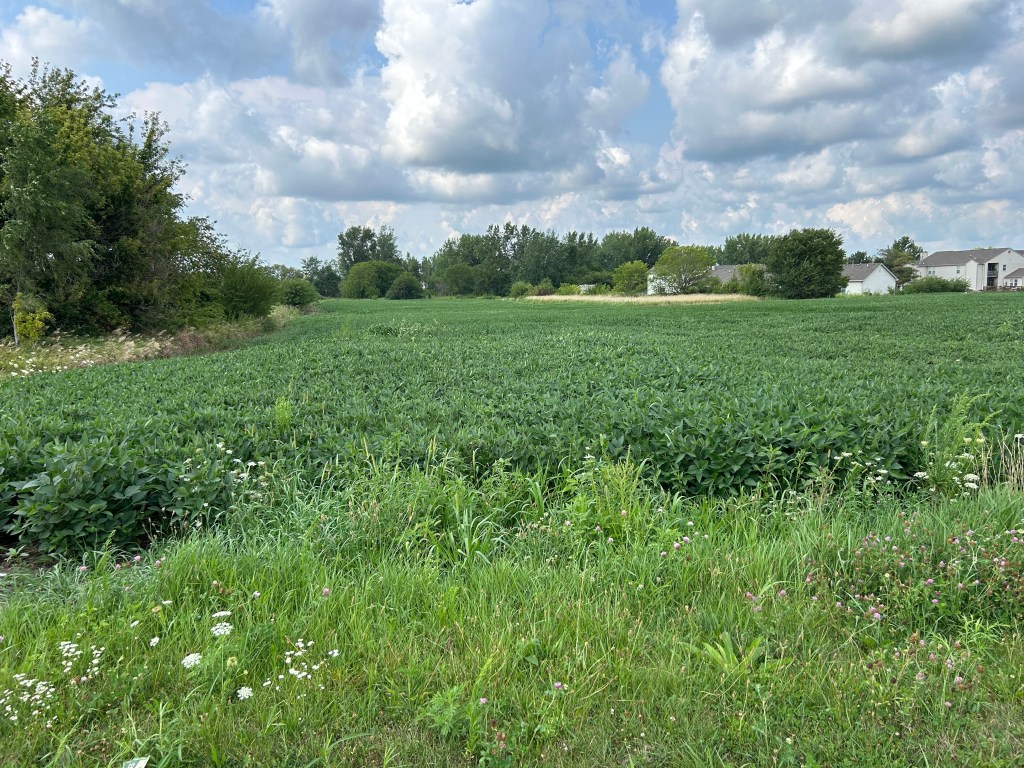
I was not expecting much out of Richmond, IN, but I was pleasantly surprised by this scenic trail that follows the Whitewater River through the city. Heavily wooded and therefore heavily shaded, with some elevation variation, it was a refreshing way to cap a day of driving in hot and humid Indiana.

What I saw of the river was much browner than white, though there are likely rapids somewhere up or downstream. The river was high — there had been some serious thunderstorms in the Mideast in the days previous. There was evidence of tree falls on the trail that had been cleaned up, and heavy drainage down the side gullies.

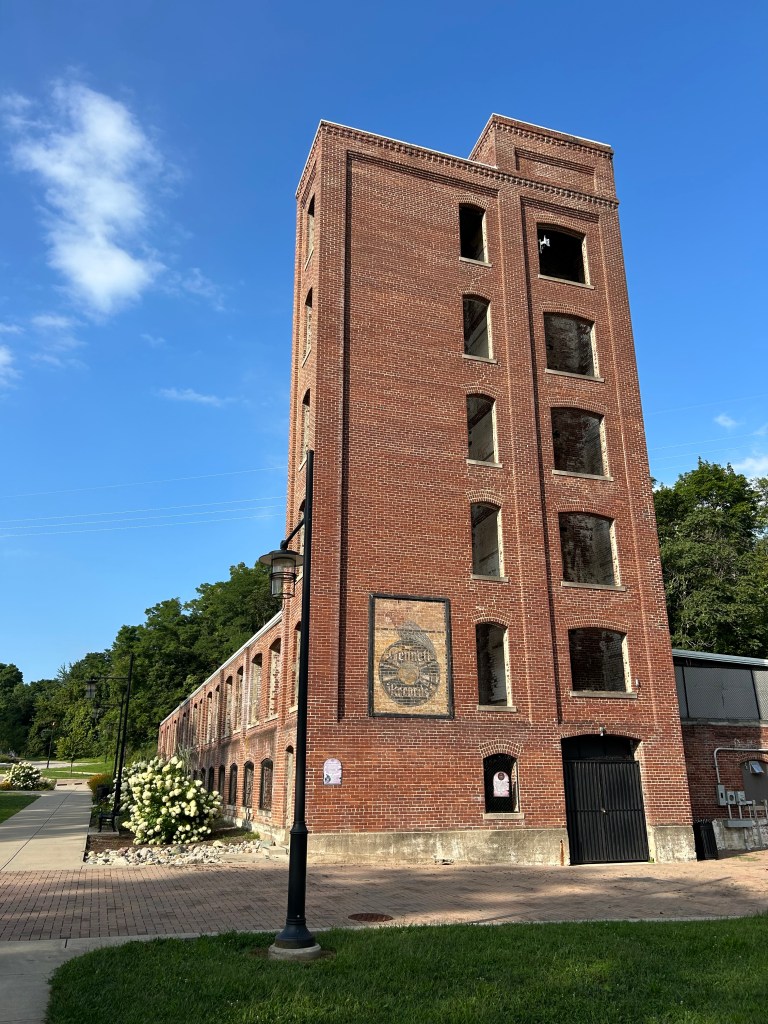
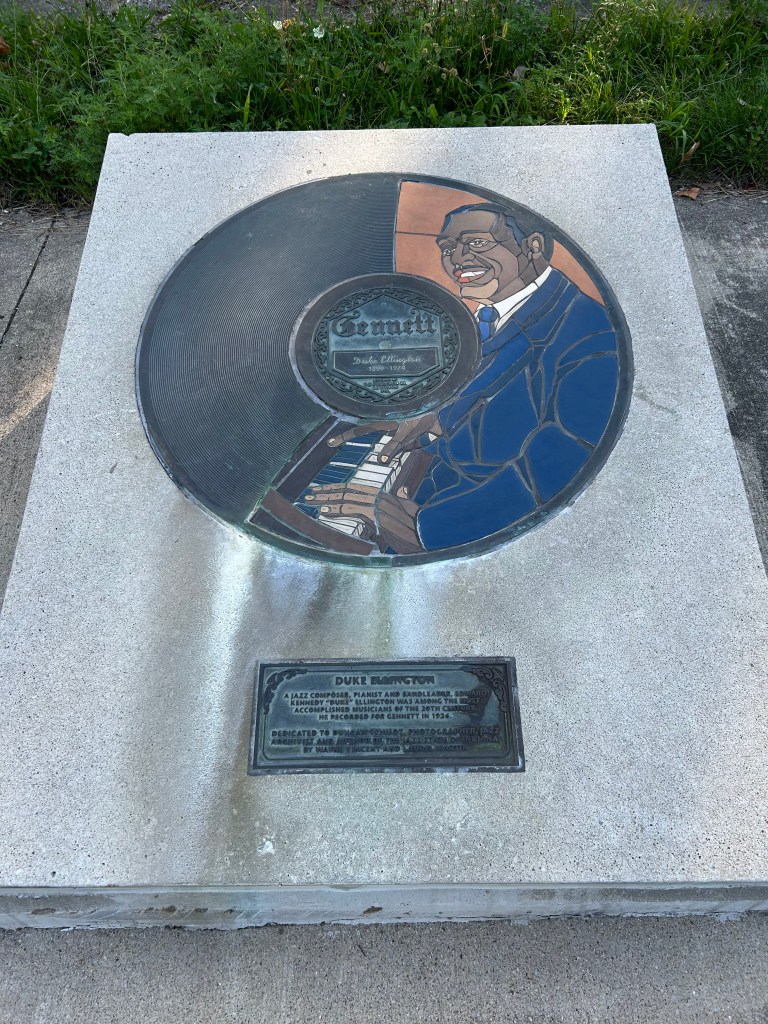
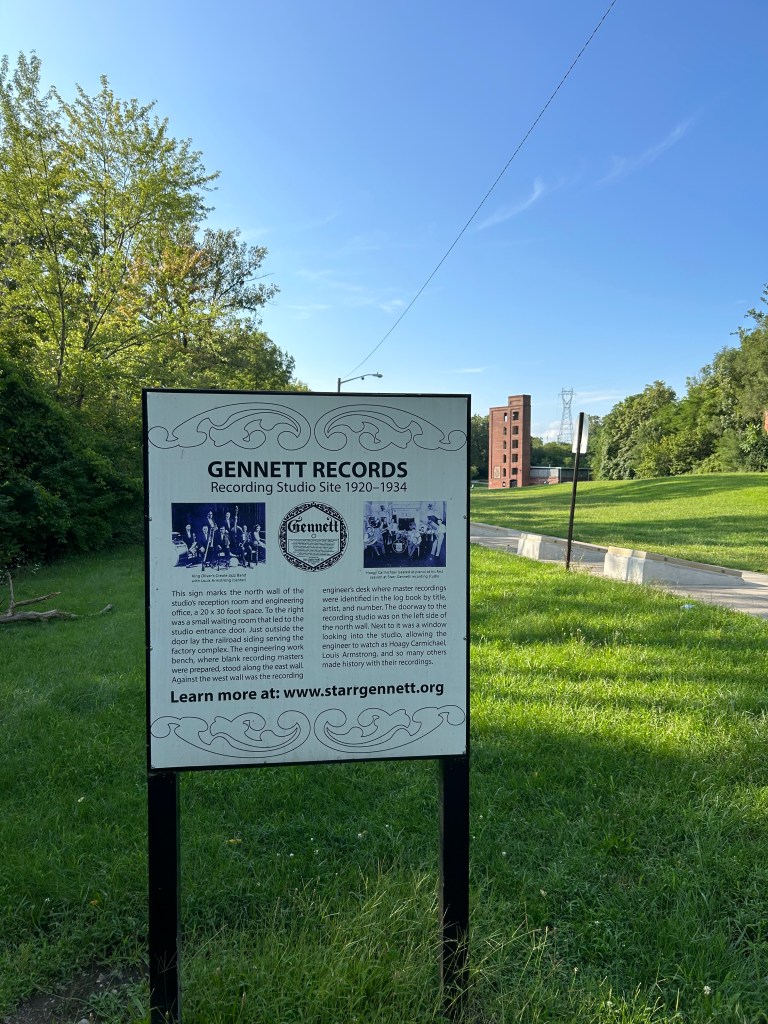
What was unexpected was what I found at the transition from trail to sidewalk — the site of Gennett Records, a studio that operated from 1920-1934 in the Starr Piano building. A line of memorial sculptures ran along the path, featuring Duke Ellington, Hoagy Carmichael, Jellyroll Morton, Big Bill Broonzy, Fats Waller, Lawrence Welk, Gene Autry, Charley Patton, Coleman Hawkins, Blind Lemon Jefferson, and many more.

The building was empty, but a sign indicated that it now housed the local Winter Farmers’ Market. There was nothing but trees and meadows around it, which makes you wonder, what was it like in 1920? Were there business all along the river, like you would see in so many American cities in the 1800s and early 1900s? Was this old brick structure the only one left? Or had it always been set in an idyllic meadow, away from commerce and residences?
Plus, they were making pianos down here. We have a piano in our Oregon house, covered by a blanket in the garage. It was too much of a pain to move. They were making pianos by the Whitewater River in the 1890s, moving them around in horse-drawn wagons, likely. Maybe the railroad was nearby.

This is the hidden culture that warms your heart. You can drive all around American cities, through squalor and waste, and you stumble, out-of-breath and sweaty, upon a gem like this, and it warms your heart. People were making music a hundred years ago in this magnificent brick building on the banks of a river in Eastern Indiana. Culture is possible in this country.

I would not hesitate to guess that Richmond’s cultural peak was in the 1920s, and it might never get there again. But at least they preserved something to remember it, and they added the memorials to enrich the memory. I am so glad that they did. Thank god for the music industry, even the digital one we have today.

Also, the defacement and defilement was minimal, and the grounds were well-kept, which also heartens one’s spirit, that those who visit or hike through or volunteer to care for the site give a serious shit about it. I think the site has a purity — you can almost hear piano keys in the breeze.

Also, the site has not been gentrified. It has not become a brewpub, or a hair salon, or a Hanna Andersson. Okay, so the farmers come in on the weekends to sell their corn and fruits and wares, but even then only in the winter. Development is absent, which almost makes this hallowed ground. How is this possible? It’s only blocks away from brewpubs, salons, and shops.

I ran past the site, then turned around and came back through, and when I did, there was a group of four teenagers, one with a bike. Guess what they were doing? Reading the memorials. I was reading about Charley Patton when I was 17, in Rolling Stone and in library books. That was 43 years ago. If I had come across this place at age 17, would I have solemnly paid tribute? Or left some broken beer bottles. One thing is for sure — I would have found a way to get into that building.

I walked farther than normal at the start of the run, and I did a poor job judging where my turnaround point was, so when I got back to car, I still had time to run. However, I had passed the same family three times on the trail already, and did not feel like disturbing them again, so I just stopped short of my full time. It was fine. This run was not just for my physical health.

Serendipity — that’s what you might call it. Probably not the first time serendipity made an appearance at the site of Gennett Records.

Bourbonnais, IL

Neighborhood Streets

Run Time: 63:47 + 2-minute kick

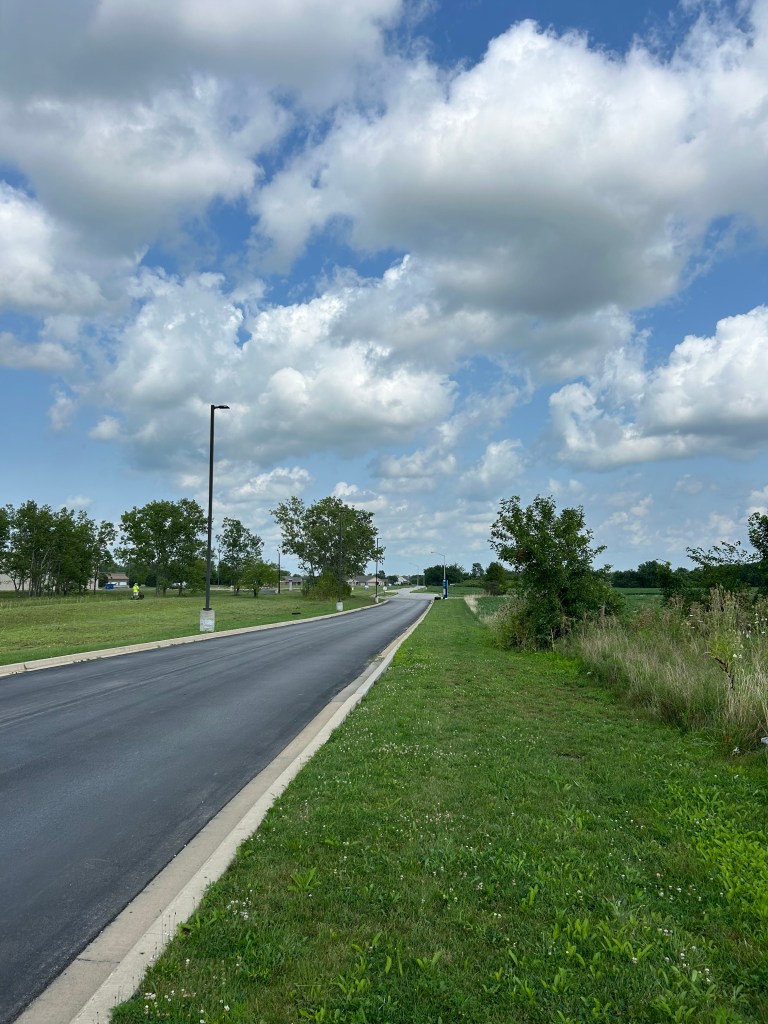
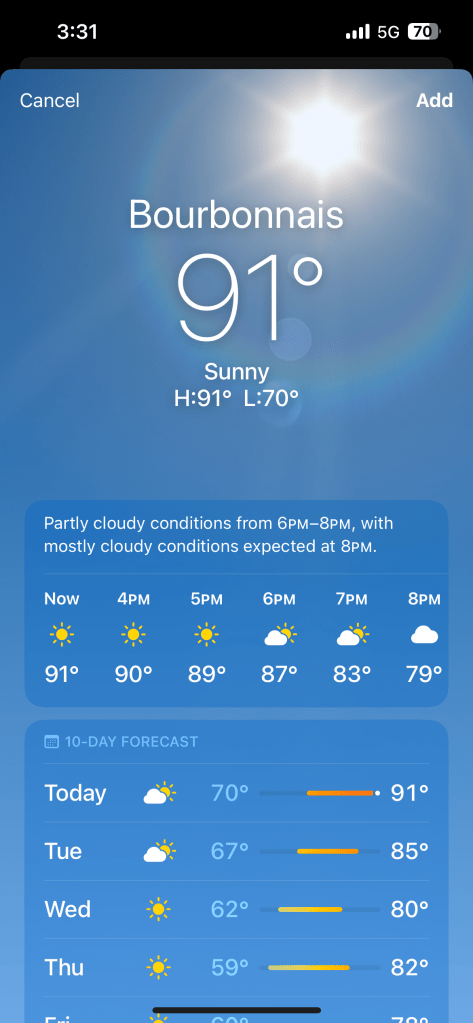
Brutal heat, high humidity, no shade, no fun. No trail, no track. Just cement sidewalks. Even the five-minute walks between ten-minute runs provided little respite. If you run only when conditions are ideal, I suppose that makes you an idealist. Better to strive for anyism, when it comes to running, at least.

As I drove through one of the Central U.S. industrial centers this week, I passed a Fog Area sign. The smokestacks on either side of the railroad overpass, and the strange acrid smell made me wonder if this was standard H2O fog they were warning of. I can imagine some municipal decision-maker in 1973 making an executive determination that if it looks like fog, you can call it fog.

Even more concerning in this interior land of corn is the agri-smell you sometimes encounter, and the uncertainty when you don’t. I remember the odor of powdered Malathion when I worked at a granary at age 15. It’s that same chemical smell of fertilizer and weedkiller. Your brain knows it’s not right. Our bodies are still calibrated for hunting and gathering. They know.

I also encountered a helicopter spraying fields — first time I’ve seen that. I suppose we need to keep the chips and ethanol coming. The societal disruption if we ceased chemical activities might be immediately worse. The Earth, after all, will be fine. It does not care about the nature of life. Life, as Ian Malcolm reminds us, finds a way.

This crop smelled like mint. Probably was mint.

There is hypocrisy, however, in criticizing industry and agribusiness when you work in the fossil fuel industry, driving around in a non-hybrid, or worse, flying to a regional center for a week of travel. Not sure if I will ever escape that trap that I freely walked into.

Asbury, IA

Chavenelle Trail

Run Time: 63:43 + 2-minute kick

I never really made it to the Pond Loop, and after the insect debacle the day before, I was a little wary of marsh terrain. I was looking at trails near the Mississippi River, but then I noticed there was a “trail” that ran right past my hotel. Really, it was just a sidewalk, but it had a name, and there were lane lines and arrows painted on the cement, so convenience won me over.

I made it through one leg of the Loop at the turnaround point. I was just north of US 20, my old friend. I thought I might actually run alongside of US 20, but then the trail diverted west one signal light short. I’ll bet no one has ever run the full length of US 20. You’d need an Angel on each shoulder and your head on a swivel. US 20 is blue-collar rust-belt working-class low-fi analog.

Dropped into Eastern Iowa for a day and a half at the end of the trip. The corn was in full bloom. One wonders what the chemical composition of Iowa soil is at this point. It sure looks dark and rich, but even the color might be artificial. Apple Maps diverted me onto gravel twice, something that usually happens in Iowa. It always reminds me of Flannery O’Connor’s “A Good Man Is Hard to Find.” It’s a short story — you’ll have to read it to understand the reference.

I do not recommend sidewalk running, although it likely has a beneficial antifragility component. It is the random trash and debris that is mentally oppressive. How the hell will we ever reduce the amount of sidewalk and ditch trash when we continually increase the amount of potential trash? Everything from ground coffee to toys to fast food is individually plasticized. If Wendy’s served their food in the loose Amazon packing paper that their employees saved from their home deliveries, I would be fine with that. If any packaging negatively impacts the environment, let’s just illegalize it and let the market find something carbon-neutral.

It takes supreme, perpetual, and aggressively diligent self-discipline to control one’s own carbon footprint. The morality of making this a key point of one’s personal agenda is justifiably attractive, but what appeals to me is the harmony of leaving the lightest of traces. How do we commodify that harmony, so that the market carries the wave?

Twenty years is likely about what I have left, so the grim reality is that my individual actions, positive or negative, are likely meaningless in the great scope of human activity. Meaning would seem to be very important, given how much time and effort we spend inventing it. What if meaning is not important at all? What if it is an illusion? Can we find a different motivation?

Cast off meaning. Choose harmony.

Oconto, WI

Oconto River State Trail

Run Time: 63:42 + 2-minute kick

Last sales stop of the day was up in Marinette, just south of the Wisconsin/Michigan UP border, and my hotel was down in the Neenah area. All Trails showed this trail right next to I-41. Looked promising. And it ran perpendicular to the Interstate, so no traffic fumes.

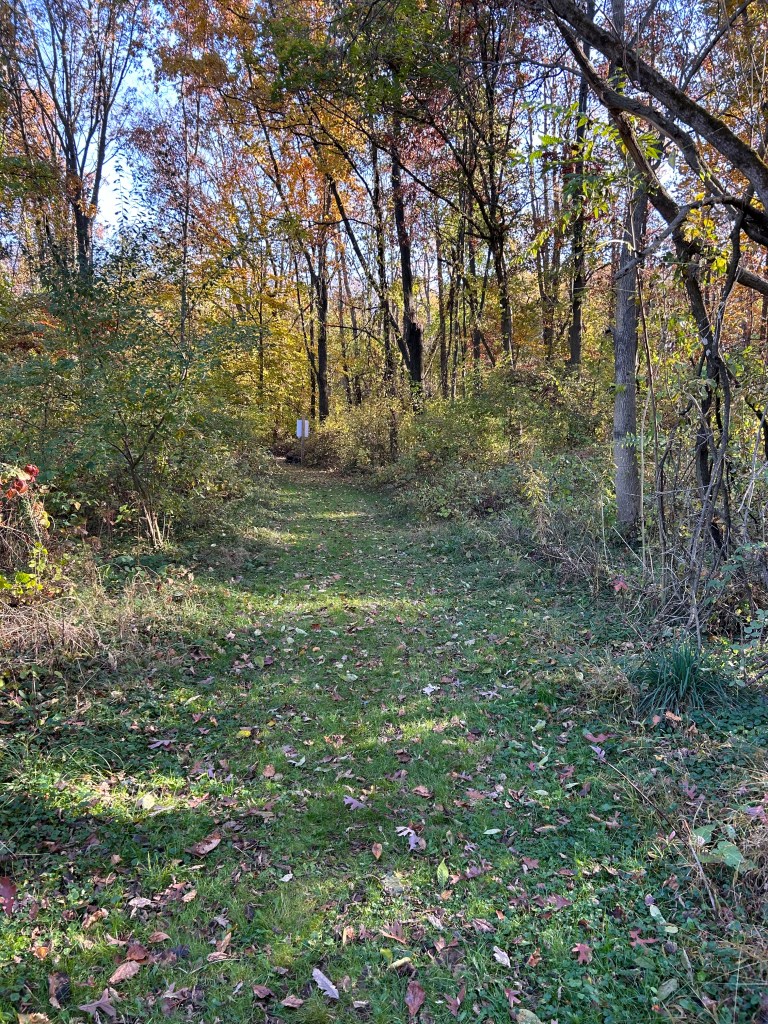
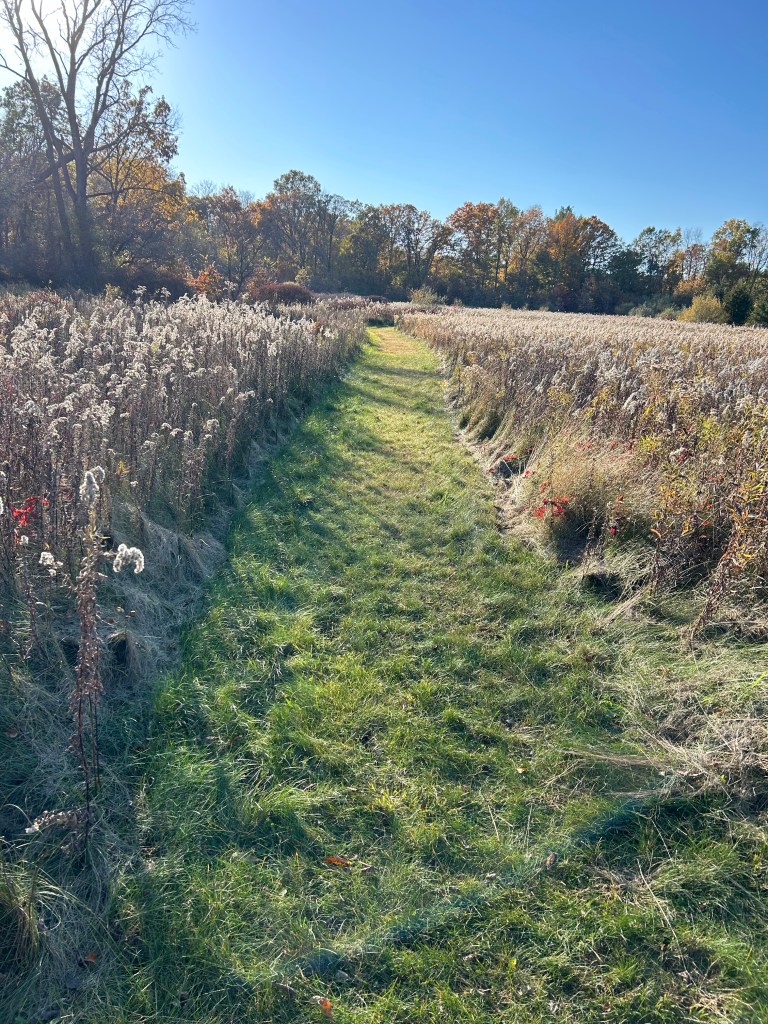
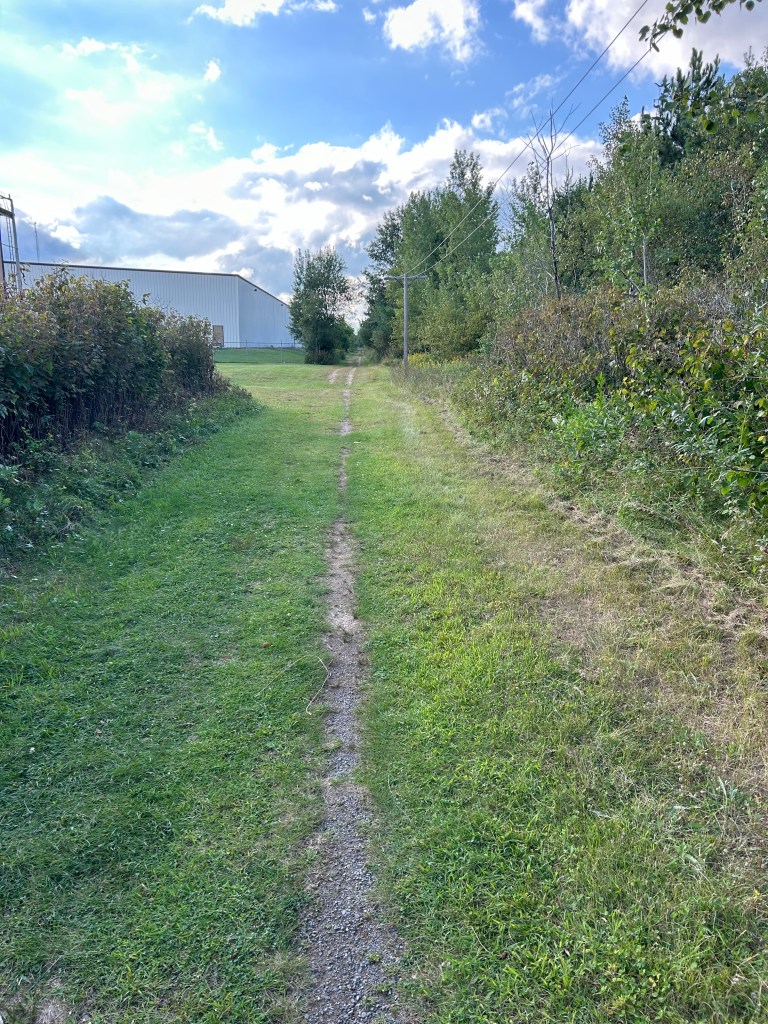
And it started out great. A gravel path that started on one side of the freeway, crossed under, then followed the other side for a half-mile before turning west. Then it diverted away from the county road and headed off through the forest, a mown grass path with nothing but trees on both sides and mostly overhead.

Alas, the tranquility was short-lived. Wisconsin is in semi-flood stage. The moisture contributes to the circle of insect life. I was just far enough into the out-and-back run when they circumlocated me and sent out the call.

It was not mosquitos — too sunny and daylight. It was flies. They were quick to bite. No need to inject some anesthetic to lull us into a false sense of security. They just take a chunk and dare you to kill them. Even worse, I had taken off my shirt to get some sunlight into pale places, so there were sensitive regions exposed.

This trail was well-manicured. It probably doubles as a snowmobile trail in winter. There is a lot of grass in Wisconsin, and I don’t mean the psychedelic kind. Wisconsin is America’s lawn. There are strips of lush lawn grass running through the middle of cornfields.

There are lawnmower manufacturers in Wisconsin as well, at least one of them is on my radar for the equipment trailer they sell. We have tie downs and safety equipment they are looking at adding as accessories. The lawn, as you would know if you’ve read Rachel Carson, is a scourge, mostly because we are too obsessed with its unnatural comfort. It welcomes chemical pollution, and it ain’t what the bees like, unless you let the clover grow in it.

The more bugs I encounter in the Central and Eastern U.S., the more I appreciate the desert climate of Eastern Oregon and Washington, Idaho, Utah, Montana, and Wyoming. Give me the hot, dry wind. Wind is a great equalizer. You have to be a hell of a flyer to navigate the winds of Wyoming. Yes, the red ants are frightening, but only the queen flies, and she is not interested in harassing lone runners.

Could be why all of these trails I find are empty, unless they are urban. My question is: what was the guy on the riding lawnmower wearing as he cut this trail? A beekeeper’s outfit?

I survived, with 8-10 bug bites. Could have been worse. Could have been like when I got into the poison ivy last summer clearing weeds in my own backyard. Now THAT is an invasive species.

Delafield, WI

Ice Age Trail

Run Time: 63:41 + 2-minute kick

I had some difficulty finding a hotel room for the first night of this trip. Most hotels were not available, and those that were had room rates of $800+. What the hell could be going on in Milwaukee in early July? It’s kind of a cool town, but really?

So, yeah, Republican National Convention. Just days after The N-Ear Miss. I stayed in Johnson Creek, about 30 miles west of the city, right off I-94. On my way I found this nice trail that followed along the highway, far enough away that the exhaust fumes were likely below toxic levels.

Hot and muggy, some inclines, light breeze — felt pretty good after half a day in Chicagoland traffic. The trail took me into the boutique downtown area, then followed a creek. I think it is part of a longer regional trail. I saw signs further north for the Ice Age Trail later in the week.

I do not have much to say about political conventions at this point. I just feel a mixture of confusion, futility, and disappointment. Who the hell knows what the next four months will bring, to say nothing of the next four years? I kind of want the system to blow up also, but I have children and grandchildren that I want to be safe.

So am I just focusing on what is important to me, or am I hiding from reality? Do I have to be involved and in-the-know to avoid disapproval? Can I not just spend the last quarter of my life thinking and doing what interests me?

I recently watched “Turn Every Page,” a documentary about Robert Caro and Robert Gottlieb working together to publish Caro’s biographies of Robert Moses and Lyndon Johnson. First of all, Caro writes about the true nature of power, so that we can better understand it. He is a treasure. Second of all, it made me nostalgic for the pre-internet era, when we didn’t know what all corruption and graft was going on.

It gave me some ideas about a book I am trying to write, some alternate history threads to follow. What if Nixon had not resigned? What if he had refused to leave office, even after his term ended?

I am not pro-Nixon. I am just interested to understand why these types of scenarios never occurred to us. Almost anything can happen, and given enough time, likely will. Isn’t there an Everything Everywhere All At Once universe where Nixon reigned until his death?

I had to rewrite the last few paragraphs from memory when this damn blog site froze and would not let me save or publish. I hope they are as illuminating and intelligent as the first version. Maybe it was saved and published in Alternate Nick’s universe. If you’re there, let me know.

Waterford, IN

Creek Ridge County Park

Run Time: 63:33 + 2-minute kick

AllTrails for the win again. I drove our youngest to Chicago for a flight back to Oregon, listening to his music all the way — some fantastic jazz that made the drive very enjoyable. I then visited two of our big customers there. My hotel was east of Michigan City, in a beautiful little town called La Porte, and I found this trail on the way.

It was a short loop trail, with little elevation change, but it was all shaded, which was a plus on this day. More than half of it was non-paved, which is a big plus. Some families were using the playground in the center, some dog owners were using the dog run, and at least one “foursome” was using the disc golf course. There were a few bugs, but they only bothered when I was walking. More incentive to run.

At the turn of the year, my wife invited everyone in the family to subscribe to a random album generator at 1000albumsgenerator.com. I have been faithfully listening to any daily pick of which I was unfamiliar, and a few of which I was familiar, and rating them. I have also been adding some songs to my playlist.

The best days are the days when it recommends a musical artist of which I have no knowledge. This day it recommended Sigur Ros’ album Agaetis Byrjun. Unfortunately, I am unable to get the accent marks on the appropriate letters, and to combine the a and e into one combo, as one should when mentioning Sigur Ros and Agaetis Byrjun. Sigur Ros is an Icelandic band, and this album is phenomenal. I normally eschew expanded tracks versions of albums, but I listened to all 34 songs of the 20th Anniversary Deluxe Edition, including 12 live songs and several demos: 4 hours and 23 minutes total. Some songs I listened to twice. I saved 16 songs to my running playlist.

This music is not going to be for everyone. It is very slow, with long songs, and repeated sequences. The singing is in the high-note range, something I also do not normally find pleasing with male singers, and on one album (not this one) they apparently sing in a made-up language, not that it would matter, because I do not understand the language on Agaetis Byrjun. It has some creative instrumentation, which I really appreciate. A great find.

Another great family recommendation: my daughter invited all of us to subscribe to the Important, Not Important newsletter last year, and it has become my primarily news source. The June 28 edition included a guest essay by Dekila Chungyalpa, the Founder and Director of the Loka Initiative. She wrote about deep resilience in the time of crisis, specifically with respect to environment, climate, and as an antidote to the Anthropocene mindset.

The essay included a link to an online course: “Psychology of Deep Resilience: Addressing Ecoanxiety and Climate Distress for Individual, Social and Ecological Well-Being.” In our family Signal chat, my daughter indicated her interest in the course. I took a look as well, and I have been thinking about it ever since. The tab is still open on my Chromebook, and unlike some of you, I do not keep many tabs open.

I have worked in the tow truck industry for 45 years. I contribute to the fossil fuel industry every workday. It is time for that to change. I do not know how I will pivot, but I think I can, and maybe this course will help. I have long thought about issues related to indigenous cultures, even embarking on a couple of literary false starts with the theme of reversing our collective departure from “First Nation” ways.

I often wish I were back in school, though I like the freedom of reading what I want and writing what I want, without assignment. This course just strikes me as something different, something interesting, something I have not seen before. Or maybe something that is sitting in my ancient subconscious, asking to be released. Who knows where or how it might alter my course?

Plus, if I do the course, that will give my daughter even more incentive to do it as well.

Is it time to retire my Altras? Hell, no! I won’t let them go till I wear right through my sock and my epidermis.

Red Deer, AB

Red Deer South Bank Trail

Run Time: 63:29 + 2-minute kick

All Trails finally comes through. My last stop of the sales day was in Red Deer, and I was driving down to a hotel just north of Calgary, and I took a quick glance at the All Trails app and found a few options not far off the freeway. I chose the South Bank Trail, which, though paved, turned out to have some nice views and little vehicular adjacency.

Great weather for running as well. It was my last night in Alberta, having flown into Calgary, then circled south to Lethbridge and Medicine Hat, then up to Edmonton and back down through Red Deer. I flew in late Monday, so no time to run that day. I was burnt out when I got to Lethbridge. One of my favorite runs of the past was in Lethbridge, but this time my hotel was on the other side of town. No place to run near my hotel in Edmonton either, but at least I went out for a 45-minute walk when I got to the hotel. Salvaged the week with this run.

Before the trail broke away from the roads, I passed several mansionesque houses with wrought iron fences and gates and landscaped lawns and wildlife statues, overlooking the Red Deer River. Beautiful places, but how beautiful would it have to be to endure such brutal winters? I saw a few houses with indoor pools. I suppose comfort would be even more valuable in the Great White North.

Of course, the Edmonton Oilers were in the midst of a potential historic comeback in the Stanley Cup Finals when I was in Edmonton. I saw a lot of Oilers flags. A few of my customers talked about how we were “witnessing history.” One told me about how common it is for Oilers fans to reminisce about “the good old days,” when Gretzky and Messier and Coffey and Kurri and Fuhr were winning Stanley Cups. “These are the good old days!” he told me.

I am an unfanatic Rangers fan. When they make the playoffs and I watch, my lovely wife roots for them as well. This week, during one of our evening chats, she said that, even if the Oilers don’t come back from a 3-0 deficit to win the Stanley Cup, their fans would have the consolation that they didn’t get swept. “The Rangers didn’t get swept,” I said. “Fuck the Rangers,” she said. She might be more fanatical than me.

My interest in professional sports has waned. I especially do not enjoy the pervasiveness of sports gambling. I don’t like gambling, and our culture’s propensity to gamble is more than a little indicative of our disconnect from logic, reason, and clear thinking. If I follow a team or an athlete, and they are playing in an important game or match, I almost would rather not watch. I find it stressful to watch, maybe because it is out of my control. I have learned throughout the years that it does not matter what shirt I am wearing, or what chair I am sitting in, or what is served for a pre-game meal — it is out of my control. Luck does happen, but randomly. That’s what makes it luck. Kind of like winning — or not winning — at gambling.

It does not really matter if the general masses want to pour their money into gambling. It does not really affect me. Except that, if they have a propensity to engage in irrational behavior, and that propensity is reinforced by the “culture” we all live in, they might be engaging in irrational behavior that does (or might) affect me, like voting for Trump, or carrying a gun, or driving like an asshole. So, really, doesn’t anything that condones irrational behavior have a potentially negative affect on us all? Kind of like, if someone doesn’t want to look after their own health, and that irrational behavior eventually results in health care that costs money, don’t we all pay for that in some way?

I suspect these are all examples of the Tragedy of the Commons, or something like that. Random tragedy is bad enough. Why are we commonly courting tragedy?

Kennewick, WA

Chinook Middle School

Run Time: 63:23 + 2-minute kick

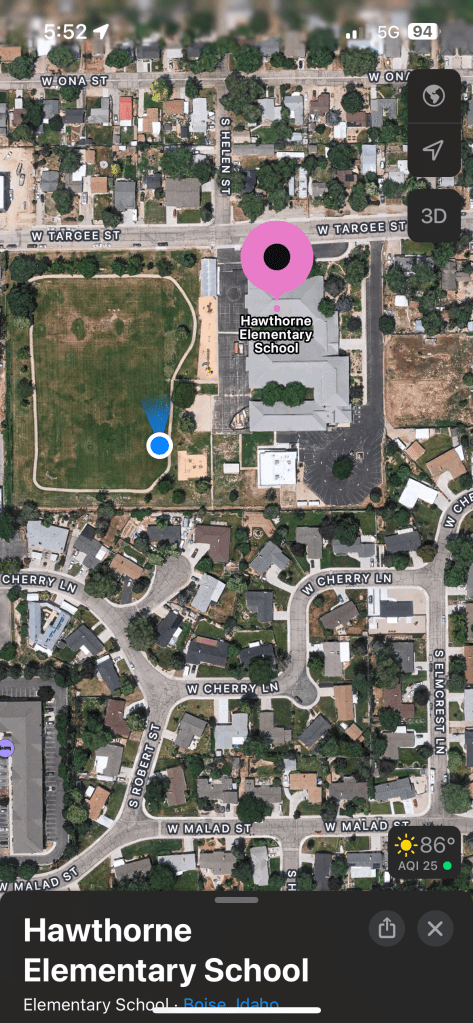
End of a long drive. Hot. Tired. Cannot find anyone who wants to make money by selling our line in Tri-Cities. Put the hotel location into my map app rather than the AllTrails trail I wanted to drive to. Almost didn’t run at all. Then I checked in, sat for a few minutes in the hotel room that had been precooled to 63 degrees, did some digestive clearing, and decided to run a full run.

Good decision. I felt great afterward. Not so great during, but knowing that I don’t feel so great and that I will no doubt be able to complete the run, and in fact could double it or triple it if I had to, is a tonic for the brain. Endurance is more important than truth, said Chinaski.

A very nice, new, big middle school on the Southern edge of Kennewick, with an even bigger high school a few blocks away. I could have run at either track, likely. Chose the middle school because it was less likely to have an athletic event going on. There was some kind of event at the school — looked like perhaps an orientation for next year. Kids and parents moving together at regular intervals out one door and in the next. I would have thought that, of the three cities in Tri-Cities, that Richland would be the high-income district. But maybe not. Maybe all the sales tax dollars from Seattle are funding new schools in the Eastern prairie lands.

The next day I passed a sign on I-82 that said no homegrown fruit past this point. A lot of wine and apple orchards in Central Washington. You do not want to mess with Big Fruit.

Drove through some gorgeous back-country on this trip. Enjoyed some Dutch Bros coffee, and Escape from New York Pizza (with my youngest, in Portland, at the end of the trip). It made up for all the flight nonsense on Monday. Every hotel was quiet and clean. Every day was sunny.

The trail probably would have been paved anyhow. The track was empty and easy on the lower extremities. No shade, but if you can’t handle 87 degrees with a light wind, you got no business being a runner. I have been feeling some resistance in my body lately. This felt like a rededication run.

You never know what is going to flip the switch.