Steamboat Springs, CO

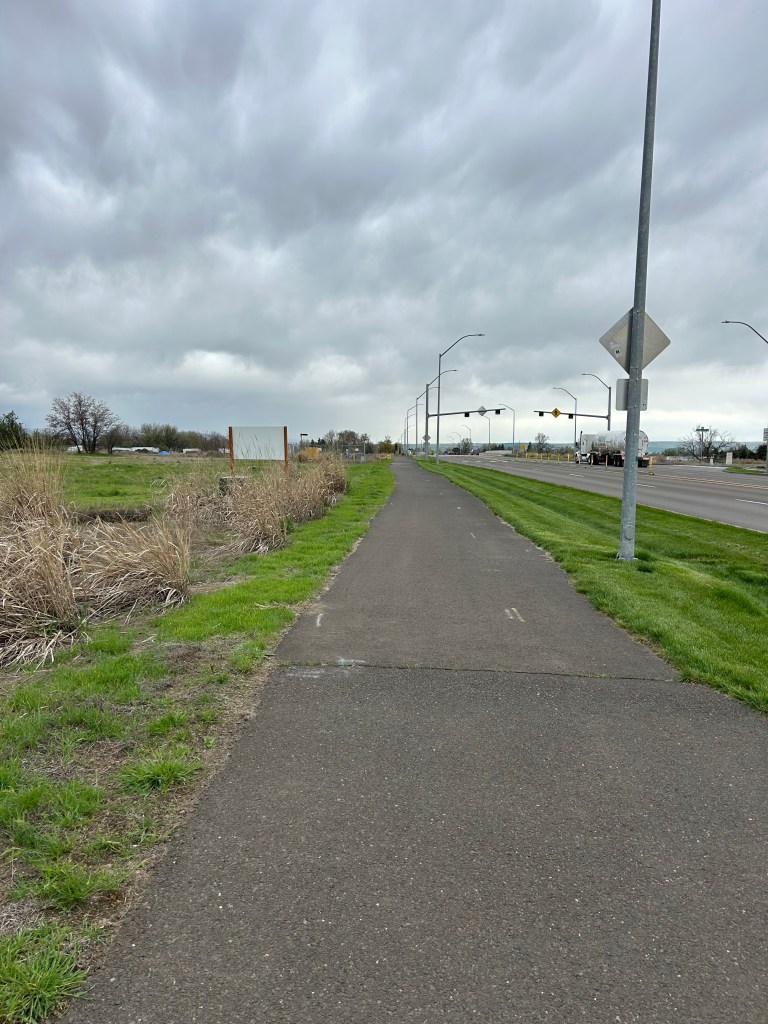
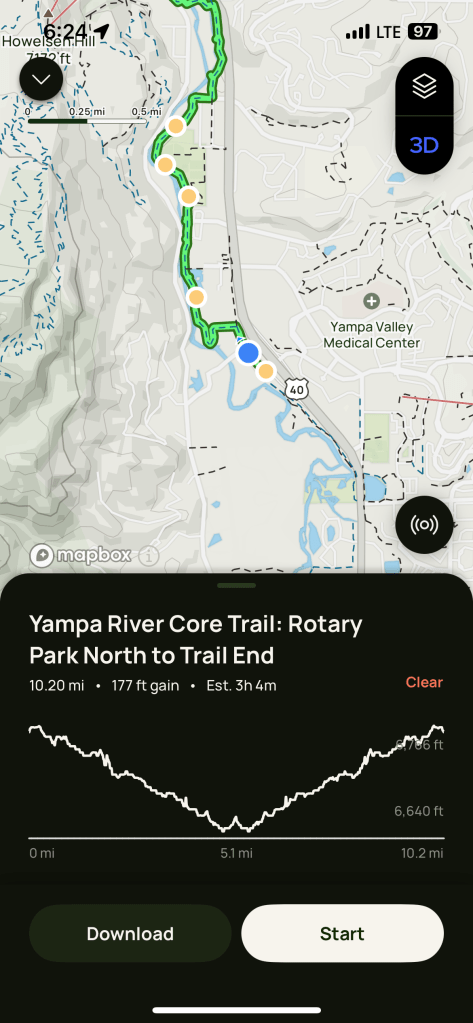
Yampa River Core Trail

Run Time: 64:10 + 2-minute kick

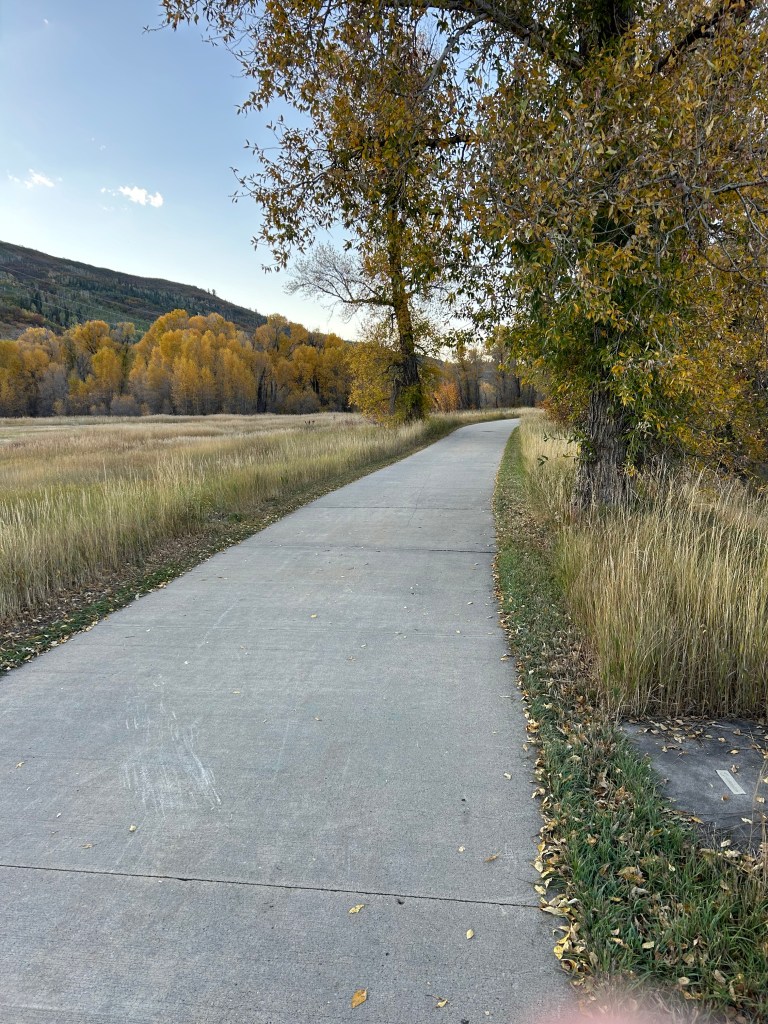
It took me a few minutes to find the trail. There is a lot of construction going on in this ski town. I thought I could cut across through a private road and a Trail Closed sign to the south end of the trail, then follow it from there, but a crew with heavy equipment was doing some digging. I doubled back past the hotel and through a condo complex to find the west leg of the trail, and it was all fine from there.

6770 feet in elevation. My last run of the 2-week road trip. I was cutting across from Vernal, the cultural Mecca of Eastern Utah, up and over the Rockies back to Denver to fly home the next day. You don’t actually get to go up and over the Rockies on I-70. There’s a long tunnel at the summit. And there is way too much traffic at 12,000 feet. Where the hell are all these people going on a late Friday morning? I did appreciate the sign warning of a downgrade the next 40 miles. That is a long downgrade.

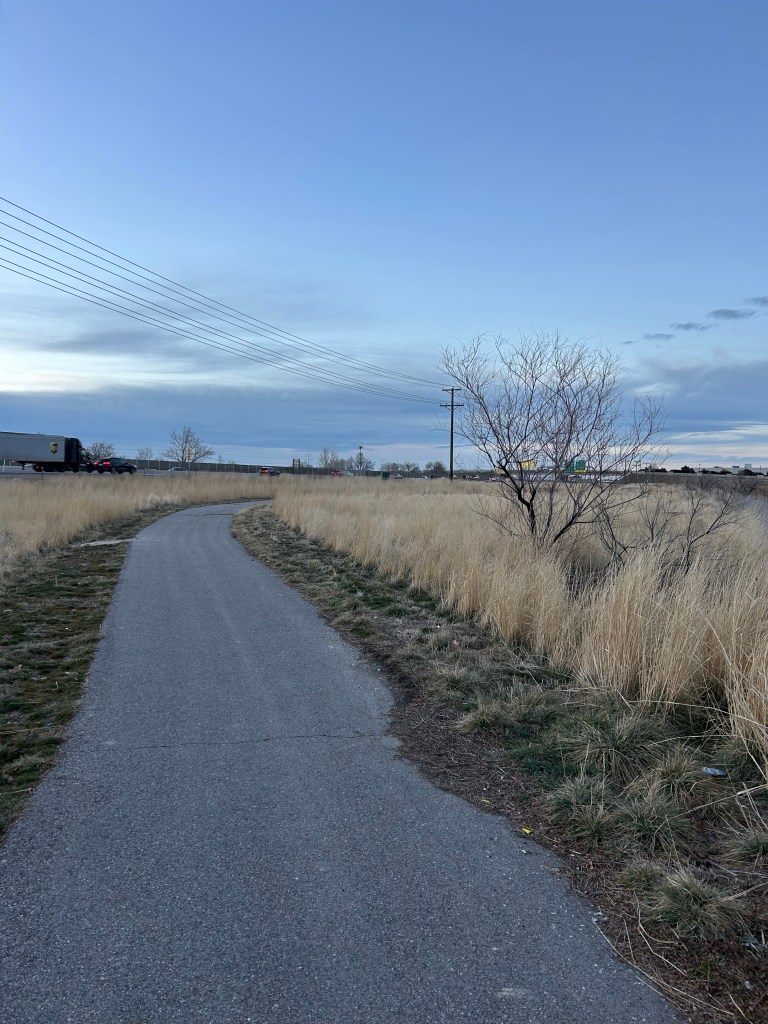
The Yampa River Core Trail is paved — not my favorite. But for sections there was a side trail that had developed from the strayings of previous users, probably in winter when the cement is iced over. The solution to cement is to avoid it, and avoidance is usually just a side-step away.

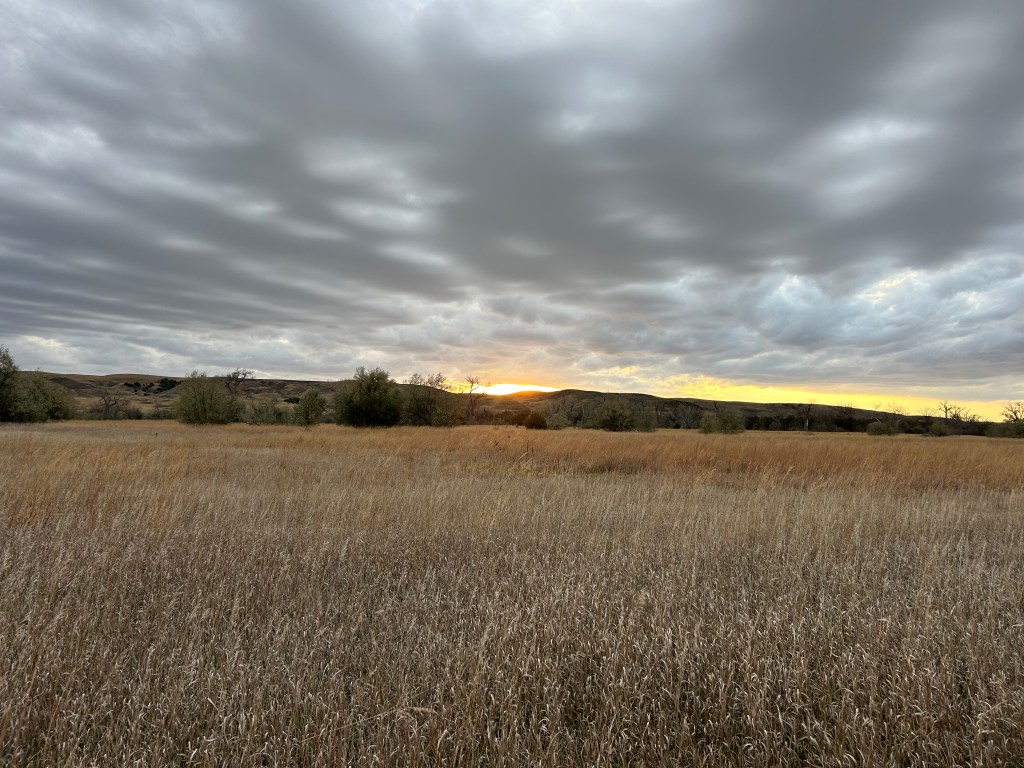
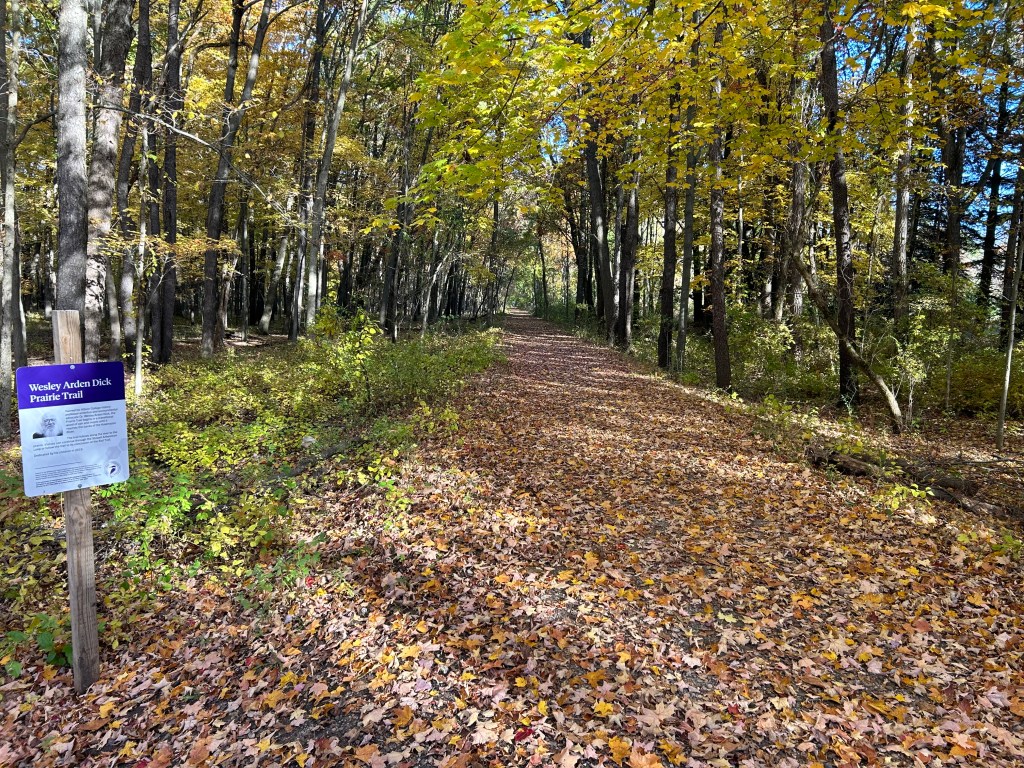
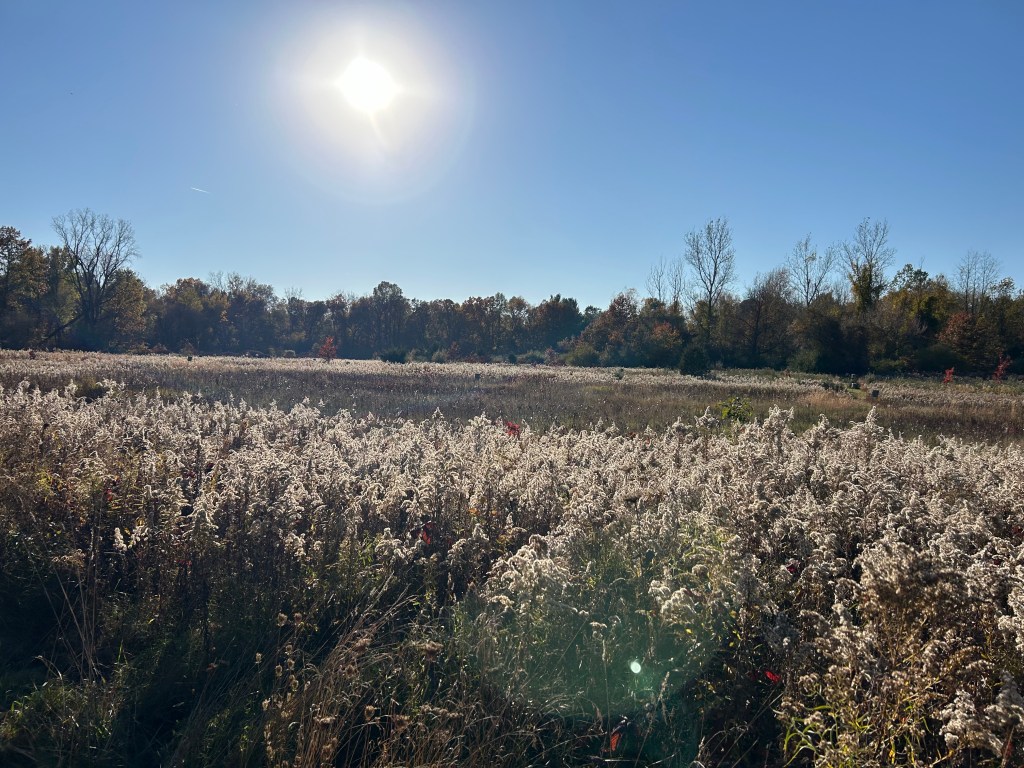
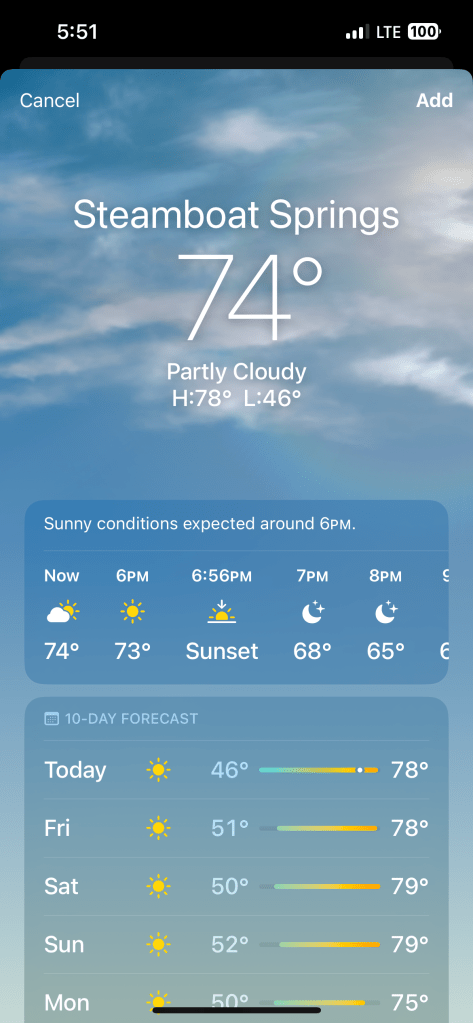
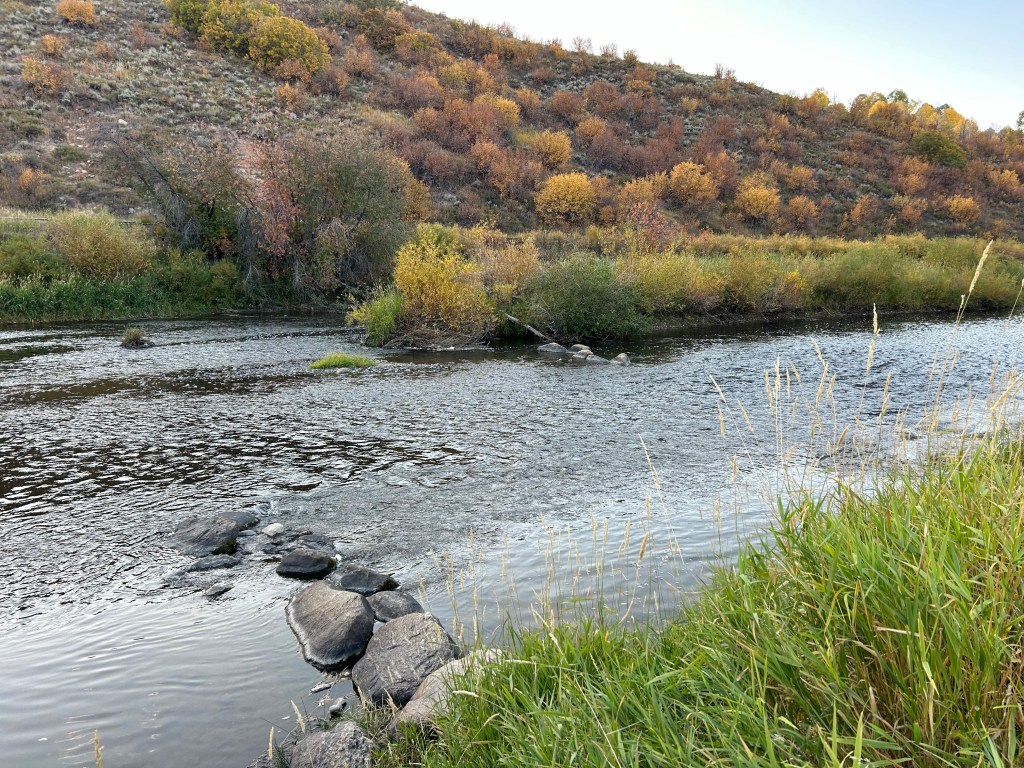
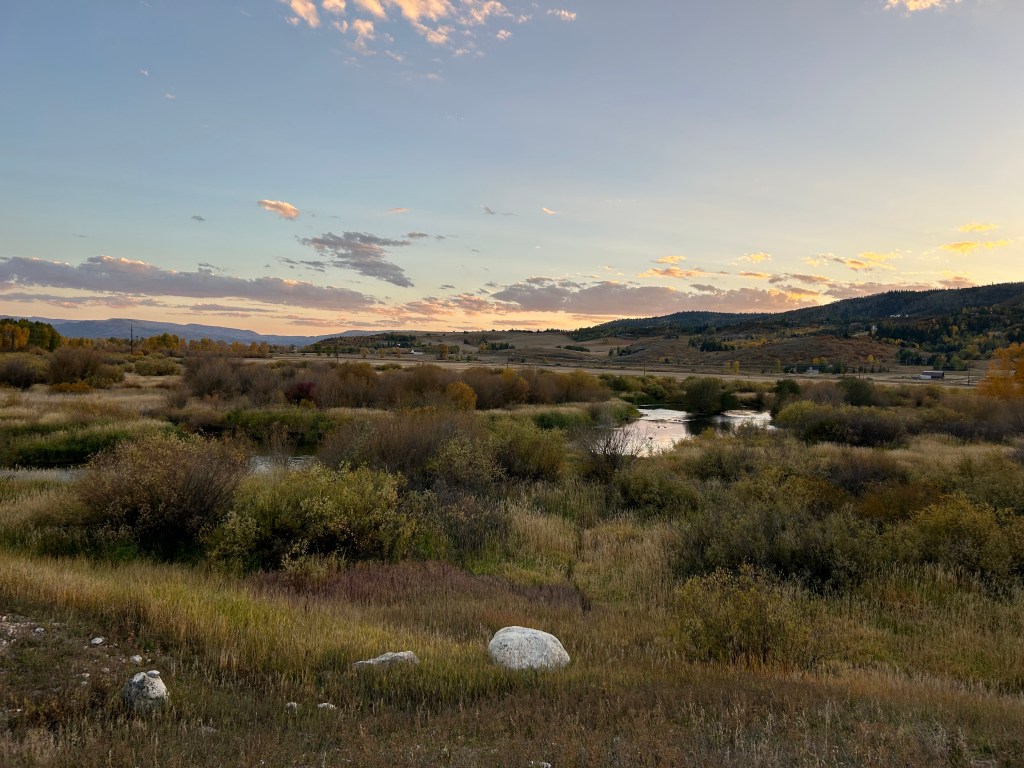
The early fall foliage in Steamboat Springs was nice. The weather was warm. I better appreciate it now. Soon it will be frigid and I will be arguing with myself whether or not to face the weather or not. Also, I may not get back to Steamboat Springs. It is not on my normal route, and the chances that the one prospect in Vernal will start carrying our line is slim.

As I drove south to join the parade on I-70 the next morning, there were a couple of short traffic stops for road construction, and I was stopped behind a Subaru and an old Ford Ranger pickup. The driver in the Subaru was on the phone, taking the opportunity to engage in commerce or to medially socialize. There were two old guys in the Ranger, smoking, their windows open. I could not help but notice that these two old smokers were gazing out at the landscape, taking in the beauty of nature to a much greater extent than the Subarube.

It made me think of the many times I had noticed, back in the day when more people smoked, how much work smokers avoid by taking smoke breaks. We know that smoking is not wise, but there is some wisdom in using a bad habit to stop and smell the filtered roses. Not just taking in the amazing view of the Rocky Mountains on one side of the road and the prairie grasslands on the other, but to just stop and think about life and love and the losers who work nonstop with no breaks.

Maybe the few smokers left just stare at their phones nowadays, like everyone else. Those two geezers in the Ranger were likely anomalies. That Ranger was probably a stick-shift, and driving with your phone in view is bad enough with an automatic. They also had both windows down, a good tactic when you are smoking, but also they probably had no A/C. Windows down, arms resting on the door, elbows sticking out, cigarettes burning between index and middle fingers, pondering the great truths and meanings — Rangers in the true sense of the word. It made me nostalgic for the 1970s.

Have all those former smokers who have rehabilitated their lungs also sacrificed the brief moments of peace and reflection? Do they now just move from one indoor activity to the next? Is it not ironic that smoking is one of the few activities that now gets you outdoors not only every day, but multiple times a day?

Of course, we have gotten so unused to the presence of cigarette smoke that now we are hyperalert to any wayward molecules that pass our vicinity. What brought my attention to the Ranger was the faint odor of cigarette smoke that had entered the chamber of my rental car from sixty feet away, carried hither by the morning breeze. “Who the hell is smoking?” I said aloud indignantly, first suspecting the Subaru guy of hypocrisy before spotting Uncle Jesse and his twin brother. How many miles would it take to clear the chamber, and would I have to pass two cars on this two-lane desert highway to reachieve purity?

You get my subtle point, right? We could learn something from the smokers. Take breaks. Get outside. Gaze thoughtfully into the distance. Toss your butt on the ground and stub it out with your foot. Play it cool. Let the sanctimonious fools do all the work.

Boise, ID

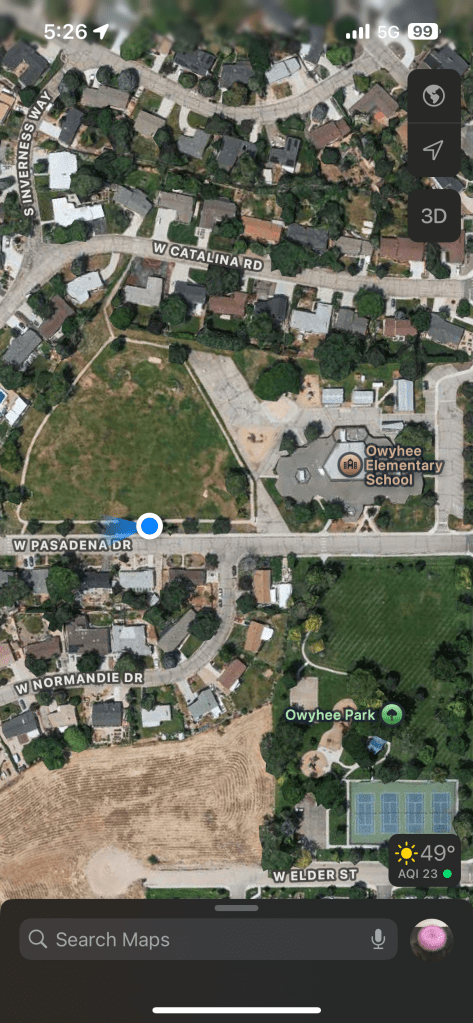
Hawthorne Elementary School + neighborhood streets

Run Time: 64:09 + 2-minute kick

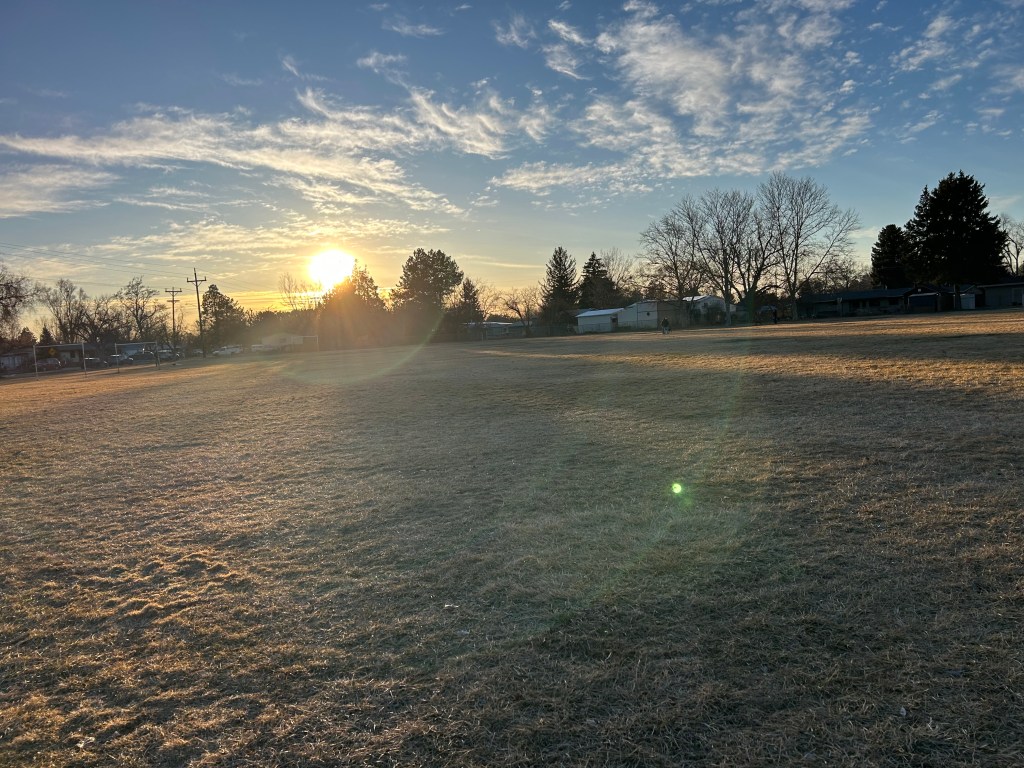
This was a checkbox run. I was tired, it was hot, I was in the city, I didn’t feel like running, there wasn’t a good place to run, but I ran. I checked the box. I moved the calendar item to the next day. There was little to see in this neighborhood near the airport, but running in Boise/Nampa/Caldwell reminds me of the time I lived here for a few years back in the 1980s. They still flood-irrigate their lawns here. The sagebrush still grows around the city.

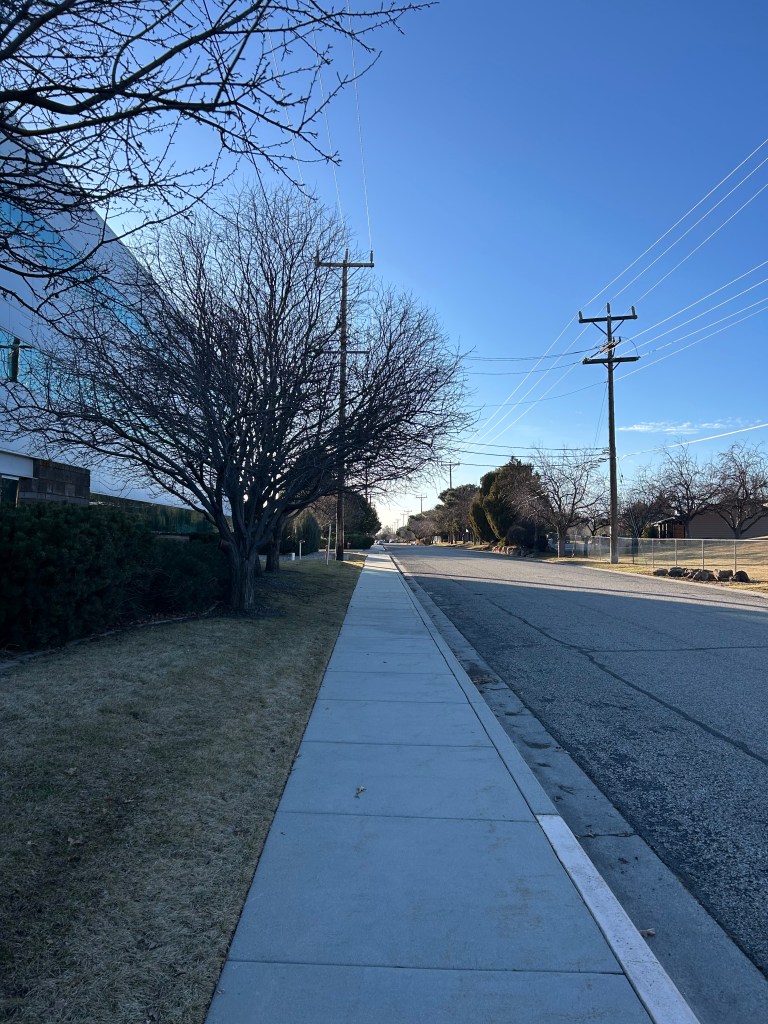
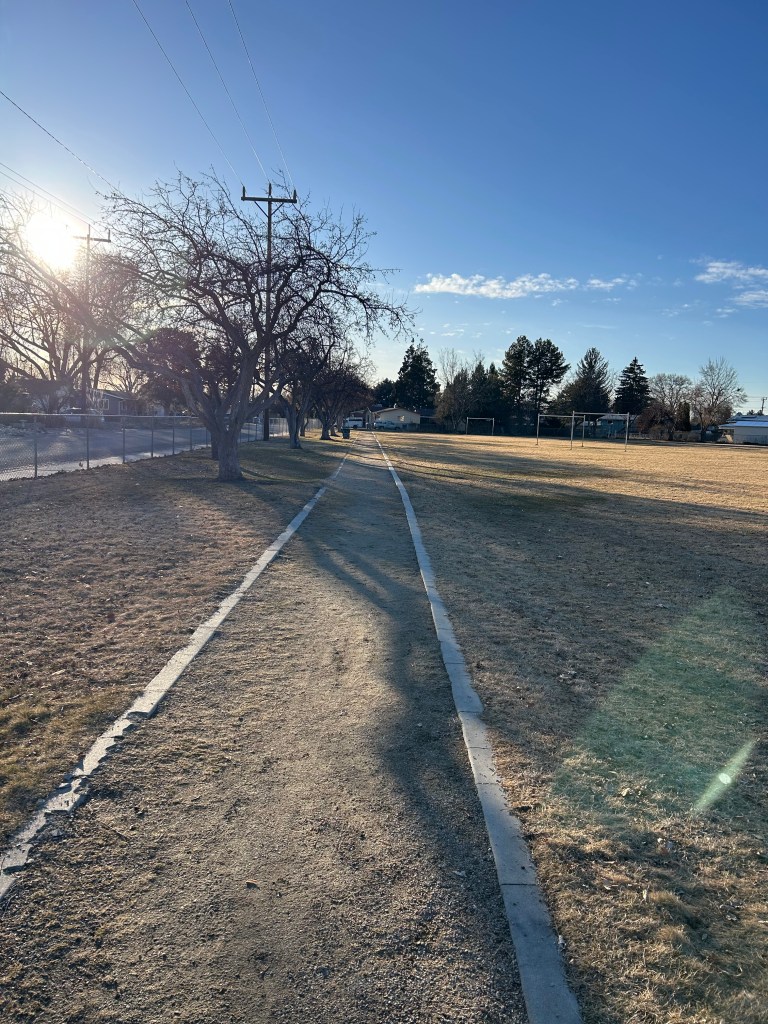
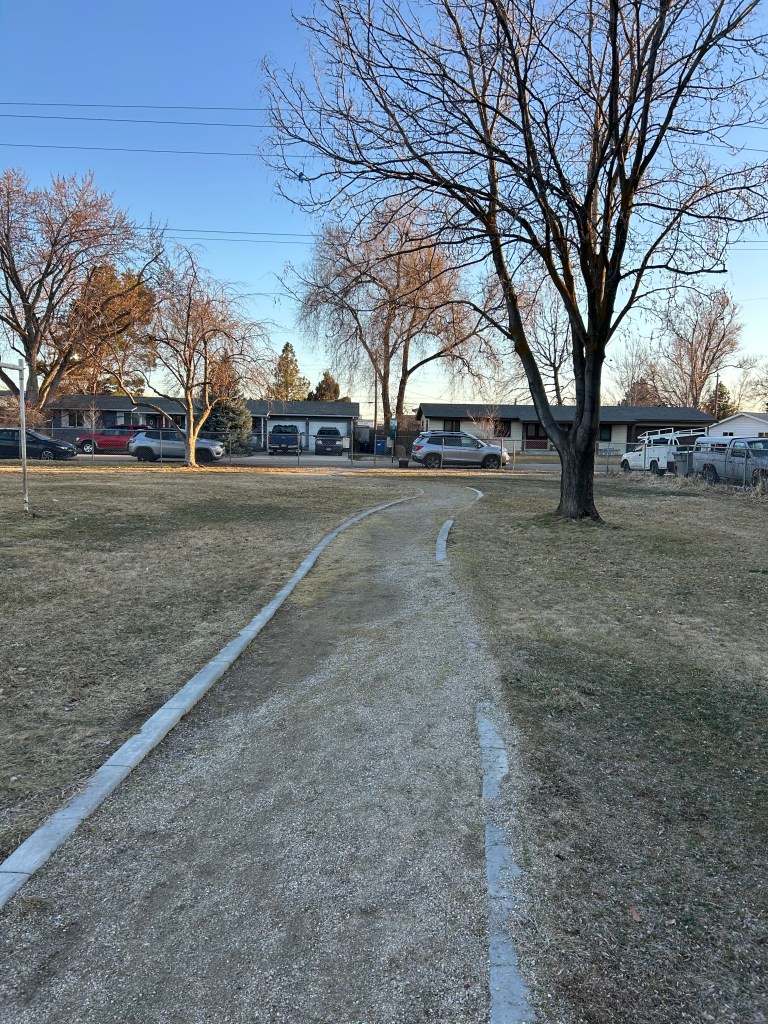
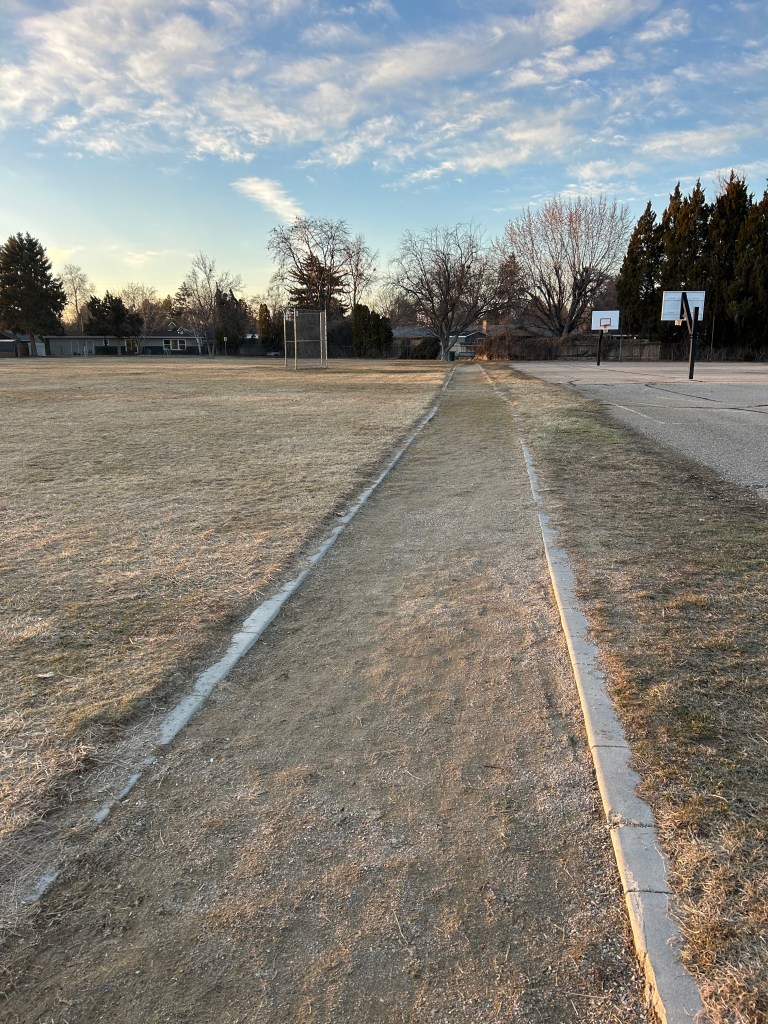
I started out on a sidewalk on a road running along the freeway, but it was intermittent, and there was traffic, so I turned into a neighborhood. There was a bike route of some sort, so I followed the signs, and I ended up at a railroad crossing. I found a snowmobile/quad trail running along the tracks that took me off the road for a bit. It did not extend all the way to the road I was intending to reach, so I went back into the neighborhood and eventually found my way to an elementary school with a cinder track running around the school field.

Oddly, I ran on a similar track within a few miles of this school at a different school sometime in 2023. It made me think of fourth-graders being sent out to run around the track in the rain by a PE teacher. Running on a track is boring. Running on an elementary school cinder track is boring and low-budget. It’s analog. On this afternoon in this neighborhood, this track seemed to be a dog-walking track, though the dogs present were all well-behaved and did not even bark at the lone runner.

I had driven from Washington to Boise along the Salmon River and the Payette River National Scenic Byway, which is a beautiful drive. I had spent the night in Clarkston, WA, which is right across the river from Lewiston, ID. Lewiston is generally well-known and a regional hub, but I had never even heard of Clarkston. Clark was always getting second billing.

The day before, north of Moscow, Idaho, a bull moose ran across US-95 right in front me. I had to hit the brakes hard to avoid impacting his lower legs. He hurdled over the guard rail with ease. Really rather graceful, though he was missing one antler, which makes one question what caused that. Only the third moose I have ever seen, so it was noteworthy.

I also had run two days before in Kennewick, WA, but decided not to include a blog post, because it was exactly the same track and the same run I had in Kennewick in the late spring. I attended the wedding of my niece’s son in Yakima, which is one reason why I had a two-week sales trip, so I could be in Yakima, WA, on a weekend in September. It was a fun time. I drank a fair amount of white wine and reconnected with some old friends.

So a lot going on in Colorado-Wyoming-South Dakota-Montana-Idaho-Washington-Utah this late summer/early fall. 4000+ miles on the rental car. One night at the sis-in-law’s and 10 different hotel rooms. Panda Express 3 times and Jimmy John’s twice. A wedding, a moose, a dead elk, and no abandoned cats at rest areas. Beautiful scenery and comfortable weather. 6 runs.

Missoula, MT

Run 1 time: 64:06 + 2-minute kick

Kim Williams Nature Area

Run 2 time: 64:07 + 2-minute kick

Mount Sentinel M-Trail

A rare 2-night stay in one hotel room. A minor bonus: one more with no packing. My hotel was right on the river, which was a bigger bonus. Wasn’t sure where to go at first, so I headed up-river on the north side, but that turned out to be a quick dead end. I could see runners and bikers across the river, so I back-tracked and found a footbridge that took me over to the University of Montana campus.

I wonder what First People’s tribe Chief Williams was from.

Unfortunately, there was a football game the day I checked out, and it inflated the room rates considerably. $180ish the first night, $330ish the second night. When I booked it, our travel app gave me the average, and believe it or not, $255 a night is the median in Missoula. If I would have known the difference, I would have stayed just the one night and then picked the next city for the second night stay.

Has the Montana Osprey lost competency? That is grounds for evolutionary deselection.

As I left town that Saturday morning, headed to Washington for a family wedding, I saw a man tending to an elk that had been struck by a vehicle, maybe his vehicle. I am not sure what he was doing. He was kneeling by the animal, his hand on its neck. Was he rendering care? Was he helping the spirit to release? Was he displaying remorse? It seemed a dangerous place to be ceremonial.

I had seen numerous animal crossing signs in my travel through Wyoming and Montana, including Elk Crossing, Deer Crossing, Bear Crossing, and even Bighorn Sheep Crossing. The ones that I found interesting had a mileage limit: an outline of an elk with Next 10 Miles under it. How do the elk know how to measure mileage?

The one animal I did not find represented on state signage is the one animal you see everywhere: the pronghorn antelope. Every time I drive through Wyoming and Montana, not to mention North Dakota, South Dakota, Nebraska, Colorado, Utah, Idaho, and Eastern Washington and Oregon, I see LOTS of antelope. Sometimes 200-300 in a day. They gather in small herds and graze or just bed down by the interstate.

If any game deserves some road signs, it is the antelope. There is more roadkill antelope in these regions than any other animal, though not as many as the roadkill deer you see in Wisconsin and Iowa. Why do the antelopes not get signs? Is this some kind of discrimination? Is there a game caste system at play?

A few days later I made the drive from Spokane down through Lewiston and onto Boise, and I saw some “Watch for Rock” signs, which was appropriate. I watched, and I saw some beautiful formations. I was happy to be prompted. In other places you will get “Falling Rock” or pictographs of boulders crushing stick figures in square cars, but that just tells you to be alert to danger. Being reminded to watch for rock, as an entity unto itself, provides a richer travel experience.

The second run was not so much the normal 10-minute run/5-minute walk, but the run-until-lung-failure/walk-until-just-breathing-hard. I took the trail up UM Mountain. That is not UM, as in what everyone in Montana starts a sentence with, but UM as is University of Montana. Typical. Of course they have their own mountain. It just formed for them through millions of years of plate tectonics, right next to the football stadium.

The trail cut back-and-forth up the slope to the giant white M on the hillside a 700 feet up from the valley floor. If you’ve ever wondered what a big letter on a mountainside looks like close up, what looks Majestic from below, looks godawful up close. Downwind from the top left corner, large sections of peeled-off white paint hung in the prairie grass. The view of the valley and distant mountains was to die for — literally, if you tried to run all the way up. I was prudent and took several walking breaks.

The wind was a-gustin’ up near the top of Mount Sentinel, which is its real human name. Not UM Mountain. It is a popular trail. Not sure how far it was to the top, maybe a mile or a little more. At least 50 other people on the trail at the same time as me. Good lord. What are these people trying to prove? We were already at 3200 feet elevation at the bottom.

I wish that I could get off I-90 and I-15 more when I am in Montana. Sometimes I cut across on a state highway, if I can, from one city to another. The drive from Great Falls to Columbia Falls is fantastic — you go right past the south edge of Glacier National Park. But the drive down from Columbia Falls toward Missoula, along Flathead Lake, is depressing. A lot of rundown houses and shacks, junk-filled properties, and tourist traps.

So long, Montana. See you next year.

Billings, MT

Dustin Freese Memorial Sidewalk + Neighborhood Streets

Run Time: 64:05 + 2-minute kick

The beginning of an extended 2-week trip through Wyoming, South Dakota, Montana, Idaho, Washington, Utah, and Colorado. Plus I flew on Sunday so that I could stop in and see my sis-in-law and her youngest, who live in Fort Collins. She brewed up a fiery batch of barbacoa, which was fantastic.

We talked a fair amount about writing. We have both recently finished a first draft of a novel, and we shared editing/rewriting strategies. She told me about some apps that sound interesting, though I am hesitant to dip into the AI world when it comes to writing. I still prefer analog over digital. In fact, I am thinking of buying a manual typewriter.

As I drove through the high desert the next day, I thought about my days working on a student newspaper in high school. I thought about my friend, Jim Hill, who was a staff photographer, and who has an original copy of each every-other-weekly edition we published in the two years we attended Glencoe High School in Hillsboro, Oregon.

These were my first serious attempts to write. I started out writing about sports, then worked my way into an opinion column, then got onto the editorial staff and wrote news stories and editorials. We were a serious group, though also irreverent, and though I have not read any of it in almost 45 years, I bet it holds up. The people in that group changed who I was — how I thought, how to commit and execute, what I valued. The personality range was vast, and yet I have never again been a part of a team that so operated so richly and successfully.

Every other Wednesday we would all gather at the end of the schoolday to lay out the paper. This was not scheduled class time. Our advisor, Mr. Taylor, invited us to do so, and we happily accepted. For 2-3 hours, we would all work together editing and cutting and pasting (literally) text, headlines, and captions onto full-size proof sheets, cropping photos, and sharing stories and hopes and dreams and insults and a lot of laughs. We had been working on this content for the full two weeks leading up to this night before publication, and I can’t really speak for anyone else, but I would bet that no one on that team ever had to be compelled to do the work. We loved all of it, and each other.

When we were done, usually 6 or 7 or sometimes 8 pm, Mr. Taylor would take the proof sheets to the printer. The next day the copies would be distributed throughout the school, and you’d go into the cafeteria at lunch time, and everybody would be reading it. That is a powerful and satisfying feeling, to see 600-800 of your peers reading your work, and in some cases, challenging what you wrote or threatening bodily harm (only happened a few times — mostly the football players who didn’t like what I wrote about their winless season). Everybody wanted to see my friend Tom’s editorial cartoons, which referenced national politics, Hunter Thompson, Rolling Stone magazine, Carlos Castaneda, School Board controversies, and Jim Morrison, perhaps all in one cartoon. The editorials and columns became the main interest, but the news and features were timely and sharp. Nancy, the News Editor, more than once was asked to shut down her tape recorder in the middle of an interview with Dr. Miller, our principal.

The disagreements and discussions in the Editorial Board meetings would get heated, but as a group we worked through complicated issues and reached consensus. Nancy, Shelley, Lori, Tom, Lisa — amazing minds all. The beauty of reaching consensus, and then the writing of the resulting editorial might be assigned to the person who originally opposed that final consensus, and then reading the concise and convincing masterpiece they wrote, would be sublime. And yet, we expected it of each other. Tom and I would fight bitterly to keep Mr. Taylor from cutting out questionable content from our columns. There were occasionally things thrown in the open classroom (like chairs), and many shouting and swearing exits. We all had carte blanche to come and go from the classroom as needed during the daily class period when we were actually assigned to be in the room, but most of us were working on the articles and opinion pieces throughout the days and often in the evenings. It was like a job that we loved so much we didn’t mind not being paid, which is a lot easier to engage in when you are a student and food and shelter are supplied at no personal expense.

When I am driving between Casper and Gillette, thinking about these things, I am tempted to plan a future visit back to Oregon, during which I look up my old friend Jim Hill, and we sit down and remove the old editions of the high school paper from the plastic sleeves he has kept them in, and we read and reminisce, but I actually think that would be too overwhelming. I get emotional just thinking about it. The actual doing it might crumble my fragile facade. Jim would keep me in good spirits — he always could — but the pain of not being able to recreate those editing sessions with those people like they all were in those times might overshadow the joy of the memories.

It was when I learned that I loved to write, but more surprisingly, that I also love to collaborate. Writing is usually a lonely undertaking. Opportunity to collaborate is rare, and maybe illusory or nonexistent. I am grateful that I found it for those two years of high school.

Warrenville, IL

West Branch DuPage River Trail

Run Time: 63:56 + 2-minute kick

A pleasant urban trail. Just 0.8 mile of sidewalk to the river, and then the rest of the run on cement and dirt/fine gravel. I waited a little later to run, so shade was abundant. Plus, the river was a little lower in elevation than most of the adjacent streets, which reduced traffic noise.

The flow of the DuPage River was suspiciously still. It was pond-like. It did not have a bad smell, and there were occasional ripples, but it did not invite swimming or wading. However, given its proximity to a major metropolis, it was surprisingly riparian.

The next day I visited an account in East Chicago, not far from the Indiana line. There was a sign across the street: Hegewisch Swamp, Established 2001. Really? Established by whom? Seems like the wrong word. Named, maybe. Walking path put in, likely. Sustainability Fund created, probably. Established? I think that swamp has been there a long time.

I see a fair amount of swampage in my travels in the Mideast. Swamps, wetlands, marshes, and forested muck is likely the primary established ecosystem conglomeration of this region. It makes you wonder how some settlements were built, and whether or not the occasional log cabin was swallowed whole by a sudden pond.

How desperate were American settlers that this is where they settled? I get it — it’s hard to push or pull a wagon over a mountain range. It was probably tempting once you got past the Adirondacks/Appalachians to just keep on going since it was so flat, but flowing water that you can hear seems so much more comforting than a floodplain.

I’m listening to Robert Caro’s The Power Broker, his biography of Robert Moses, who developed so much of New York City and New York State. It’s fun to contrast those stories with the thought of some council in Hegewisch, circa 1999, saying, “Hey, I know. Let’s establish a swamp.” Moses seems almost biblical in comparison.

A lot of no swimming/no fishing/no boating signs along this run, which featured a few ponds once the trail broke away from the river and into the forest. The forest was nice — decent-sized trees, a wide trail, few bugs, noticeable coolness. I did see a couple guys with fishing poles, though, so there must be some place to catch something edible.

I don’t mean to pick on local governments. I appreciate the effort to create and maintain these trail systems, especially in the urban areas. I do not want to slog through sidewalk and track runs every day. We were not meant to live on cement.

Next time through Chicago, I’ll stay on the East Side and plan my run for the Hegewisch Swamp Trail. See what all the hype is about.

Schofield, WI

Mountain Bay State Trail

Run Time: 63:55 + 2-minute kick

I am not sure where Mountain Bay is, in relation to Schofield. We seemed to be rather far inland for a bay to be in close proximity. Like much of the Mideast, there are bodies of water all around, and groundwater lurking a cm or so below the surface, but a bay implies an ocean, sea, or large body of water. The nearest Great Lake was a hundred miles away. Not to mention that no mountains are to be found for many times that distance. So, one would have to conclude that the trail is either very long or misnamed.

It was a delightful trail, nonetheless. Tree-lined and away from traffic, it started out paved and eventually gave way to dirt and fine gravel. The only downsides were its flatness and straightness. Of course, flatness and straightness are not downsides in relation to the goal of getting from Point A to Point B, so the trail was utilitarian in its simplicity.

Also, flat and straight work well for snowmobiling, one might assume. It was not surprising when I encountered a State Park sign asking me if I knew the snowmobile was invented in Wisconsin. I have run on Wisconsin snowmobile trails on many occasions. They are extremely well-maintained. Plus, they are demonstrably multi-use.

I have never ridden on a snowmobile, nor do I plan to. I had a motorcycle when I was 11, and I enjoyed it for a few years, but I have moved out of the motorsports phase of my life. It was short. I survived it, thankfully. I dumped my motorcycle on a dirt airstrip that had been decommissioned and plowed up to plant trees, launching me several motorcycle lengths through the late teenage summer air. The dirt was soft, so when I face-planted, it merely filled my mouth with dirt rather than cause physical injury. My friends rode over to me and thought all of my teeth had been knocked out — that was how much dirt had gotten in. My advice? Scream with your mouth closed while catapulting off a motorcycle.

That incident was not what stopped me from riding motorcycles. The incident that stopped me was me trying to do minor maintenance on my motorcycle (translation: taking things apart to see how they worked). I messed up the clutch and made it unrideable. I didn’t want to tell anyone, so it sat in the garage for a few years till my dad got rid of it somehow. I had purchased a 1949 Willys Jeep by that time, so I was content with four wheels of adventure.

The Willys didn’t last long, either. It had no top, which made its use problematic. It also would not go faster than 60 mph. There were other limitations, such as a stick for a fuel gauge, limited seating, and no mirrors. I loved it, though, and I wish now I had kept it rather than trading it for a ’71 LeMans, which I crashed into a tree just after graduating high school.

There was insufficient snow where I grew up in Oregon to warrant a snowmobile. It was a great place for motorcycles and Willys Jeeps, however. There were fields where dirt bike riders congregated and created their own elaborate tracks and trail systems. It just happened organically, if you can use that term to describe something mechanical. At some point, lawyers and property developers put an end to that era. The land where Intel now sits in Hillsboro, Oregon, was once an enormous four-wheeling site.

Oh, well. Progress, right?

Richmond, IN

Whitewater Gorge Trail

Run Time: 63:00ish

I was not expecting much out of Richmond, IN, but I was pleasantly surprised by this scenic trail that follows the Whitewater River through the city. Heavily wooded and therefore heavily shaded, with some elevation variation, it was a refreshing way to cap a day of driving in hot and humid Indiana.

What I saw of the river was much browner than white, though there are likely rapids somewhere up or downstream. The river was high — there had been some serious thunderstorms in the Mideast in the days previous. There was evidence of tree falls on the trail that had been cleaned up, and heavy drainage down the side gullies.

What was unexpected was what I found at the transition from trail to sidewalk — the site of Gennett Records, a studio that operated from 1920-1934 in the Starr Piano building. A line of memorial sculptures ran along the path, featuring Duke Ellington, Hoagy Carmichael, Jellyroll Morton, Big Bill Broonzy, Fats Waller, Lawrence Welk, Gene Autry, Charley Patton, Coleman Hawkins, Blind Lemon Jefferson, and many more.

The building was empty, but a sign indicated that it now housed the local Winter Farmers’ Market. There was nothing but trees and meadows around it, which makes you wonder, what was it like in 1920? Were there business all along the river, like you would see in so many American cities in the 1800s and early 1900s? Was this old brick structure the only one left? Or had it always been set in an idyllic meadow, away from commerce and residences?

Plus, they were making pianos down here. We have a piano in our Oregon house, covered by a blanket in the garage. It was too much of a pain to move. They were making pianos by the Whitewater River in the 1890s, moving them around in horse-drawn wagons, likely. Maybe the railroad was nearby.

This is the hidden culture that warms your heart. You can drive all around American cities, through squalor and waste, and you stumble, out-of-breath and sweaty, upon a gem like this, and it warms your heart. People were making music a hundred years ago in this magnificent brick building on the banks of a river in Eastern Indiana. Culture is possible in this country.

I would not hesitate to guess that Richmond’s cultural peak was in the 1920s, and it might never get there again. But at least they preserved something to remember it, and they added the memorials to enrich the memory. I am so glad that they did. Thank god for the music industry, even the digital one we have today.

Also, the defacement and defilement was minimal, and the grounds were well-kept, which also heartens one’s spirit, that those who visit or hike through or volunteer to care for the site give a serious shit about it. I think the site has a purity — you can almost hear piano keys in the breeze.

Also, the site has not been gentrified. It has not become a brewpub, or a hair salon, or a Hanna Andersson. Okay, so the farmers come in on the weekends to sell their corn and fruits and wares, but even then only in the winter. Development is absent, which almost makes this hallowed ground. How is this possible? It’s only blocks away from brewpubs, salons, and shops.

I ran past the site, then turned around and came back through, and when I did, there was a group of four teenagers, one with a bike. Guess what they were doing? Reading the memorials. I was reading about Charley Patton when I was 17, in Rolling Stone and in library books. That was 43 years ago. If I had come across this place at age 17, would I have solemnly paid tribute? Or left some broken beer bottles. One thing is for sure — I would have found a way to get into that building.

I walked farther than normal at the start of the run, and I did a poor job judging where my turnaround point was, so when I got back to car, I still had time to run. However, I had passed the same family three times on the trail already, and did not feel like disturbing them again, so I just stopped short of my full time. It was fine. This run was not just for my physical health.

Serendipity — that’s what you might call it. Probably not the first time serendipity made an appearance at the site of Gennett Records.

Bourbonnais, IL

Neighborhood Streets

Run Time: 63:47 + 2-minute kick

Brutal heat, high humidity, no shade, no fun. No trail, no track. Just cement sidewalks. Even the five-minute walks between ten-minute runs provided little respite. If you run only when conditions are ideal, I suppose that makes you an idealist. Better to strive for anyism, when it comes to running, at least.

As I drove through one of the Central U.S. industrial centers this week, I passed a Fog Area sign. The smokestacks on either side of the railroad overpass, and the strange acrid smell made me wonder if this was standard H2O fog they were warning of. I can imagine some municipal decision-maker in 1973 making an executive determination that if it looks like fog, you can call it fog.

Even more concerning in this interior land of corn is the agri-smell you sometimes encounter, and the uncertainty when you don’t. I remember the odor of powdered Malathion when I worked at a granary at age 15. It’s that same chemical smell of fertilizer and weedkiller. Your brain knows it’s not right. Our bodies are still calibrated for hunting and gathering. They know.

I also encountered a helicopter spraying fields — first time I’ve seen that. I suppose we need to keep the chips and ethanol coming. The societal disruption if we ceased chemical activities might be immediately worse. The Earth, after all, will be fine. It does not care about the nature of life. Life, as Ian Malcolm reminds us, finds a way.

This crop smelled like mint. Probably was mint.

There is hypocrisy, however, in criticizing industry and agribusiness when you work in the fossil fuel industry, driving around in a non-hybrid, or worse, flying to a regional center for a week of travel. Not sure if I will ever escape that trap that I freely walked into.

Asbury, IA

Chavenelle Trail

Run Time: 63:43 + 2-minute kick

I never really made it to the Pond Loop, and after the insect debacle the day before, I was a little wary of marsh terrain. I was looking at trails near the Mississippi River, but then I noticed there was a “trail” that ran right past my hotel. Really, it was just a sidewalk, but it had a name, and there were lane lines and arrows painted on the cement, so convenience won me over.

I made it through one leg of the Loop at the turnaround point. I was just north of US 20, my old friend. I thought I might actually run alongside of US 20, but then the trail diverted west one signal light short. I’ll bet no one has ever run the full length of US 20. You’d need an Angel on each shoulder and your head on a swivel. US 20 is blue-collar rust-belt working-class low-fi analog.

Dropped into Eastern Iowa for a day and a half at the end of the trip. The corn was in full bloom. One wonders what the chemical composition of Iowa soil is at this point. It sure looks dark and rich, but even the color might be artificial. Apple Maps diverted me onto gravel twice, something that usually happens in Iowa. It always reminds me of Flannery O’Connor’s “A Good Man Is Hard to Find.” It’s a short story — you’ll have to read it to understand the reference.
I do not recommend sidewalk running, although it likely has a beneficial antifragility component. It is the random trash and debris that is mentally oppressive. How the hell will we ever reduce the amount of sidewalk and ditch trash when we continually increase the amount of potential trash? Everything from ground coffee to toys to fast food is individually plasticized. If Wendy’s served their food in the loose Amazon packing paper that their employees saved from their home deliveries, I would be fine with that. If any packaging negatively impacts the environment, let’s just illegalize it and let the market find something carbon-neutral.

It takes supreme, perpetual, and aggressively diligent self-discipline to control one’s own carbon footprint. The morality of making this a key point of one’s personal agenda is justifiably attractive, but what appeals to me is the harmony of leaving the lightest of traces. How do we commodify that harmony, so that the market carries the wave?

Twenty years is likely about what I have left, so the grim reality is that my individual actions, positive or negative, are likely meaningless in the great scope of human activity. Meaning would seem to be very important, given how much time and effort we spend inventing it. What if meaning is not important at all? What if it is an illusion? Can we find a different motivation?

Cast off meaning. Choose harmony.

Oconto, WI

Oconto River State Trail

Run Time: 63:42 + 2-minute kick

Last sales stop of the day was up in Marinette, just south of the Wisconsin/Michigan UP border, and my hotel was down in the Neenah area. All Trails showed this trail right next to I-41. Looked promising. And it ran perpendicular to the Interstate, so no traffic fumes.

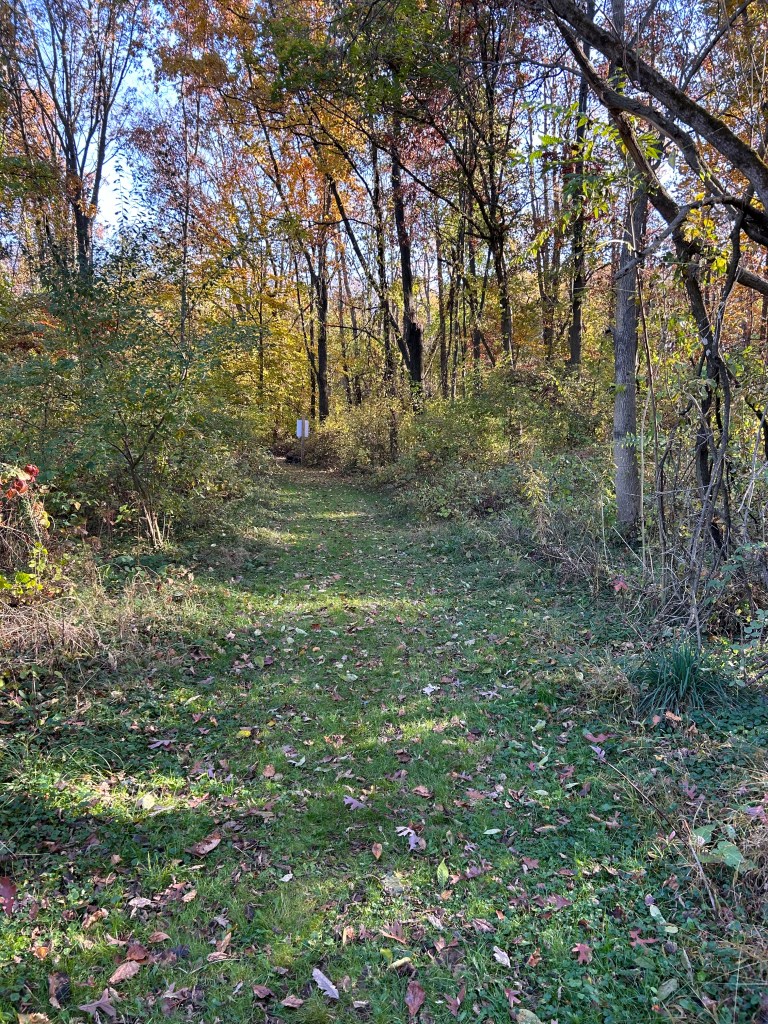
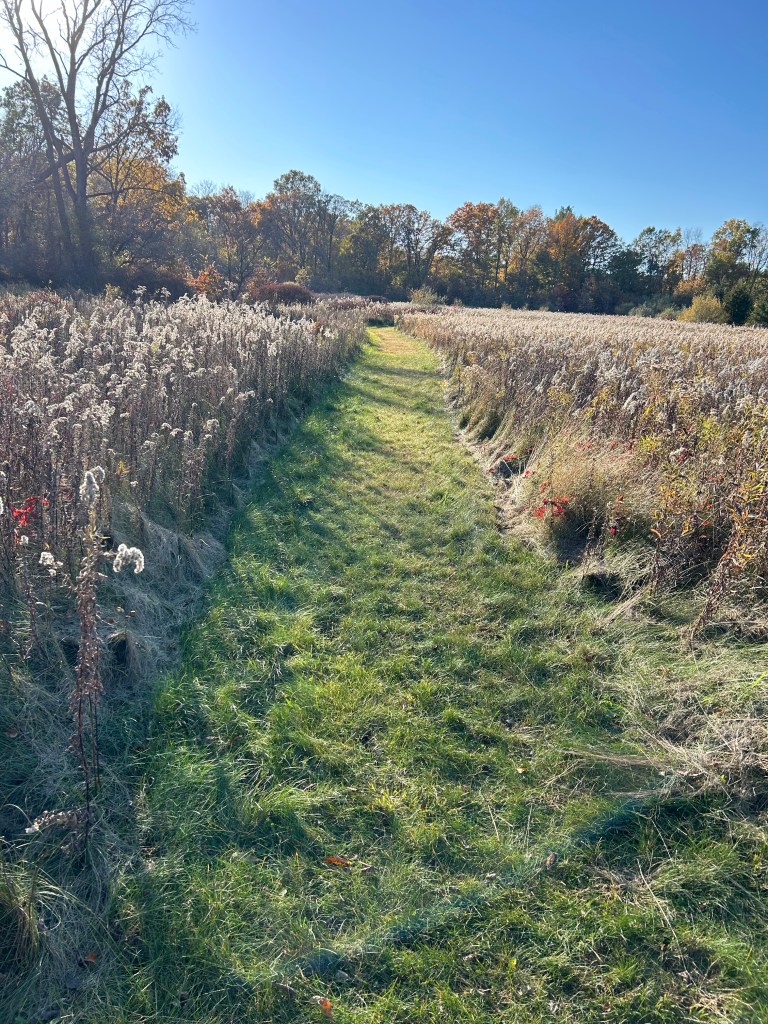
And it started out great. A gravel path that started on one side of the freeway, crossed under, then followed the other side for a half-mile before turning west. Then it diverted away from the county road and headed off through the forest, a mown grass path with nothing but trees on both sides and mostly overhead.

Alas, the tranquility was short-lived. Wisconsin is in semi-flood stage. The moisture contributes to the circle of insect life. I was just far enough into the out-and-back run when they circumlocated me and sent out the call.

It was not mosquitos — too sunny and daylight. It was flies. They were quick to bite. No need to inject some anesthetic to lull us into a false sense of security. They just take a chunk and dare you to kill them. Even worse, I had taken off my shirt to get some sunlight into pale places, so there were sensitive regions exposed.

This trail was well-manicured. It probably doubles as a snowmobile trail in winter. There is a lot of grass in Wisconsin, and I don’t mean the psychedelic kind. Wisconsin is America’s lawn. There are strips of lush lawn grass running through the middle of cornfields.

There are lawnmower manufacturers in Wisconsin as well, at least one of them is on my radar for the equipment trailer they sell. We have tie downs and safety equipment they are looking at adding as accessories. The lawn, as you would know if you’ve read Rachel Carson, is a scourge, mostly because we are too obsessed with its unnatural comfort. It welcomes chemical pollution, and it ain’t what the bees like, unless you let the clover grow in it.

The more bugs I encounter in the Central and Eastern U.S., the more I appreciate the desert climate of Eastern Oregon and Washington, Idaho, Utah, Montana, and Wyoming. Give me the hot, dry wind. Wind is a great equalizer. You have to be a hell of a flyer to navigate the winds of Wyoming. Yes, the red ants are frightening, but only the queen flies, and she is not interested in harassing lone runners.

Could be why all of these trails I find are empty, unless they are urban. My question is: what was the guy on the riding lawnmower wearing as he cut this trail? A beekeeper’s outfit?

I survived, with 8-10 bug bites. Could have been worse. Could have been like when I got into the poison ivy last summer clearing weeds in my own backyard. Now THAT is an invasive species.