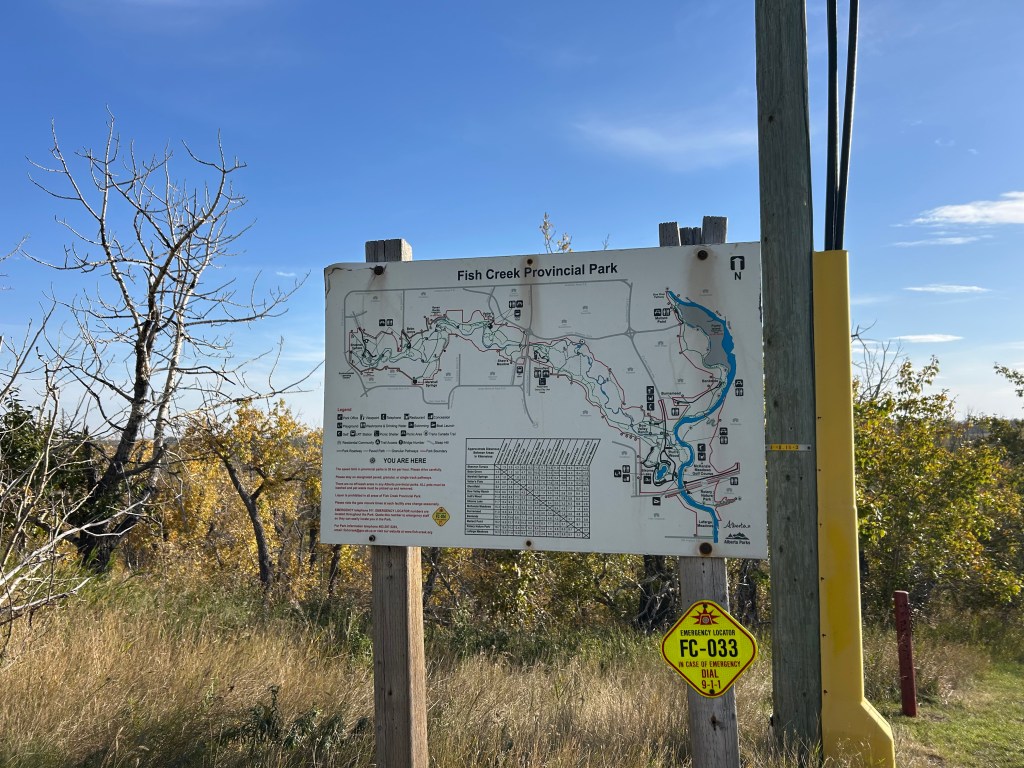
Fish Creek Provincial Park
Run Time: 60:00

The night before, in Moose Jaw, SK, the day after the mosquito scare in North Battleford, I was again besieged at sundown. This time I was just out for a walk, in my jeans, so running to safety was a problematic option. I walked down the middle of the road, as far from vegetation as possible.

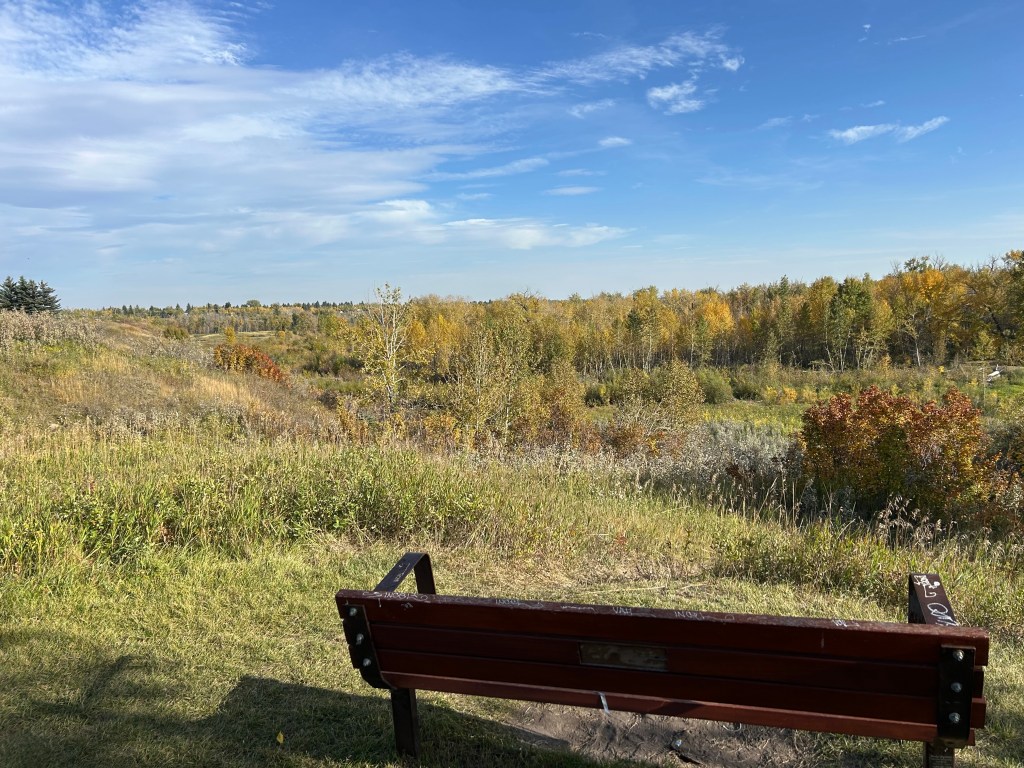
This day, in Calgary, I got to the hotel a little earlier, so I knew I could get the run in before the hour of doom. I got a little nervous descending into the Fish Creek swampage, but all was safe. I encountered no mosquitos.
Earlier in the day, on the long drive from Moose Jaw, I listened to an interview with Teri Gross of NPR’s Fresh Air. This one was unique: she was being interviewed. It was the 50th anniversary of Fresh Air, and the interview was done by another podcaster who will remain nameless, because I’m going to roast him. The episode was from 2025, only a few months after her husband of nearly 50 years passed away. Teri Gross so rarely shares any of her personal life. It was poignant to hear her talk about losing her husband, and the trials of caring for someone with a long illness.

The interviewer kept restating what Teri had said, in his own words, usually shorter, like he was summarizing or condensing what she said. He didn’t interrupt her, but it bugged me. It was like he was confirming his understanding of what she said, which, in a normal conversation, is not necessarily bad, but in the context of the interview, seemed intrusive. It was almost like he felt there was a superiority in both his listening skills and his ability to edit what she was saying, and he wanted that superiority reinforced.

Teri didn’t seem to mind. The irony is, of course, that she does not engage in this type of behavior when she interviews people. Her signature technique is to pause and allow silence after a person finishes a thought, presumably to allow them to continue if they want. And often they do. When she does speak, it’s another question. After all, is it important that she demonstrates that she understands what the person just said, and that she can restate it or summarize it? If she does not understand, she asks a question to gather more information.

In the movie “Greyhound,” which takes place on a battleship during World War II, everything that is said from one sailor to another is repeated, verbatim, to ensure that the message is passed along accurately. In that context, I loved the technique. It made me wish that work communication in all work could be similarly enacted. There was a rhythm and a clarity to it. This interviewer came across as engaging in a form of man-splaining. It wasn’t particularly egregious, other than that he was giving Teri Gross the man-version of what she just said. I wish that she had had Dave Davies, her longtime co-host for Fresh Air, interview her instead. That would have been perfect.

Teri Gross has conducted over 10,000 interviews for Fresh Air. She met her husband at WHYY in Philadelphia, where she started, and where Fresh Air started. He was a jazz critic and writer. She said in the interview that there is more vinyl in their apartment than in most record stores. She has kept most of his records and CDs, and his ashes are on a shelf with some of the records, where she can see it from the dining room table. She got emotional a few times during the interview, something you never would hear in her Fresh Air interviews (other than laughter), especially when they replayed part of her interview with Maurice Sendak shortly before he died of a long illness. At the time, she hadn’t known he was ill, and Sendak hadn’t told the public, so she conducted the interview with questions about what he was going to write or do next, and he seemed to want to talk about dying and being heartbroken about leaving this world. At the end of the interview, he said to her, “Live your life, live your life, live your life.” This contrasted with her saying, in this interview, that she tried to talk to her husband about death as his illness got worse, but he couldn’t talk about it.
She says she has no plans to retire, and thank goodness for that. She is healthy and is at the top of her game. I have so much respect for her, especially for how she has kept her personal life private, but it was special to get a small glimpse of her life growing up, her long and happy marriage, and even the pain and loss she has suffered. May other interviewers listen to her and model her technique and professionalism.