Sioux Falls Bike Trail
Run Time: 65:52 + 2:30 kick

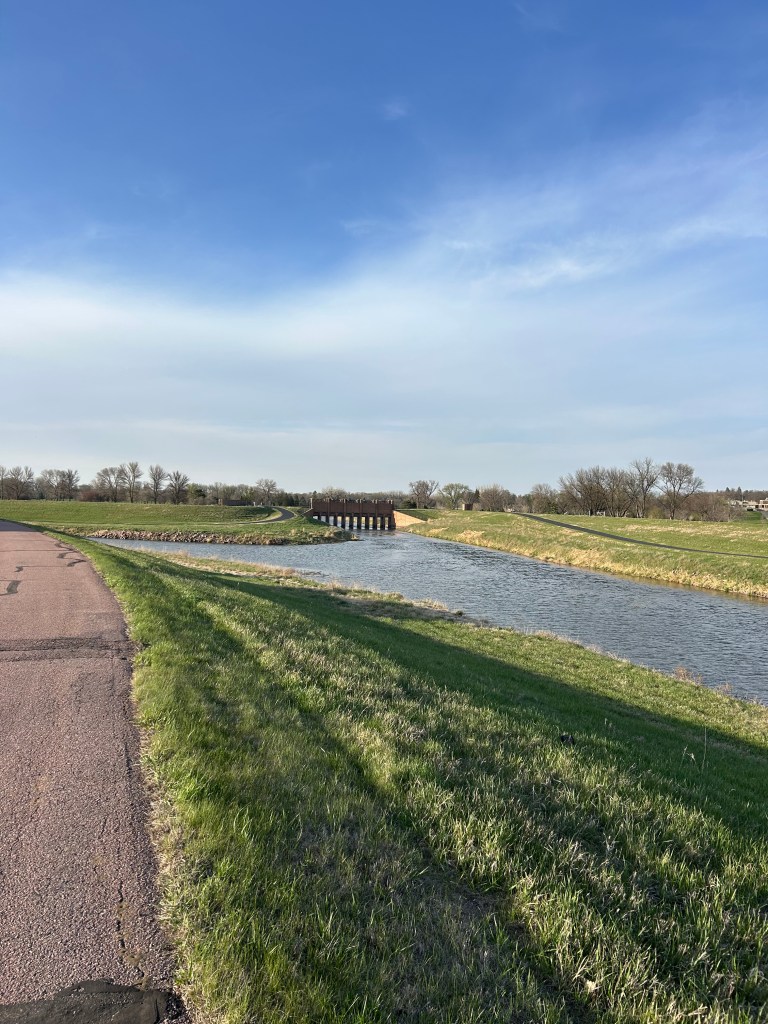
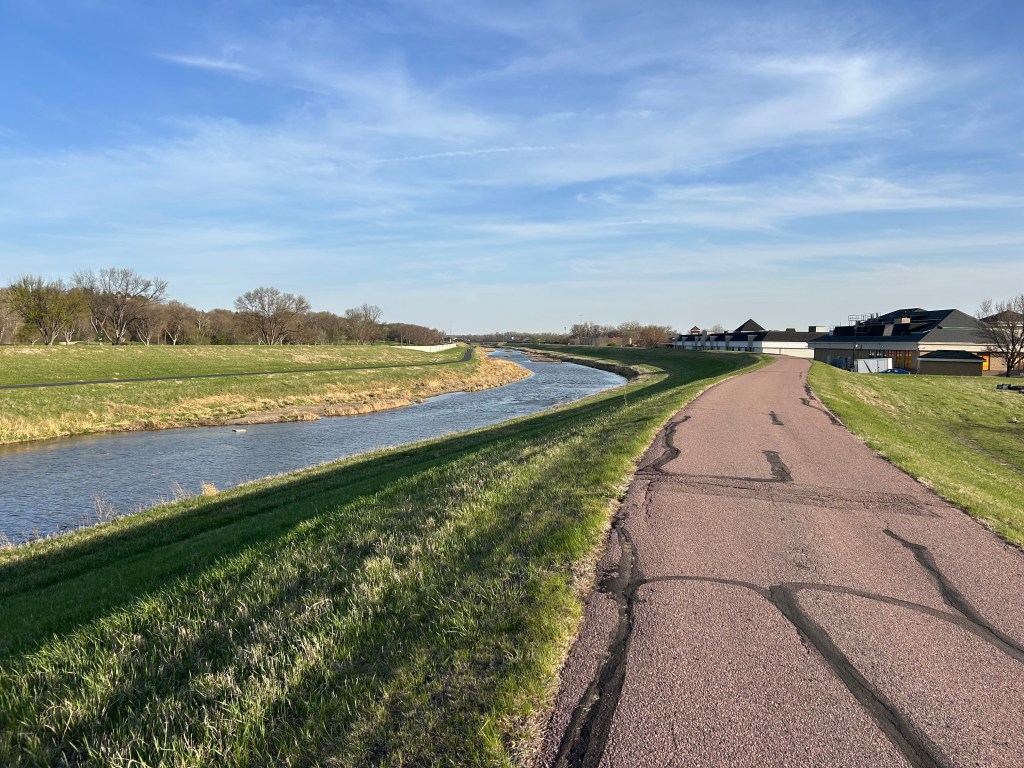
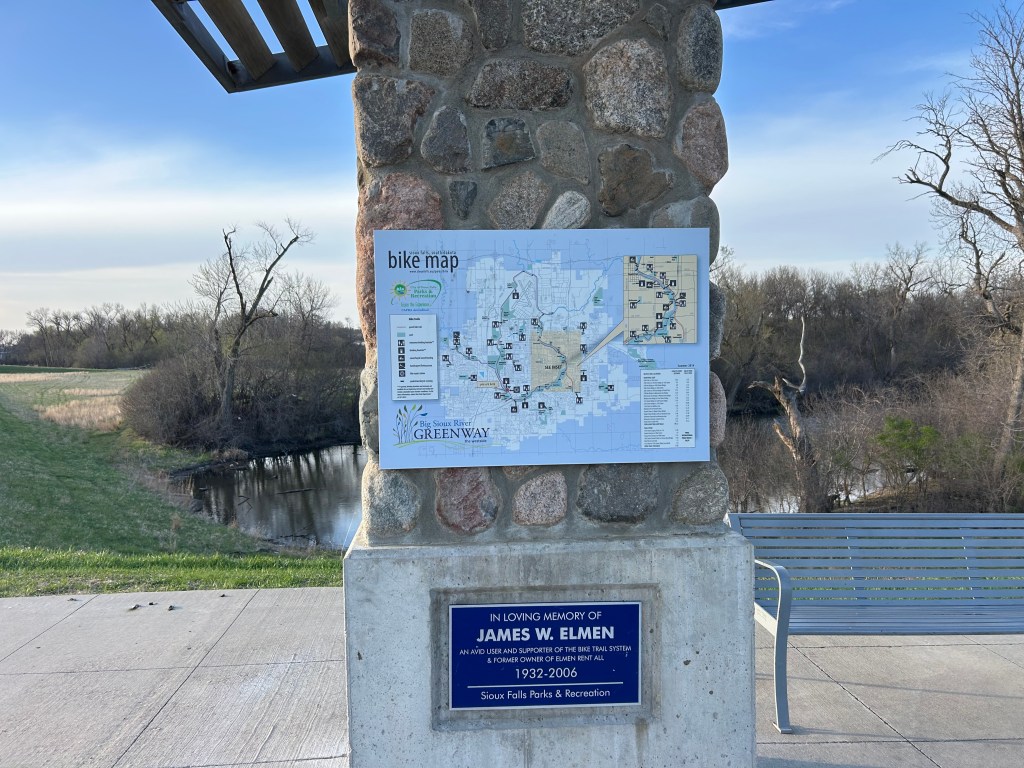
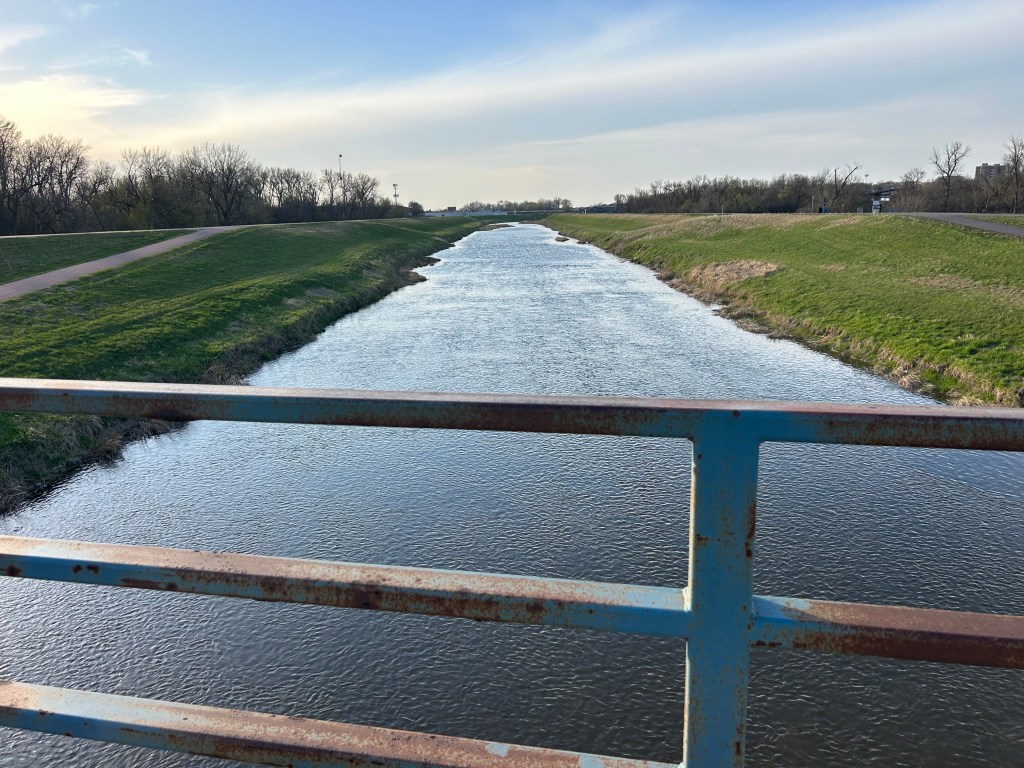
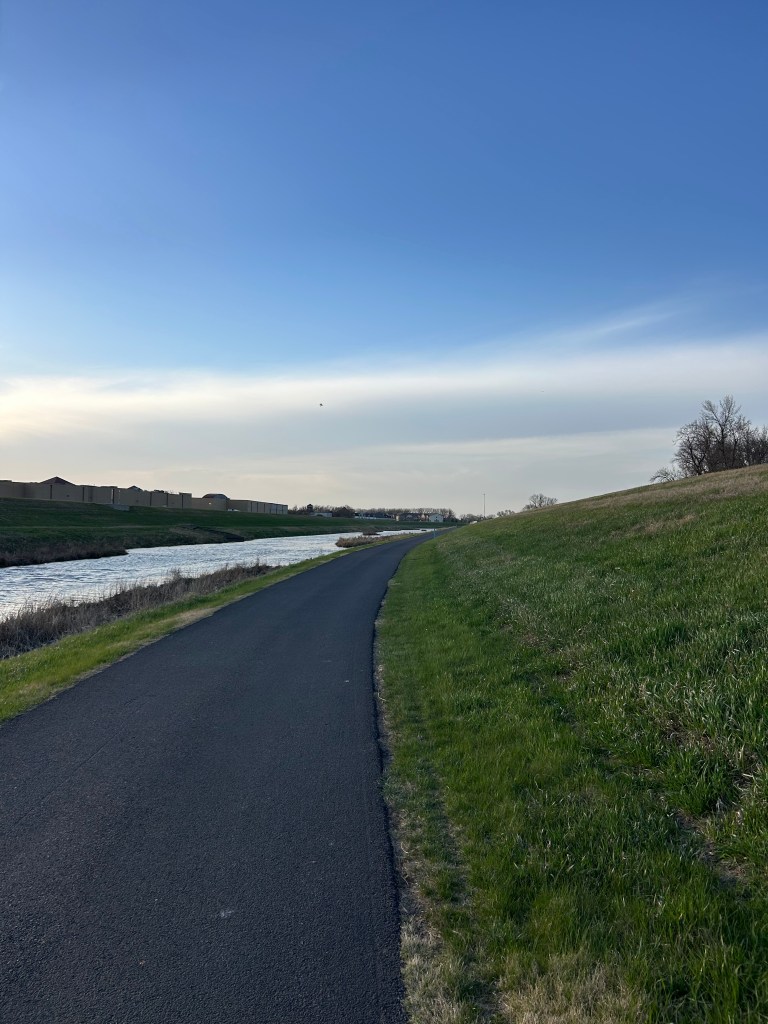
This was not my first run down the old Sioux Falls Bike Trail. I was here last year and stayed at the same Holiday Inn Express and made the same walk across the same strip mall to the same river bank. This time I ran east, rather than west, and I stayed in the open air and out of the trees. A glorious day for running.
I put a book on hold at the Kent County Library, and I asked for it to be moved to the branch closest to our home, and it was in transit for more than a week. I finally visited the branch to return a different book, and I explained my curiosity to the library employee, and she requested a second hold on the book, and then the next day it was available. Kind of like shooting air through a fuel line to clear it out.
So I got the book shortly before this work trip, and I am enjoying it (My name is Asher Lev, by Chaim Potok). Before that, I was reading a novel on a digital device, which is fine, but laptops and phones don’t work that well as bathroom readers. So, on my way to the bathroom one day, I grabbed my old well-worn copy of Zen and the Art of Motorcycle Maintenance off the bookshelf and read some of that over a multi-day span.
It’s been years since I’ve read it. I read it multiple times in my twenties, and loved it. Starting it now gave me an endorphin boost. It wasn’t as perfect as I remembered, but I am loving the thoughtfulness of it. By that I mean it required so much thought to write, and a fair amount to read. Yet it’s written in a plain, direct style that welcomes the reader to the inquiry.
Early in the story, the narrator announces his intention to engage in a Chautauqua with the group he is motorcycling with across the U.S.: his young son, and a friend and his wife. The kind of Chautauqua the narrator is thinking of is an exchange of ideas that elevates the nature of discourse — talking about something meaningful, rather than simply engaging in small talk. An ongoing exchange that is paused and recommenced, ostensibly until something of value is achieved. He has something in mind that he wants to communicate — I’m too early in the novel to remember what it is, and I haven’t gotten to that part yet. That his Chautauqua group includes his young son is notable — he’s treating his son as an intellectual equal.
For the narrator in the novel, a Chautauqua is a philosophical discussion, which people have all the time — they just don’t necessarily label it such. Philosophy underpins almost all human behavior. A philosophical void or vacuum inevitably means trouble. It was refreshing to read about narrator’s desire to provoke philosophical discourse with intention. But… it was fiction, after all.
In my experience, there is a serious philosophical void/vacuum in the business world. When I was a lowly tow-truck driver, drinking burnt coffee in a construction trailer under the I-405 bridge in downtown Portland, I would have philosophical discussions with my co-workers, such as whether or not humans should have the right to own property. At that time, I took the “no” stance. I’m a little more practical about it now, but if I engaged in a Chautauqua tomorrow on that subject, I’d have a hard time making the opposite case.

Like I said, it’s just my experience. Maybe at your place of work, there are deep, philosophical debates. Maybe it’s because I moved into management at some point, and I had to sacrifice most of my philosophical beliefs to get my 3% merit increase. If we wanted to get into a serious philosophical discussion, we could talk about the ethical abyss of capitalism.
Maybe capitalism was inevitable. I don’t know — seems like we could’ve come up with something better if we had had a Chautauqua.