The Pointe Nature Preserve
Run Time: 65:43 + 2-minute kick
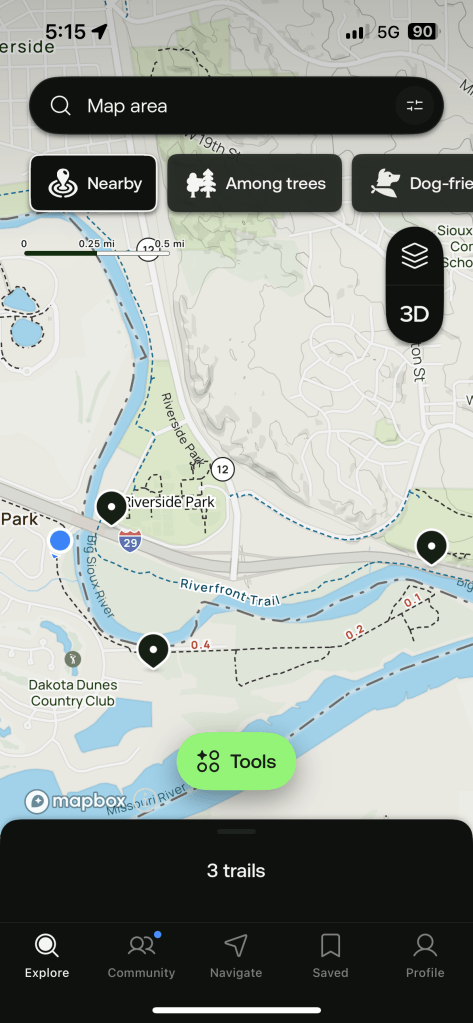
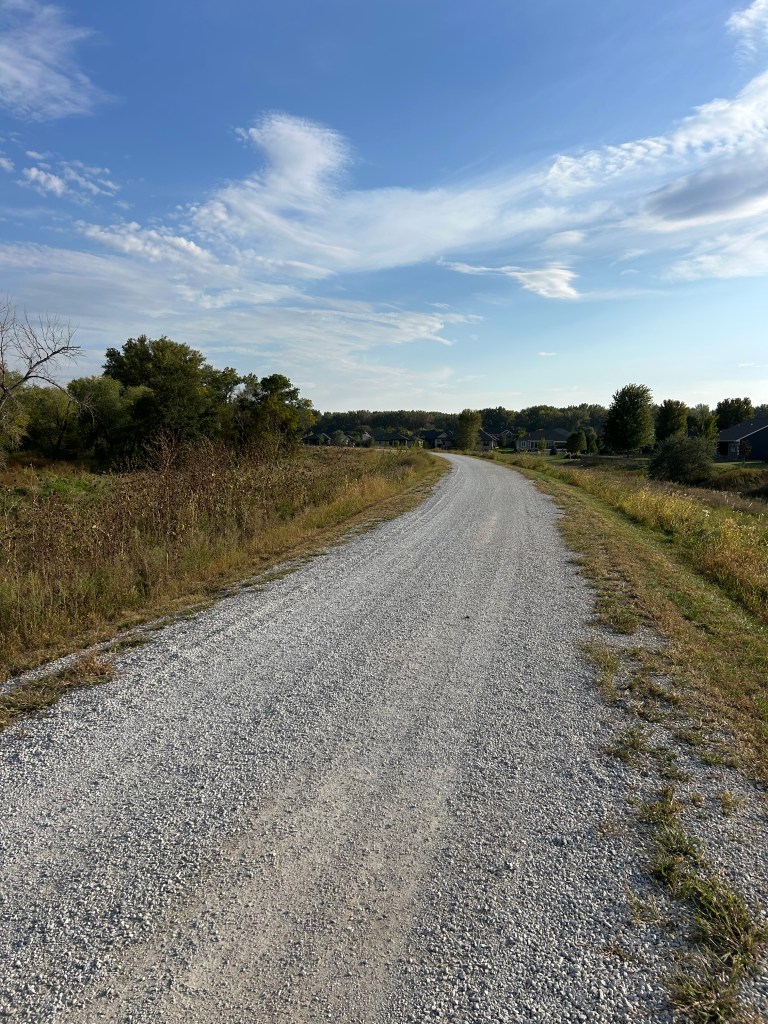
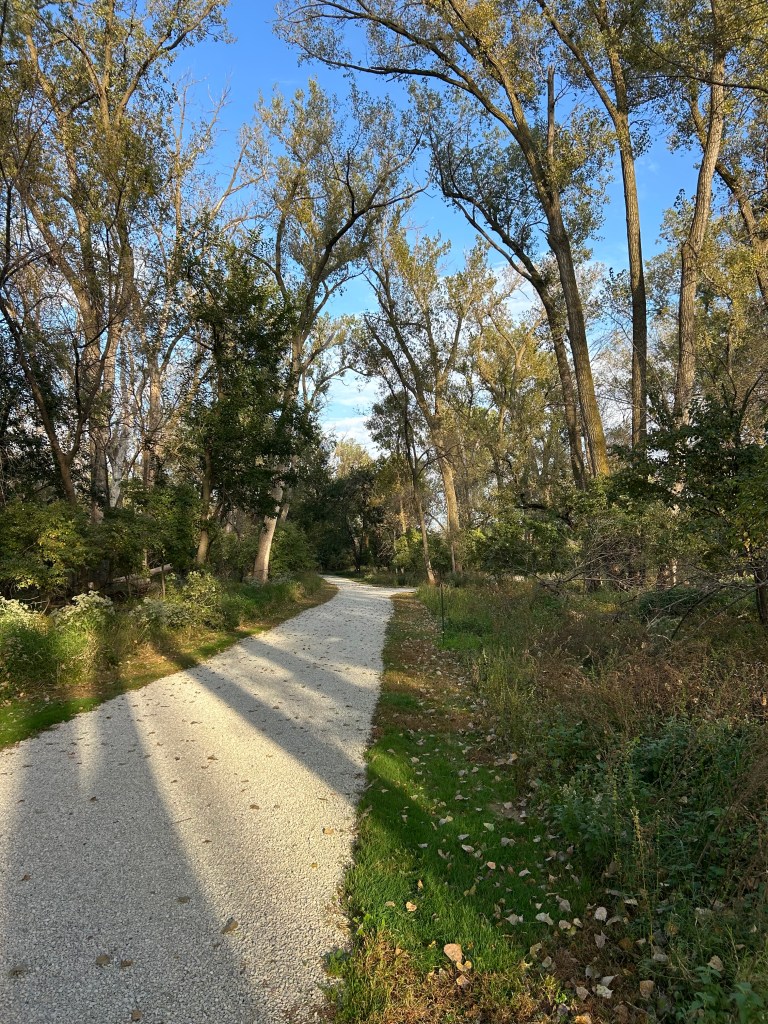
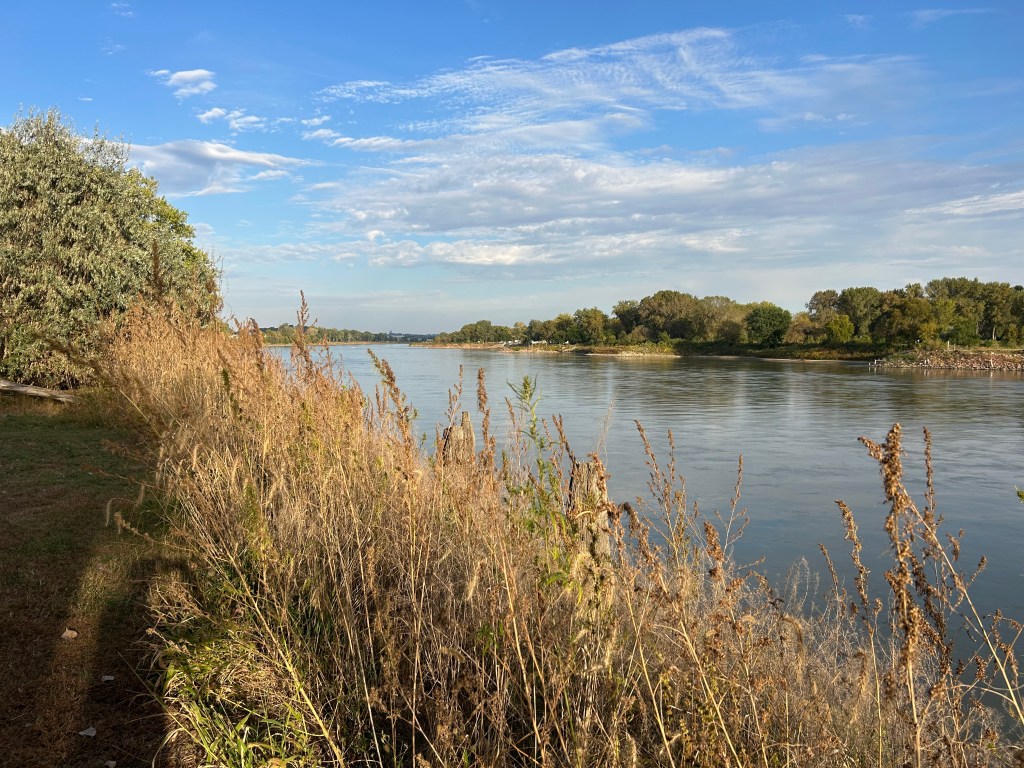
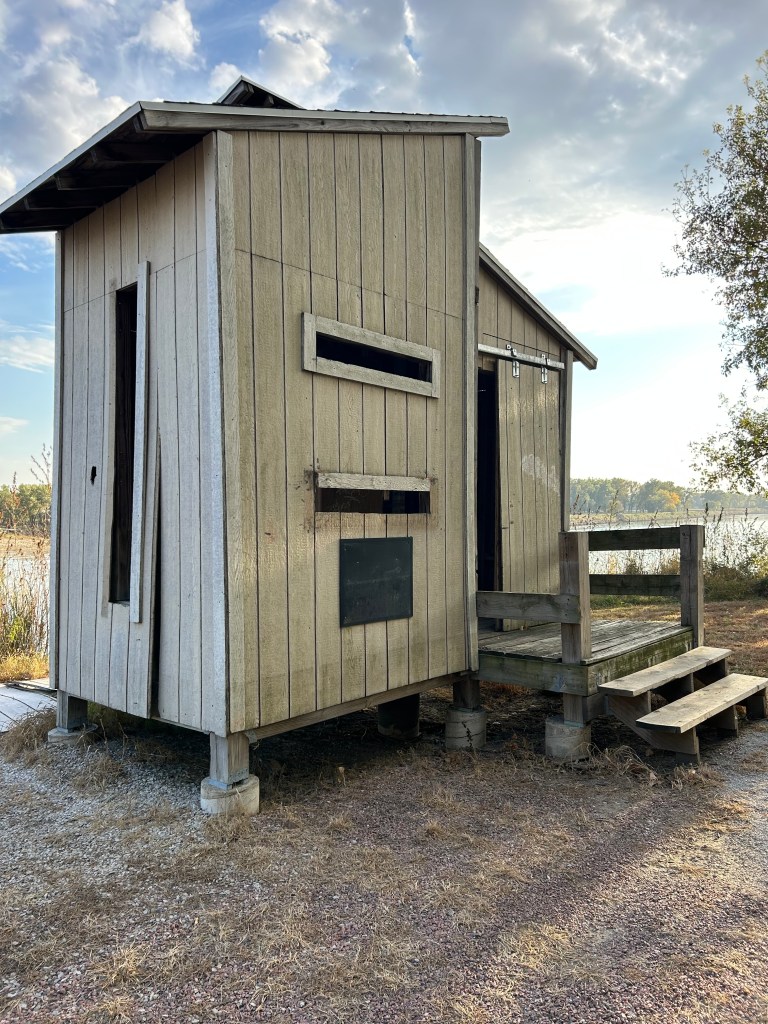
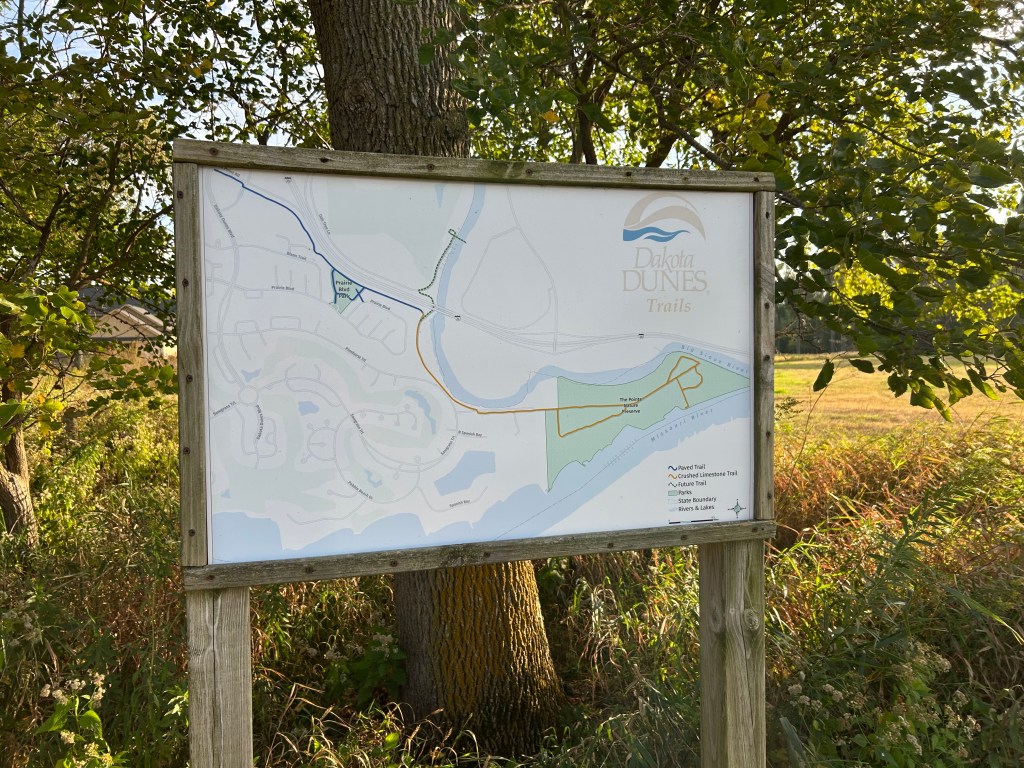
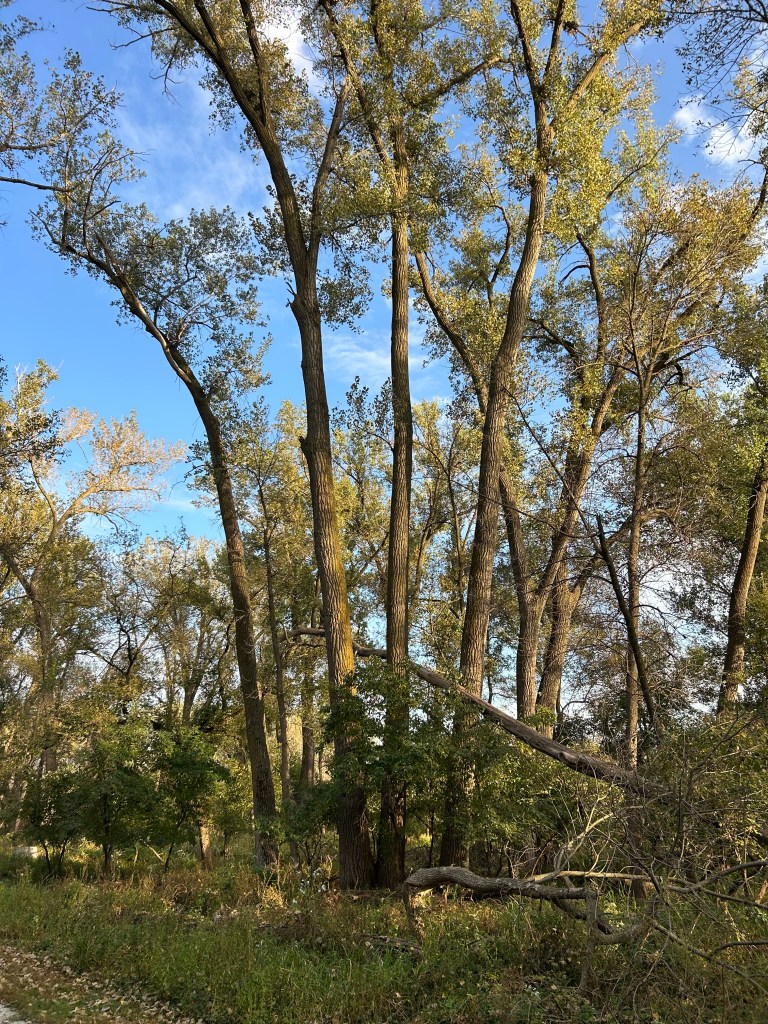
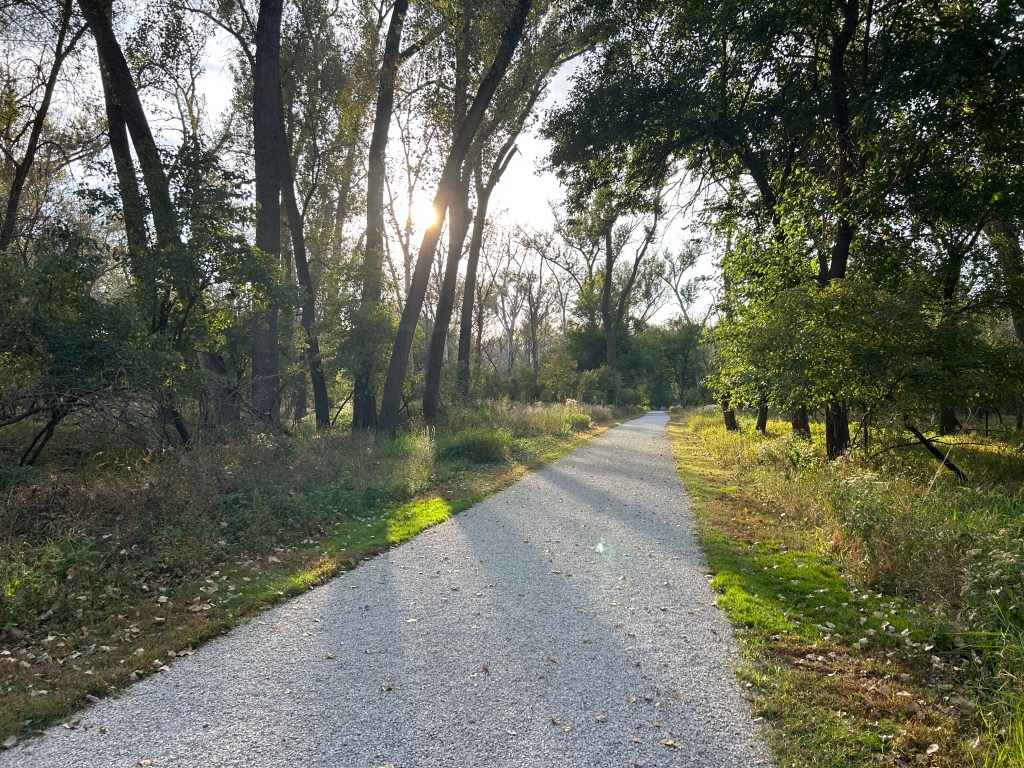
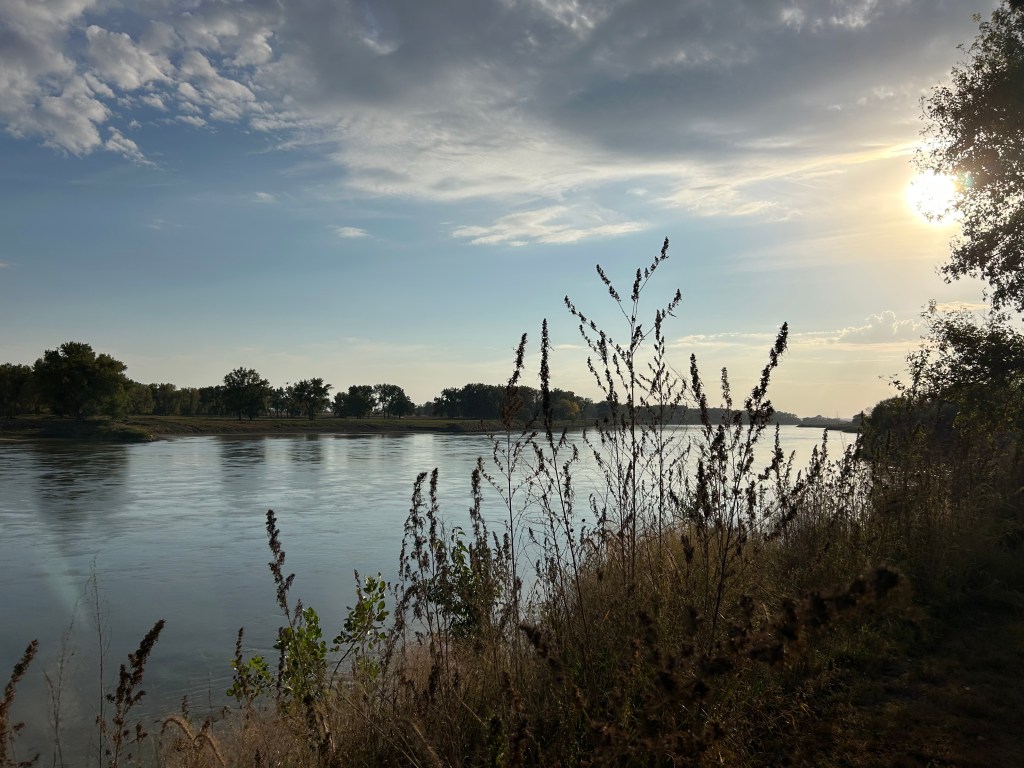
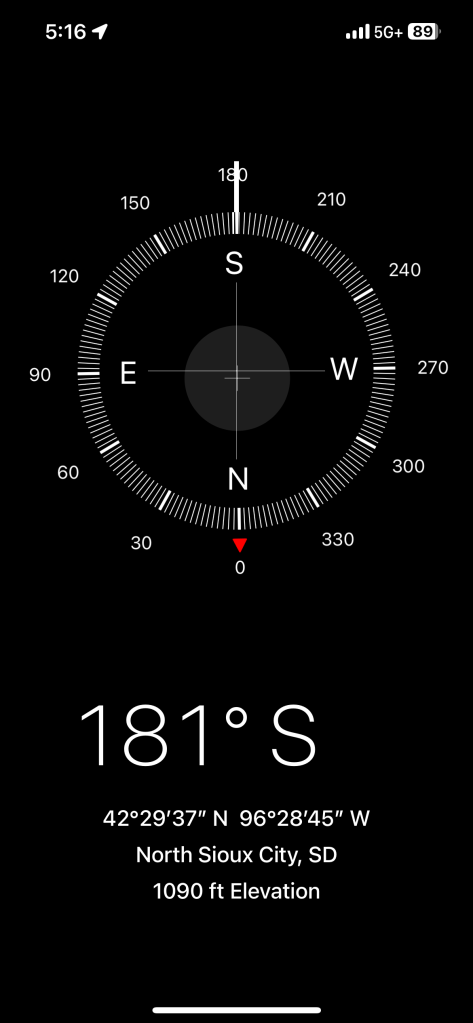
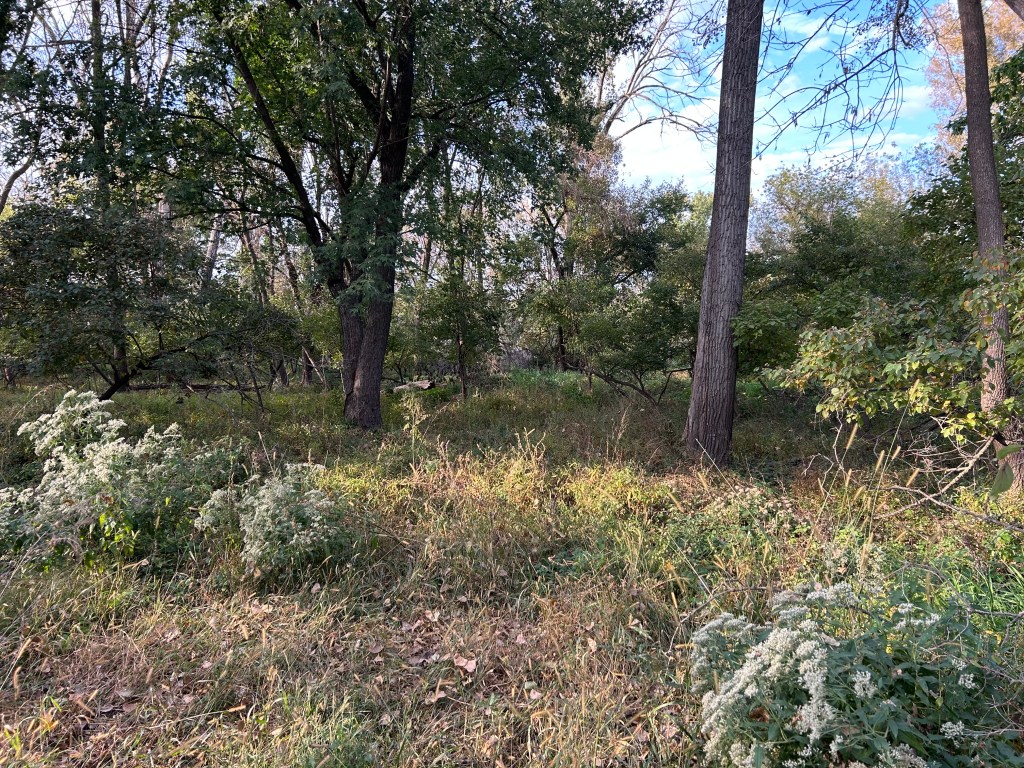
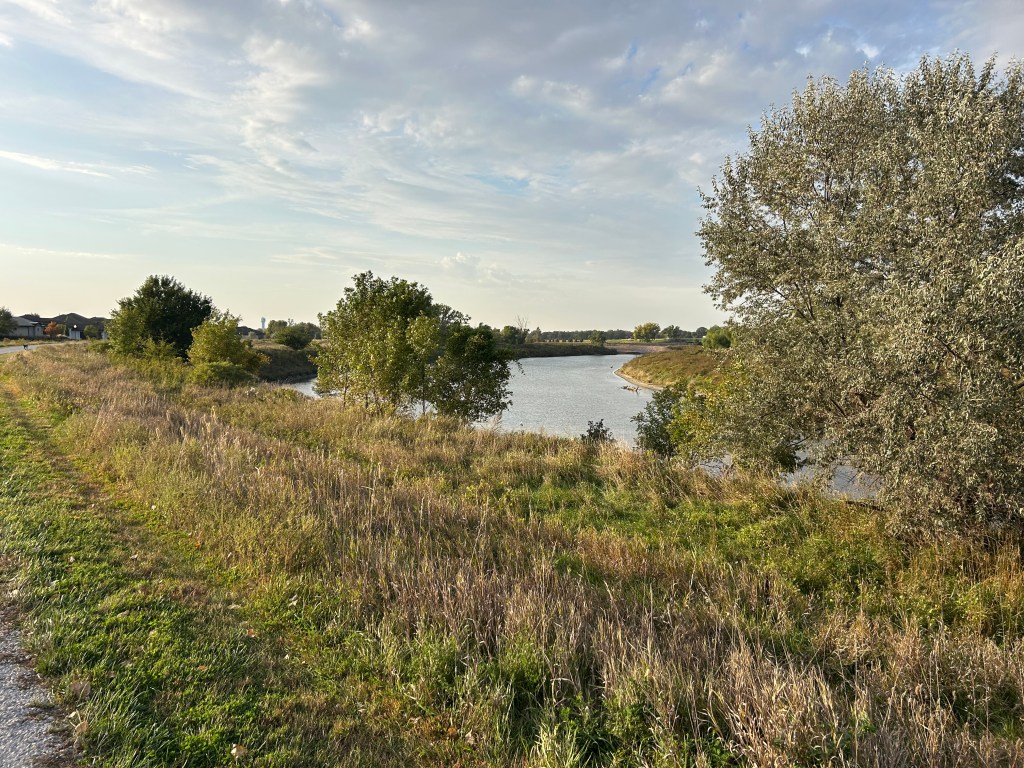
I am behind in my blogging. This run took place more than two weeks ago. I almost forgot what I wanted to write about. The run was beautiful. It was hot. Most of it was a gravel path, which took me almost to the very point where South Dakota, Nebraska, and Iowa converge, at the confluence of the Big Sioux and Missouri Rivers.
How long does it take a drop of water in the Missouri River to travel from the headwaters in Montana all the way to the Mississippi River in St. Louis? Is it possible that, in my many crossings and followings of the Missouri River, that I’ve rejoined a drop of water that I met previously?
In our family Book Club, one of the books we read this year is Learning Love, by Thais Gibson, which is about helping you to improve your relationships through the understanding and use of Integrated Attachment Theory. It’s a good book — I recommend it. Integrated Attachment Theory seems to make sense. I’m not going to try to explain it here — you’ll have to read it for yourself if you want to know more.
Some of the exercises in the book involve identifying Core Wounds — negative core beliefs “that prevent you from stepping into who you have always been destined to become” — and reprogramming them to accurate, positive core beliefs that help manifest becoming who you have always been destined to become. As you probably can imagine, Core Wounds mess with our relationships with others quite dramatically at times.
For me, identifying Core Wounds required a lot of introspection and retrospection. I had to think hard about what I believe about myself, and where those beliefs originated. It is easy, I think, to be fooled into thinking what we believe about our self is true. What other perspective do we really have besides our own? Yes, we will hear someone give us their opinion about us, and if it differs from our own, it might give us pause, but it seems reasonable to think that we would know better than anyone else who we really are and what we are really like. And we probably do. But it doesn’t mean we’re always right.
I recently listened to an interview with Patti Smith on the “Wiser Than Me” podcast with Julia Louis-Dreyfus. Julia always asks her guests if they feel comfortable telling the listener their true age, and then she asks how old they feel. Patti Smith said she has always felt like she is in the 9-11 year-old range. This resonates with me. I sometimes reflect that the voice in my head has not changed from about the age of 9, when I was in the third grade, and I started becoming confident about my independent identity.
I have my share of Core Wounds, and this book helped me to understand some of where I have been a little too hard on myself, or maybe a little too easy on myself. But it also made me wonder about the mystery of memory. Why do we remember some events so clearly, and so many others not at all? What happened to engrave something seemingly insignificant into our memory like a perfect video recording? How can we see that drop of water running through the river of our life so clearly apart from the others?
Here is a memory from when I was in the fourth grade: playing four-square on the playground at recess. In four-square, the kid serving the ball is in square 1. To their right is square 2, diagonally across from them is square 3, and to their left is square 4. There is a line of kids waiting to get into the game. When someone is eliminated by not making a proper play on the ball, the first kid in the line enters square 4, and the other three players advance accordingly.
I didn’t play a lot of four-square, but this day I did. The line was long, maybe 20 kids. As I advanced through the line, I noticed a pattern in the play. The server would make an easy bounce to the player in square 2, who would make an easy bounce to the player in square 3 that set him up to make an unplayable bounce to the player in square 4. It was a set-up to keep the 3 players in their boxes the entire recess. They were friends, of course, but it was all orchestrated by the bully in square 1. He got to keep his spot as server only through the compliance of the lackeys in square 2 and 3. Everybody in line was the victim. They basically did not even get to touch the ball.
This was unfair, obviously. I was angry watching what was happening. Kids were calling out the unfairness, but it wasn’t changing anything. I was not worried, though. In square 3 was my friend David Carr. We were not best friends, but we were good friends. He was a mellow, polite kid who was one of the “cool” kids but not a jerk. It really didn’t jibe with his personality to be the hit man who was putting all of these kids out of the four-square game unfairly. I stepped into square 4, and the same thing happened. He knocked me out with an unplayable ball. I was shocked.
I would not leave the box right away. I just stared at David. He would not look me in the eye. The dickheads in boxes 1 and 2 were yelling at me to leave, so I did. When recess was over, and we were all headed into the building, I went after David. I tackled him with the intent of pounding him. He was bigger and stronger than me, so I expected that I would be the one who got pounded. But something else happened. He saw me coming right before I got there, and he started yelling, “I’m sorry! I’m sorry!” I tackled him anyway, but he got ahold of me and just held me and kept saying he was sorry. He didn’t fight back. That was a big deal — to not fight back in front of all the other kids, for any reason, was a big deal.
A teacher came to break us apart, and David immediately began to defend me, saying it was all his fault. Everyone had seen me rush him, so everyone knew I had initiated the fight, but he wanted the teacher to know the whole story. I was still out-of-my-mind angry. I kept trying to get out of the teacher’s grip. David was the kid who got in trouble sometimes, and I was not, and I think he wanted it to stay that way. Plus, he clearly felt bad about what he had done.
Neither of us got sent to the principal’s office. I avoided four-square for awhile. I forgave David. We stayed friends all through grade school and middle school. He became a stoner, and I helped him with his schoolwork a lot. Maybe that memory stays with me because I am still unpacking it, 50 years later. Why didn’t I go after the square 1 bully? Why was I more angry at David? I saw, once I calmed down, how he had gotten himself stuck in square 3 doing someone’s dirty work, and how sad that was for him. In the course of one recess, he literally put 50+ kids out of a four-square game unfairly and felt like he had no choice. I’m sure he said that to me at one point, that he had no choice, and I tried to tell him that he did, because it was my job to tell him that, because he was my friend. I think, maybe, that I looked up to David up to that point in our friendship, and that I looked after David from that point on.

Core Wound? Maybe. Like I said, I’m still unpacking it. There are a lot of layers to an event like this, all from a simple fourth-grade four-square game at a grade school recess. Sometimes I think we all lived an entire lifetime in our childhood. I suppose it would not qualify as a Core Wound unless I had a negative self-belief as a result that was holding me back from being my authentic self. And maybe I do. And maybe I need to reframe it now and cut myself some slack for holding David to account for the actions of others. Or maybe I need to credit myself for holding David to account for his actions and continuing to be his genuine friends. Or maybe both.
 Don't Make It a Habit. Make It a Ritual.