Casper Rail Trail
Run Time: 65:29 + 2-minute kick
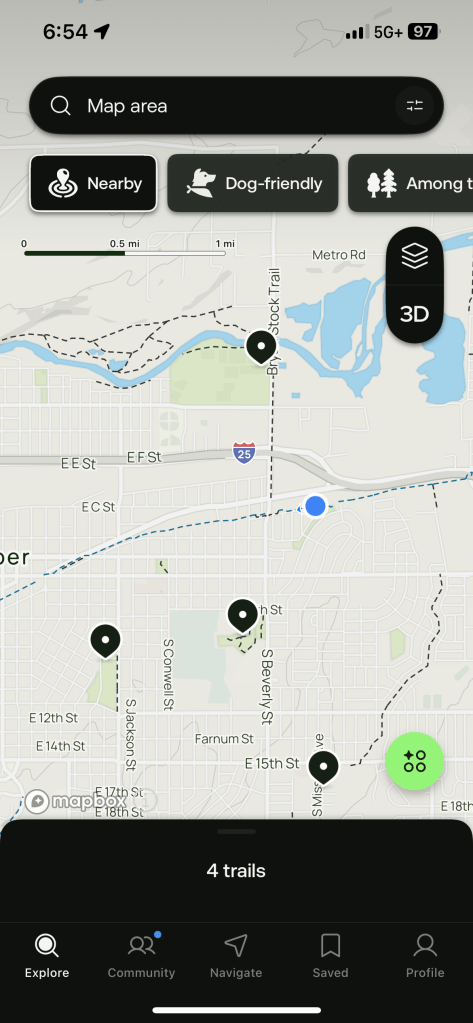
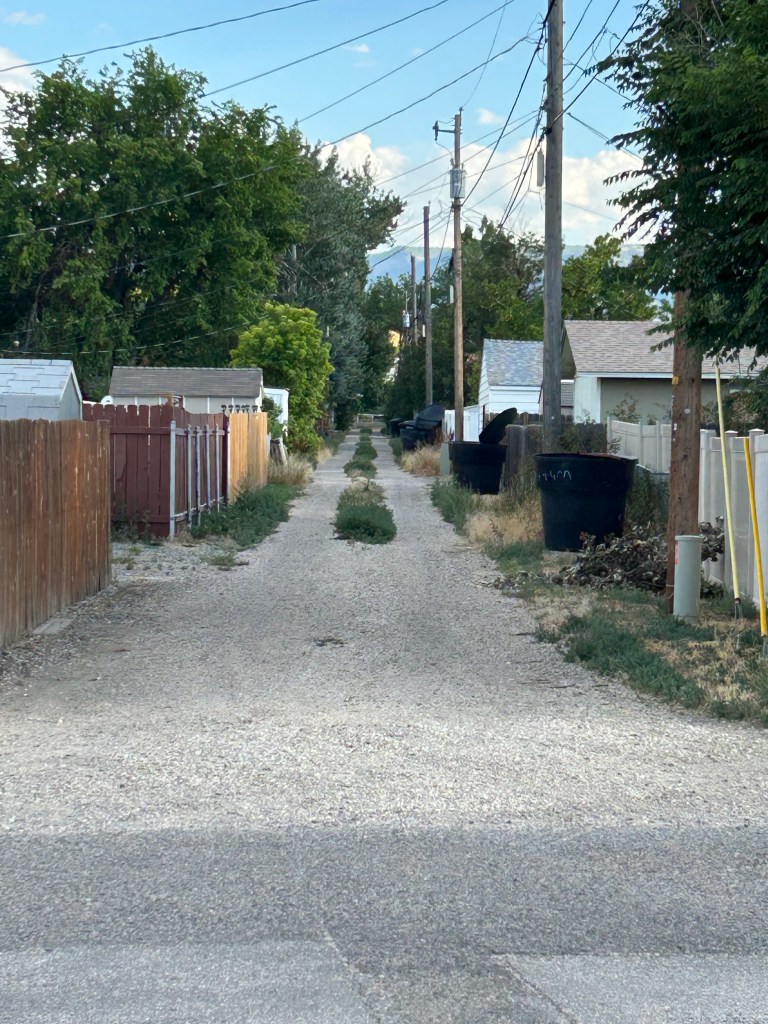
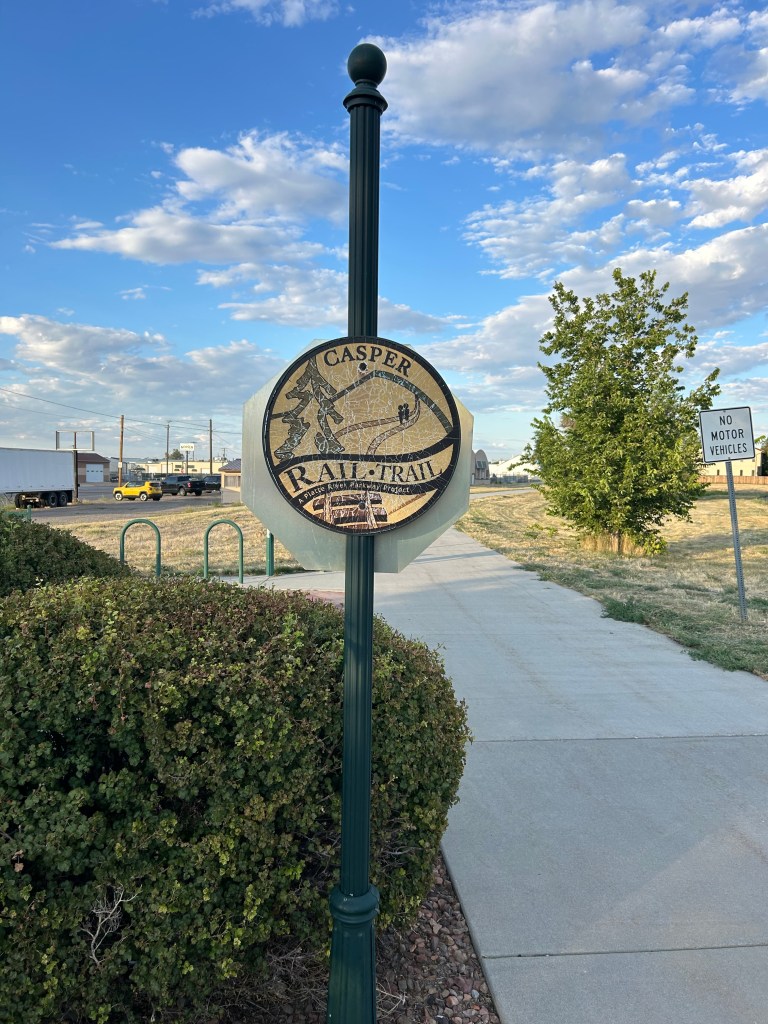
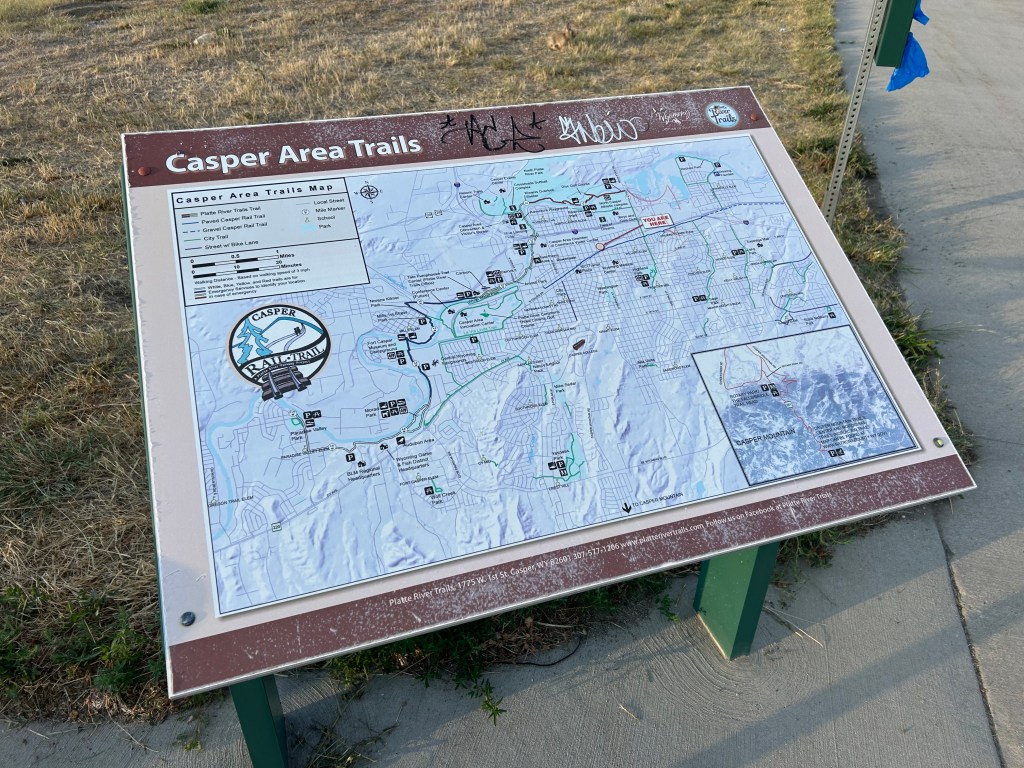
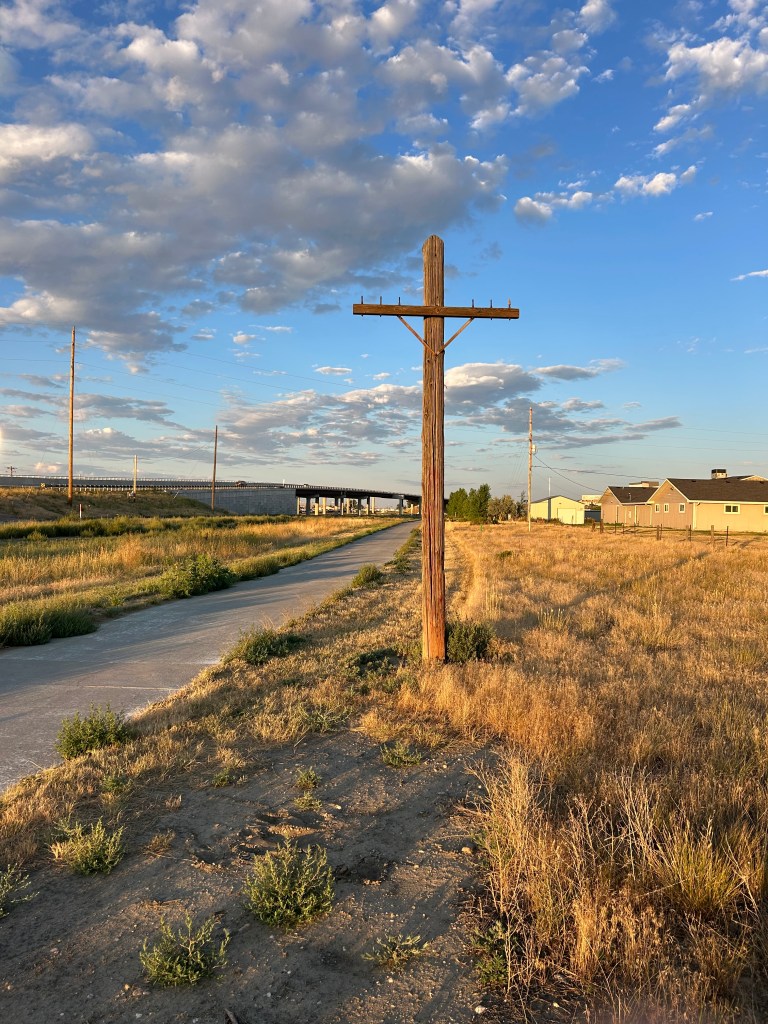
I wish I could say Casper is friendly, like the ghost, but it’s rather harsh and weatherbeaten, and many of the locals appear to have partaken of the methamphetamine in the recent past. This trail ran right along a main street, and it was a short walk from the hotel, but it was borderline sketchy. Plus the red ants with an anthill every ten feet or so just off the cement, who also look like they have partaken of the methamphetamine.

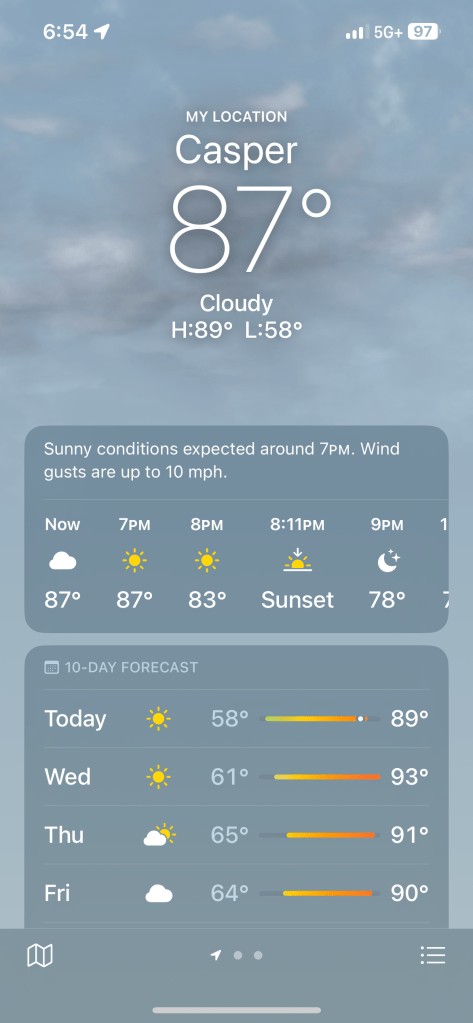
It was a comfortable evening to run. Still hot, but enough clouds to keep it shady, and a mild breeze to help the sweat keep you cool. I immediately felt the elevation, about a mile above sea level. It felt great. Reminded me of running in Utah when we lived there in 2021-22. That thin air just feels great to run in, especially compared to Michigan, where we live now about 300 feet below sea level.
I do like Wyoming in general, especially the rural areas, and double especially the mountains and hills. I have seen hundreds of antelope this week. The antelope and the ants will inherit this land when we kill ourselves off, which is appropriate, because their existence here antedates ours. I was surprised by the level of the water in the North Platte River in Douglas. The Platte in Nebraska always looks really shallow, and if you remember your elementary school films about the wagon trains, the Platte is supposed to be a mile wide and an inch deep. It seems a little late in the year for snow melt run-off. The North Platte is upstream from the Platte. You’d think it might need some momentum to get as deep as it looks in Douglas, but it runs deeper and stronger closer to its source in the Rockies.
So, for the walking part of my “run,” I usually listen to a podcast, and then I switch to music for the running part. That’s the reward for the running. I used to listen to podcasts when I ran, and it was a slog. As soon as I switched to music, my body said yes. But, to make it say yes with an exclamation point, I listen to the podcast for walking part.
I have a complicated podcast rotation. I subscribe to 25 podcasts, and I alternate between listening to podcasts in order of episode release date, and in order of how many unlistened episodes I have in the queue. Plus, if there are 4 or more Best of Car Talks in the queue, I always start the day with the oldest of those, because they drop off the feed when I have 10 in the queue. I have a list of the next episode date for each podcast in my phone, and alongside that is how many unlistened episodes remained the last time I listened to one of those podcasts episodes, so that helps me keep track of what to listen to next.
So on this day, at the beginning of this run, I started an episode of Phoebe Reads a Mystery, which is a podcast of Phoebe Judge reading a chapter of a book (usually a mystery) every day. It’s one of the podcasts for which I have a lot in the queue — currently 592 episodes. This episode was Chapter 6 of Jane Eyre. I don’t know yet if Jane Eyre is actually a mystery, but this chapter almost made me keep it going when I switched from walking to running.
A fair portion of this chapter is a conversation between the title character and Helen Burns, a classmate at a Lowood, a school for orphan girls. Jane has recently been sent there, and she is having trouble adapting, and she has a conversation with Helen about how to conduct oneself in a difficult and dire situation. It is difficult to accept that two young schoolgirls would have such a command of the language, but of course it is Charlotte Bronte who has a command of the language, and these are fictional characters.

However, I cannot imagine that Bronte altered reality terrifically. Written dialogues usually are cleaner than real conversation. You don’t read the “ums” and “uhs” often in literature, and it’s hard to write dialogue of people talking over each other, which is usually what real conversation consists of. But I am going to choose to believe that Bronte wrote these characters accurately, and that two pre-teen orphan schoolgirls in the early nineteenth century could have a conversation more erudite, elegant, and poignant than any conversation I have ever had with any other person, even in philosophy classes I took in college. It was stunning to listen to.

The question that arose in my mind after I finished listening to Chapter 6 was, what the fuck has happened to us? Okay, so we have made great advances in terms of science and medicine and technology, but much as the headwaters of the North Platte drain to a trickle in the plains, the level of discourse for our species has shallowed immeasurably.

I have had this thought before, reading Charles Portis’ True Grit, and watching the movie 99 times. When Mattie asks LaBoeuf, “Why have you been ineffectually pursuing Chaney?”, or when LaBoeuf uses a Latin legal term, and Rooster says, “I’m struck that LaBoeuf has been shot, trampled, and nearly severed his tongue, and not only does he not cease to talk, but he spills the banks of English”, I am rendered speechless by the beauty of the language.
Human discourse now barely qualifies as communication. I not only long to talk like Jane and Helen, I long to hear someone, anyone, talk like that in the normal course of daily life. I cannot help but think we have slipped backward in this respect. I cannot help but think we would not be living in the Age of Idiocy if we had maintained this intelligent use of language.

Maybe it wouldn’t have mattered. Maybe we’d have ended up here either way. In Bronte’s time, there was terrible inhumane squalor in many parts of society, most assuredly as bad or worse than methamphetamine partaking. Squalor remains, and with respect to the use of language, an intellectual squalor predominates.
I will just have to be content listening to Bronte, reading Charles Portis, and rewatching “True Grit” for the hundredth time.

 Don't Make It a Habit. Make It a Ritual.